Department of Neurobiology, Stanford University School of Medicine, Stanford, CA 94305, USA.
Department of Neurobiology, Stanford University School of Medicine, Stanford, CA 94305, USA.
Cell. 2018 Dec 13;175(7):1811-1826.e21. doi: 10.1016/j.cell.2018.10.044. Epub 2018 Nov 29.
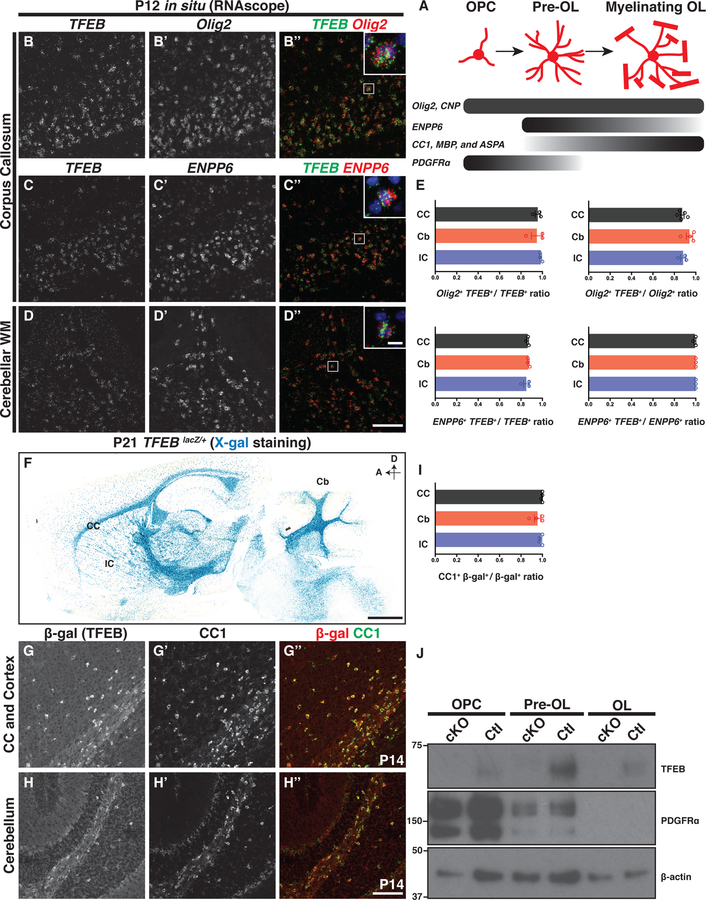
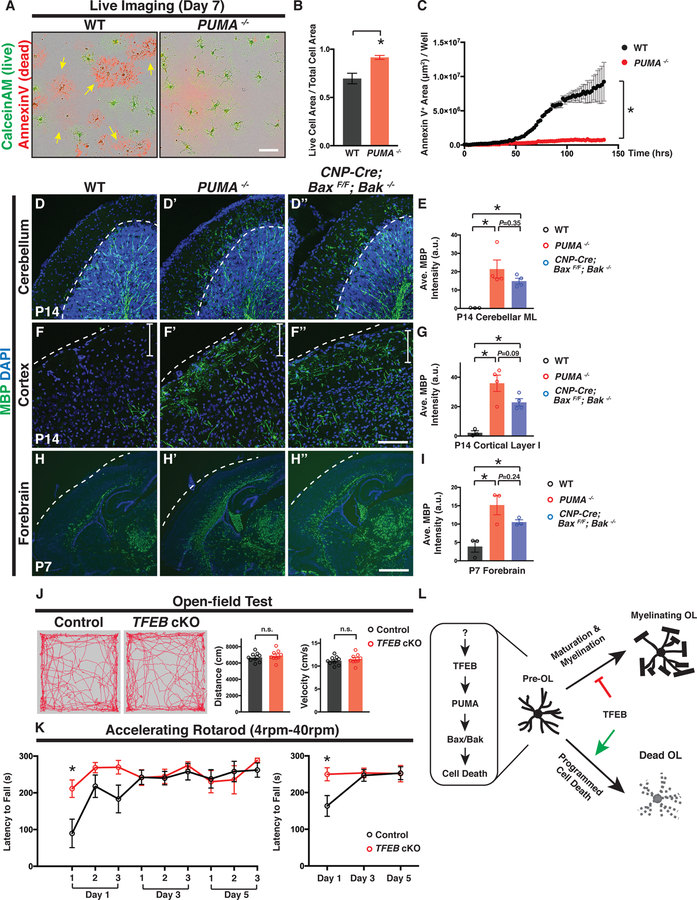
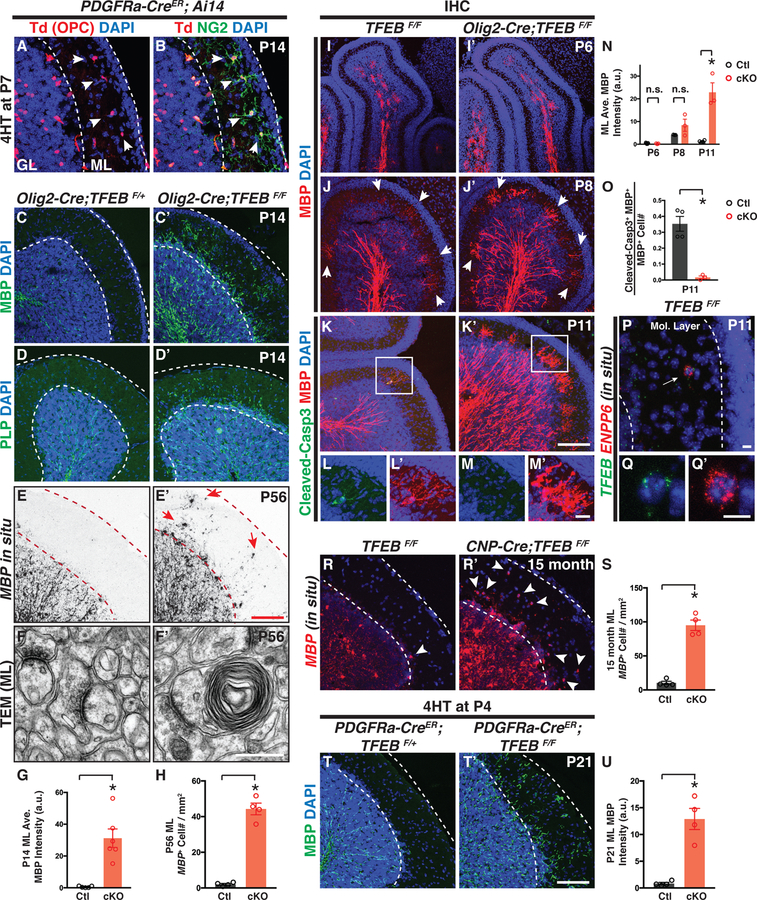
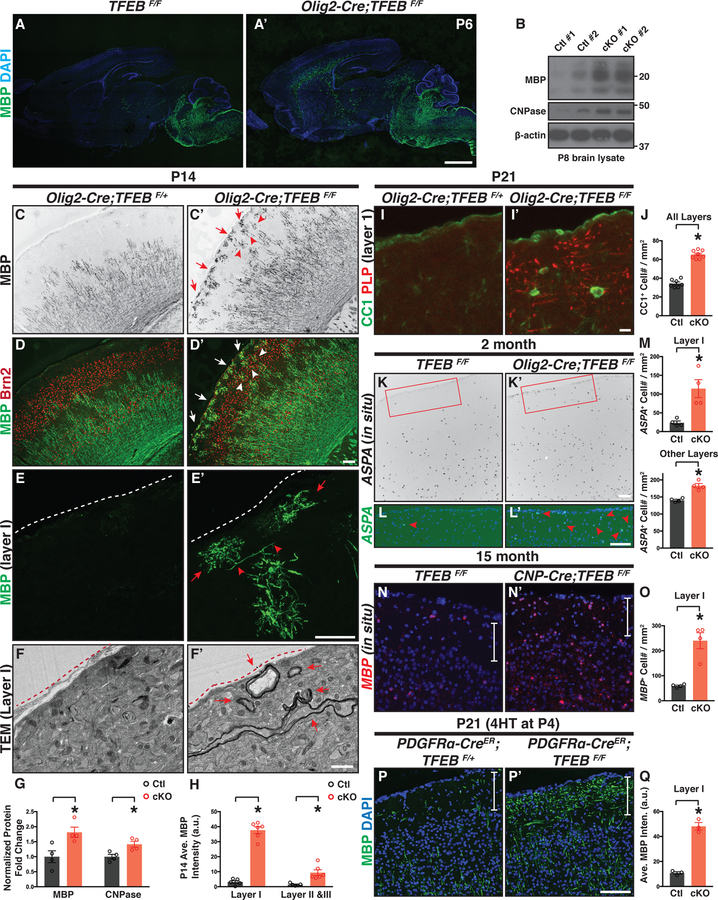
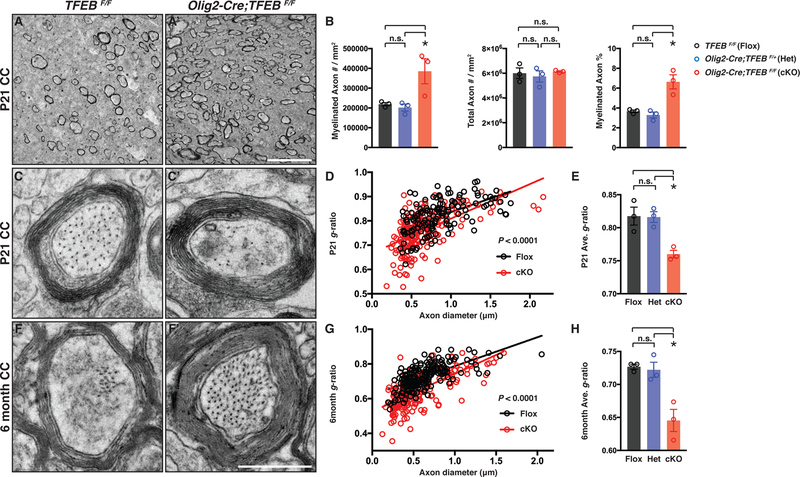
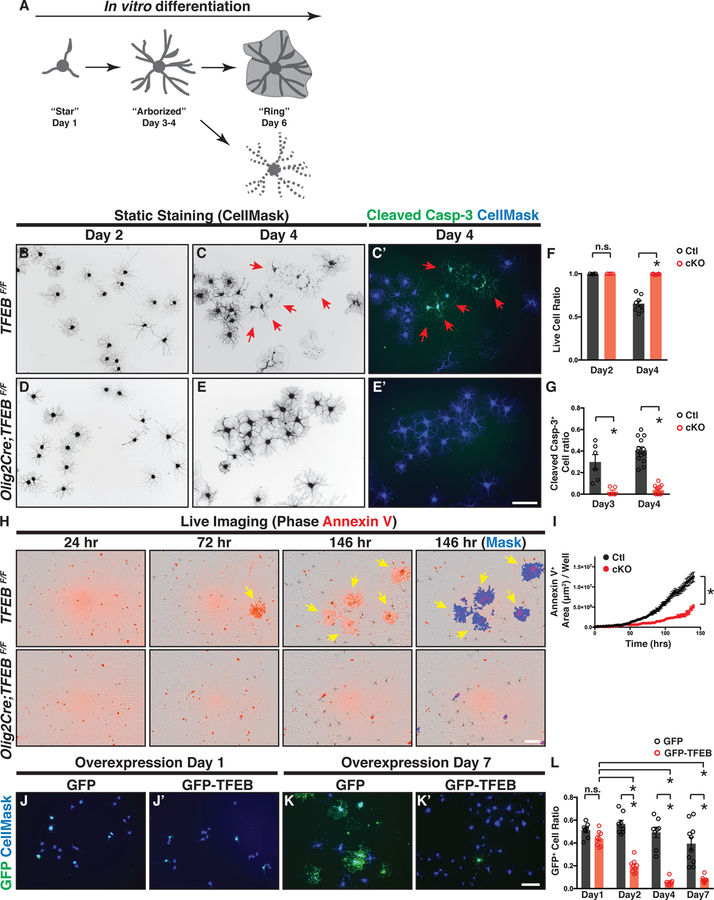
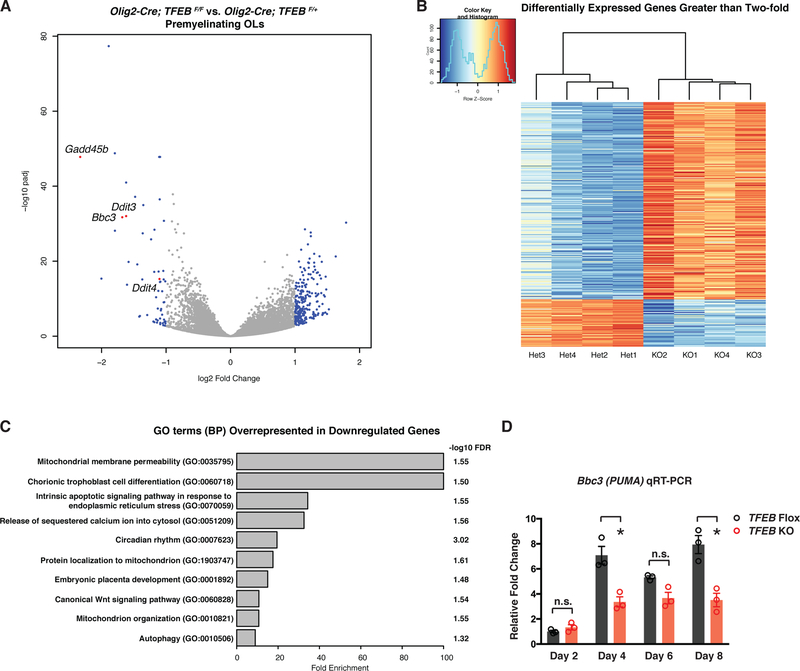
Nervous system function depends on proper myelination for insulation and critical trophic support for axons. Myelination is tightly regulated spatially and temporally, but how it is controlled molecularly remains largely unknown. Here, we identified key molecular mechanisms governing the regional and temporal specificity of CNS myelination. We show that transcription factor EB (TFEB) is highly expressed by differentiating oligodendrocytes and that its loss causes precocious and ectopic myelination in many parts of the murine brain. TFEB functions cell-autonomously through PUMA induction and Bax-Bak activation to promote programmed cell death of a subset of premyelinating oligodendrocytes, allowing selective elimination of oligodendrocytes in normally unmyelinated brain regions. This pathway is conserved across diverse brain areas and is critical for myelination timing. Our findings define an oligodendrocyte-intrinsic mechanism underlying the spatiotemporal specificity of CNS myelination, shedding light on how myelinating glia sculpt the nervous system during development.
神经系统的功能取决于髓鞘的适当形成,以实现绝缘和对轴突的关键营养支持。髓鞘的形成在空间和时间上受到严格调控,但分子层面上的调控机制在很大程度上仍不清楚。在这里,我们确定了调控中枢神经系统髓鞘形成的区域和时间特异性的关键分子机制。我们发现,转录因子 EB(TFEB)在分化中的少突胶质细胞中高度表达,其缺失会导致小鼠大脑的许多区域过早出现异位髓鞘形成。TFEB 通过诱导 PUMA 和 Bax-Bak 的激活来发挥细胞自主功能,从而促进少突胶质前体细胞的程序性细胞死亡,从而选择性地消除正常情况下未髓鞘化脑区的少突胶质细胞。该途径在不同脑区中保守,对髓鞘形成的时间至关重要。我们的研究结果定义了中枢神经系统髓鞘形成的空间和时间特异性的少突胶质细胞内在机制,为髓鞘形成的少突胶质细胞在发育过程中如何塑造神经系统提供了线索。