Department of Public Health, Environment and Social Determinants of Health, World Health Organization, 20 Avenue Appia, Geneva, Switzerland.
The Norwich School of Medicine, University of East Anglia, Norwich, UK; Department of Environmental Health, Tshwane University of Technology, Pretoria, South Africa.
Int J Hyg Environ Health. 2019 Mar;222(2):270-282. doi: 10.1016/j.ijheh.2018.11.005. Epub 2018 Nov 30.
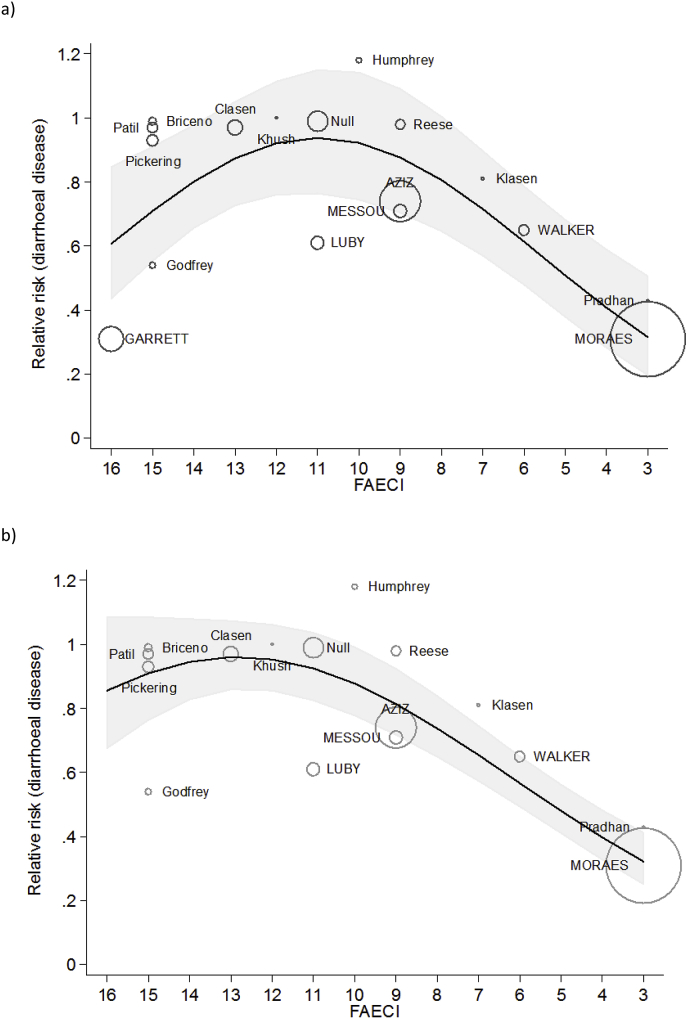
The impact on diarrhoea of sanitation interventions has been heterogeneous. We hypothesize that this is due to the level of prevailing faecal environmental contamination and propose a Faecal Contamination Index (FAECI) of selected WASH indicators (objective 1). Additionally, we provide estimates of the proportion of the population living in communities above certain sanitation coverage levels (objective 2).
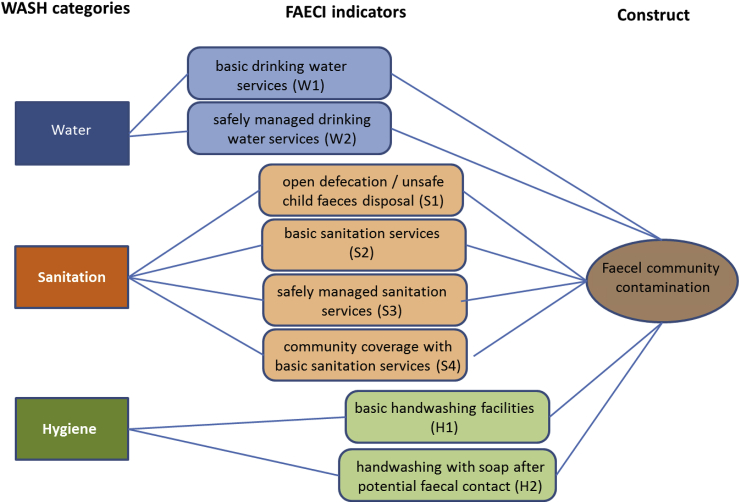
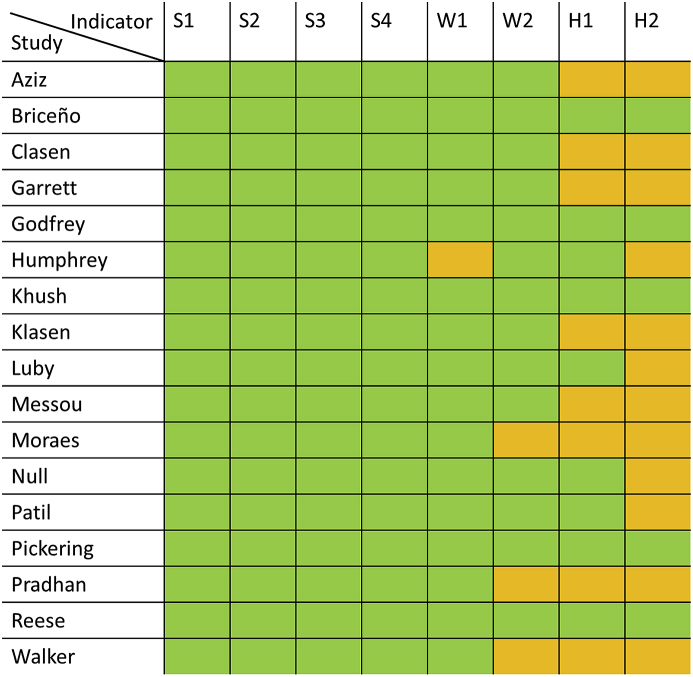
Objective 1: Faecal contamination post-intervention was estimated from WASH intervention reports. WASH indicators composing the FAECI included eight water, sanitation and hygiene practice indicators, which were selected for their relevance for health and data availability at study- and country-level. The association between the estimated level of faecal environmental contamination and diarrhoea was examined using meta-regression. Objective 2: A literature search was conducted to identify health-relevant community sanitation coverage thresholds. To estimate total community coverage with basic sanitation in low- and middle-income countries, at relevant thresholds, household surveys with data available at primary sampling unit (PSU)-level were analysed according to the identified thresholds, at country-, regional- and overall level.
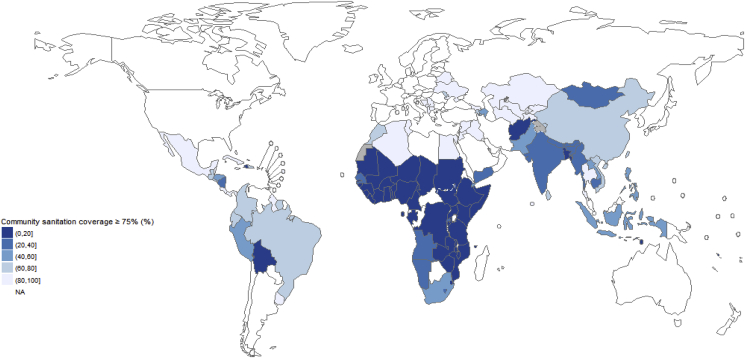
Objective 1: We found a non-linear association between estimated environmental faecal contamination and sanitation interventions' impact on diarrhoeal disease. Diarrhoea reductions were highest at lower faecal contamination levels, and no diarrhoea reduction was found when contamination increased above a certain level. Objective 2: Around 45% of the population lives in communities with more than 75% of coverage with basic sanitation and 24% of the population lives in communities above 95% coverage, respectively.
High prevailing faecal contamination might explain interventions' poor effectiveness in reducing diarrhoea. The here proposed Faecal Contamination Index is a first attempt to estimate the level of faecal contamination in communities. Much of the world's population currently lives in faecally contaminated environments as indicated by low community sanitation coverage.
卫生干预措施对腹泻的影响存在差异。我们假设这是由于粪便环境污染的程度不同,并提出了一个选择的水卫生计指标的粪便污染指数(FAECI)(目标 1)。此外,我们还提供了生活在特定环境卫生覆盖水平以上社区的人口比例的估计值(目标 2)。
目标 1:从水卫生计干预报告中估计干预后的粪便污染。构成 FAECI 的水卫生计指标包括 8 个与健康相关且在研究和国家层面具有数据可用性的水、环境卫生和个人卫生实践指标。使用元回归检验粪便环境污染程度与腹泻之间的关联。目标 2:进行了文献检索,以确定与健康相关的社区环境卫生覆盖阈值。为了估计低收入和中等收入国家基本环境卫生的总社区覆盖率,在相关阈值下,根据确定的阈值,在国家、区域和总体层面上,对具有初级抽样单位(PSU)层面数据的家庭调查进行了分析。
目标 1:我们发现估计的环境粪便污染与环境卫生干预措施对腹泻病的影响之间存在非线性关系。在粪便污染水平较低时,腹泻减少幅度最大,而当污染水平增加到一定水平以上时,则没有发现腹泻减少。目标 2:分别约有 45%和 24%的人口生活在基本环境卫生覆盖率超过 75%和 95%的社区中。
高流行粪便污染可能解释了干预措施在降低腹泻方面的效果不佳。这里提出的粪便污染指数是估计社区粪便污染程度的首次尝试。正如低社区环境卫生覆盖率所表明的那样,世界上大部分人口目前生活在粪便污染环境中。