School of Mathematics, Statistics and Computer Science, University of KwaZulu-Natal, Westville Campus, Durban, South Africa.
Malar J. 2018 Dec 5;17(1):453. doi: 10.1186/s12936-018-2604-y.
The effect of malaria in Nigeria is still worrisome and has remained a leading public health issue in the country. In 2016, Nigeria was the highest malaria burden country among the 15 countries in sub-Saharan Africa that accounted for the 80% global malaria cases. The purpose of this study is to utilize appropriate statistical models in identifying socio-economic, demographic and geographic risk factors that have influenced malaria transmission in Nigeria, based on malaria rapid diagnostic test survey results. This study contributes towards re-designing intervention strategies to achieve the target of meeting the Sustainable Development Goals 2030 Agenda for total malaria elimination.
This study adopted the generalized linear mixed models approach which accounts for the complexity of the sample survey design associated with the data. The 2015 Nigeria malaria indicator survey data of children between 6 and 59 months are used in the study.
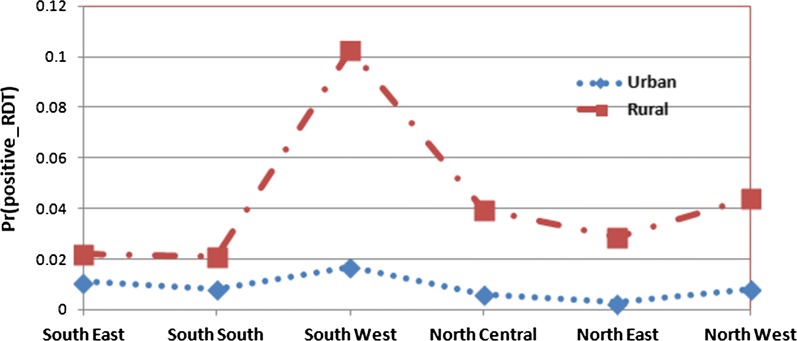
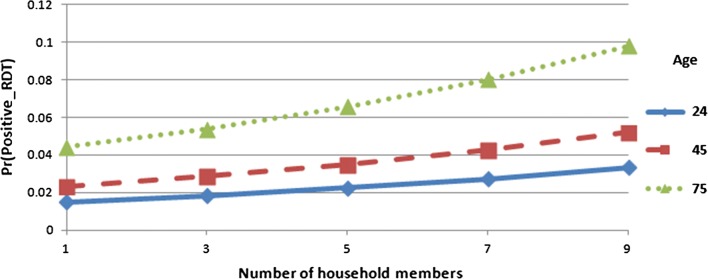
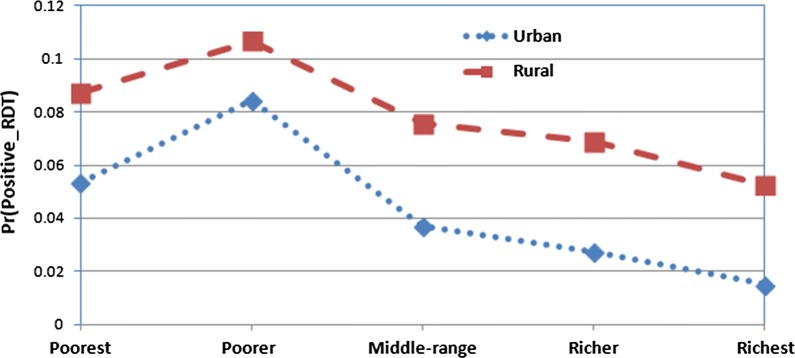
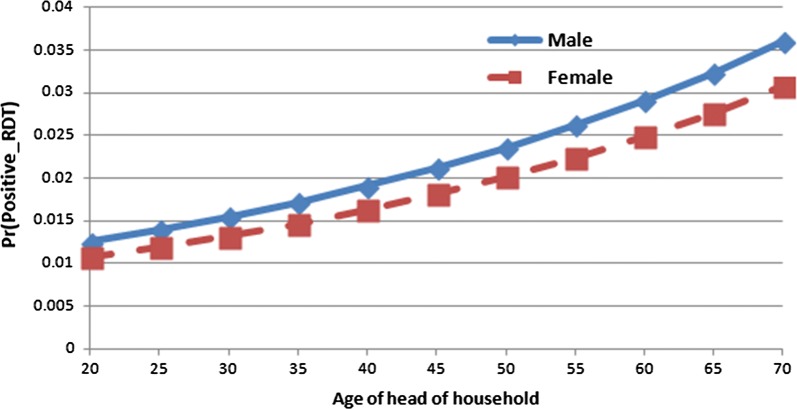
From the findings of this study, the cluster effect is significant [Formula: see text] which has suggested evidence of heterogeneity among the clusters. It was found that the vulnerability of a child to malaria infection increases as the child advances in age. Other major significant factors were; the presence of anaemia in a child, an area where a child resides (urban or rural), the level of the mother's education, poverty level, number of household members, sanitation, age of head of household, availability of electricity and the type of material for roofing. Moreover, children from Northern and South-West regions were also found to be at higher risk of malaria disease and re-infection.
Improvement of socio-economic development and quality of life is paramount to achieving malaria free Nigeria. There is a strong link of malaria risk with poverty, under-development and the mother's educational level.
疟疾在尼日利亚的影响仍然令人担忧,并且一直是该国主要的公共卫生问题。2016 年,尼日利亚是撒哈拉以南非洲 15 个疟疾负担最重的国家之一,占全球疟疾病例的 80%。本研究旨在利用适当的统计模型,根据疟疾快速诊断检测调查结果,确定影响尼日利亚疟疾传播的社会经济、人口和地理风险因素。这项研究有助于重新设计干预策略,以实现到 2030 年消除疟疾的可持续发展目标 2030 议程的目标。
本研究采用了广义线性混合模型方法,该方法考虑了与数据相关的抽样调查设计的复杂性。本研究使用了 2015 年尼日利亚疟疾指标调查数据,调查对象为 6 至 59 个月大的儿童。
从本研究的结果来看,群集效应显著[公式:见正文],这表明群集之间存在异质性。研究发现,儿童年龄越大,感染疟疾的脆弱性就越高。其他主要的重要因素包括:儿童是否贫血、儿童居住的地区(城市或农村)、母亲的教育程度、贫困程度、家庭人口数量、卫生设施、家庭户主年龄、电力供应情况以及屋顶材料类型。此外,来自北部和西南部地区的儿童也被发现更容易患疟疾和再次感染。
改善社会经济发展和生活质量对于实现无疟疾的尼日利亚至关重要。疟疾风险与贫困、欠发达和母亲的教育水平密切相关。