Kato Yukinari, Ohishi Tomokazu, Kawada Manabu, Maekawa Naoya, Konnai Satoru, Itai Shunsuke, Yamada Shinji, Kaneko Mika K
Department of Antibody Drug Development, Tohoku University Graduate School of Medicine, 2-1 Seiryo-machi, Aoba-ku, Sendai, Miyagi 980-8575, Japan.
New Industry Creation Hatchery Center, Tohoku University, 2-1 Seiryo-machi, Aoba-ku, Sendai, Miyagi 980-8575, Japan.
Biochem Biophys Rep. 2018 Nov 24;17:23-26. doi: 10.1016/j.bbrep.2018.11.005. eCollection 2019 Mar.
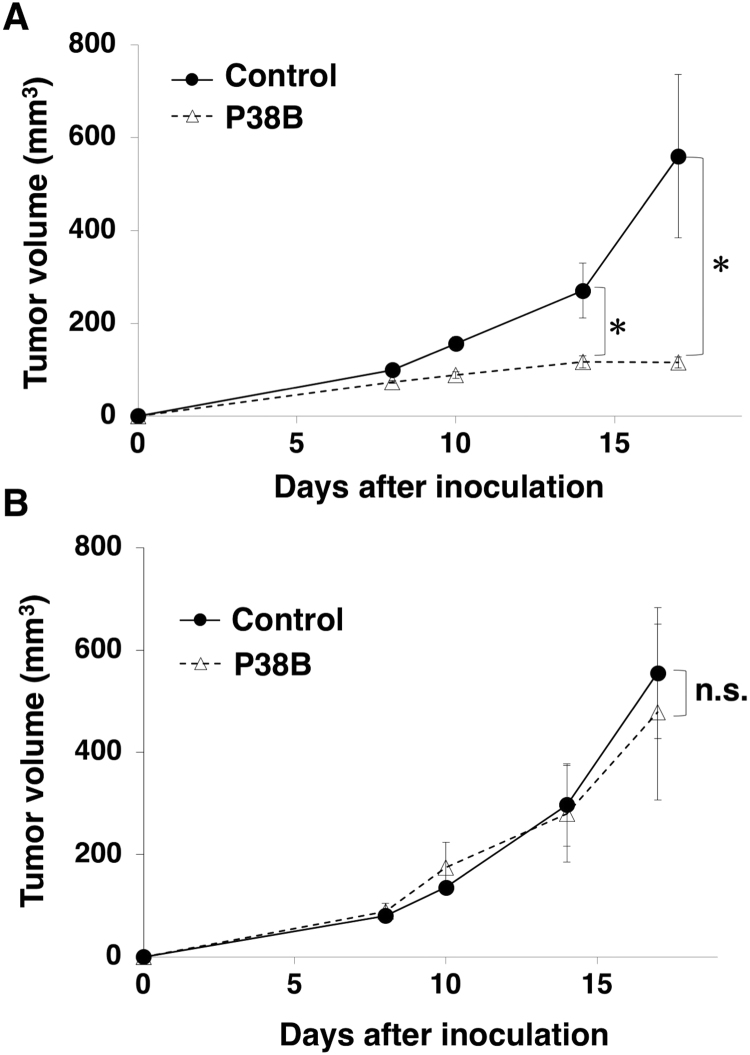
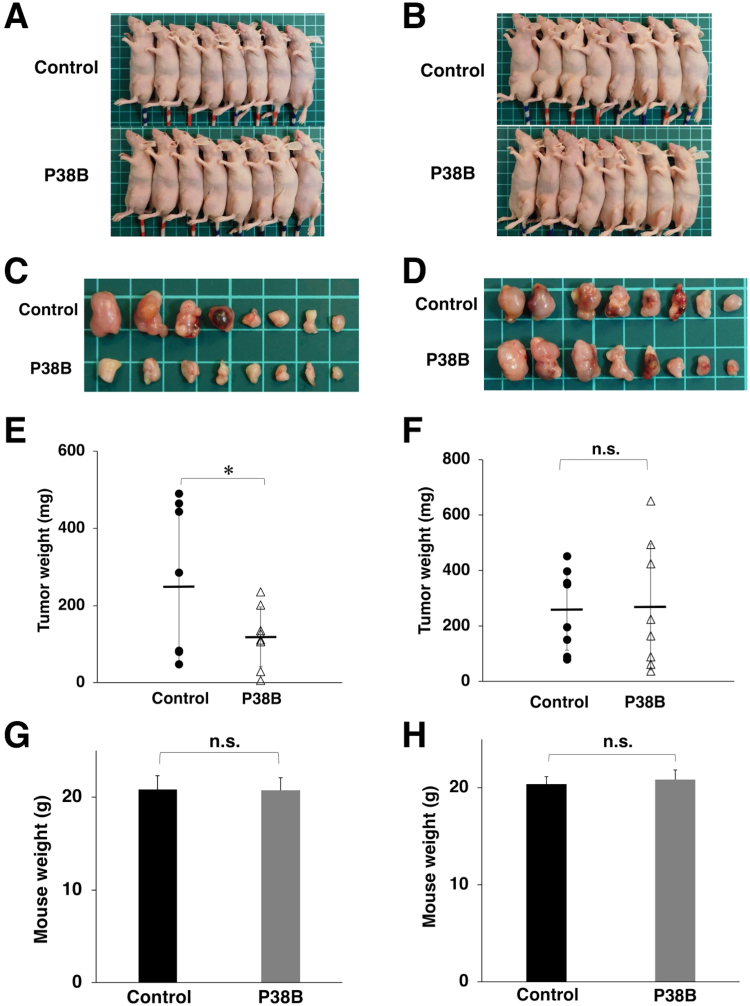
Podoplanin (PDPN) is a type I transmembrane heavily glycosylated sialoglycoprotein that is expressed in normal tissues such as pulmonary type I alveolar cells, renal podocytes, and lymphatic endothelial cells. PDPN overexpression in cancerous tissue is associated with hematogenous metastasis through interactions with the C-type lectin-like receptor 2 (CLEC-2). Previously, we have reported the development of a mouse monoclonal antibody (mAb), PMab-38 (IgG, kappa) against dog PDPN (dPDPN). PMab-38 was found to strongly react with canine squamous cell carcinomas (SCCs) and melanomas; however, it showed no reaction with lymphatic endothelial cells. Recently, we have developed and produced the mouse-canine mAb of subclass B, P38B that showed antibody-dependent cellular cytotoxicity (ADCC) and complement-dependent cytotoxicity against Chinese hamster ovary (CHO)/dPDPN cells. In the present study, we investigated the antitumor activity using mouse xenograft model. To induce ADCC activity by P38B, canine mononuclear cells were injected surrounding the tumors in a xenograft model. It was demonstrated that P38B exerted antitumor activity against the mouse xenograft model using CHO/dPDPN. These results suggest that P38B is useful for antibody therapy against dPDPN-expressing canine SCCs and melanomas.
血小板内皮细胞黏附分子(PDPN)是一种I型跨膜高度糖基化的唾液糖蛋白,在正常组织如肺I型肺泡细胞、肾足细胞和淋巴管内皮细胞中表达。癌组织中PDPN的过表达通过与C型凝集素样受体2(CLEC-2)相互作用与血行转移相关。此前,我们报道了一种针对犬PDPN(dPDPN)的小鼠单克隆抗体(mAb)PMab-38(IgG,κ)的研制。发现PMab-38与犬鳞状细胞癌(SCC)和黑色素瘤强烈反应;然而,它与淋巴管内皮细胞无反应。最近,我们研制并生产了B亚类的小鼠-犬单克隆抗体P38B,其对中国仓鼠卵巢(CHO)/dPDPN细胞表现出抗体依赖性细胞毒性(ADCC)和补体依赖性细胞毒性。在本研究中,我们使用小鼠异种移植模型研究了其抗肿瘤活性。为了通过P38B诱导ADCC活性,在异种移植模型中于肿瘤周围注射犬单核细胞。结果表明,P38B对使用CHO/dPDPN的小鼠异种移植模型具有抗肿瘤活性。这些结果表明,P38B可用于针对表达dPDPN的犬SCC和黑色素瘤的抗体治疗。