Universidade Federal de São Carlos (UFSCar), Departamento de Genética e Evolução, São Carlos, Brazil.
Universidade de Campinas (UNICAMP), Departamento de Genética, Evolução e Bioagentes, Campinas, Brazil.
PLoS One. 2018 Dec 6;13(12):e0208316. doi: 10.1371/journal.pone.0208316. eCollection 2018.
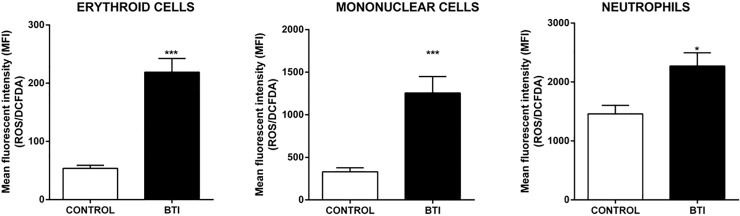
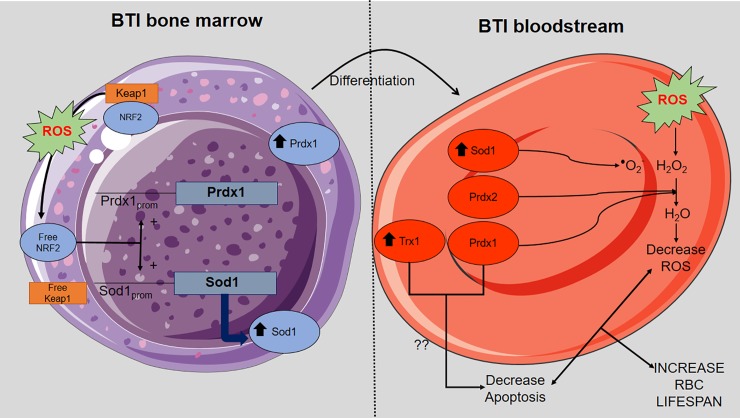
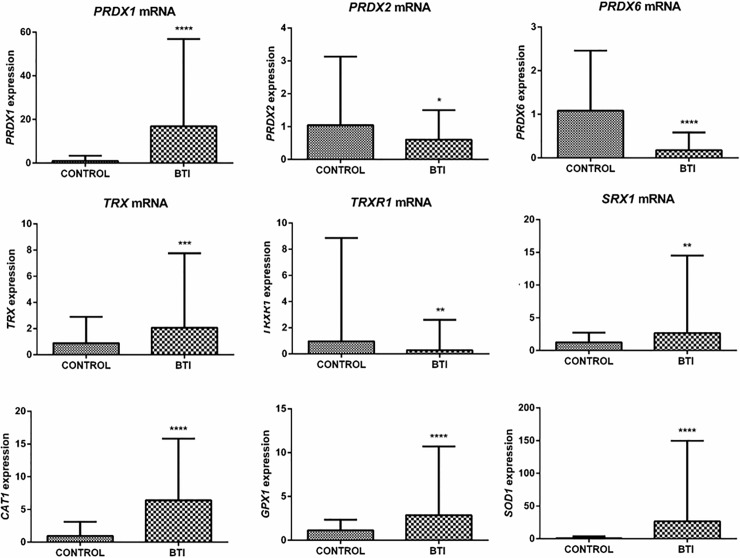
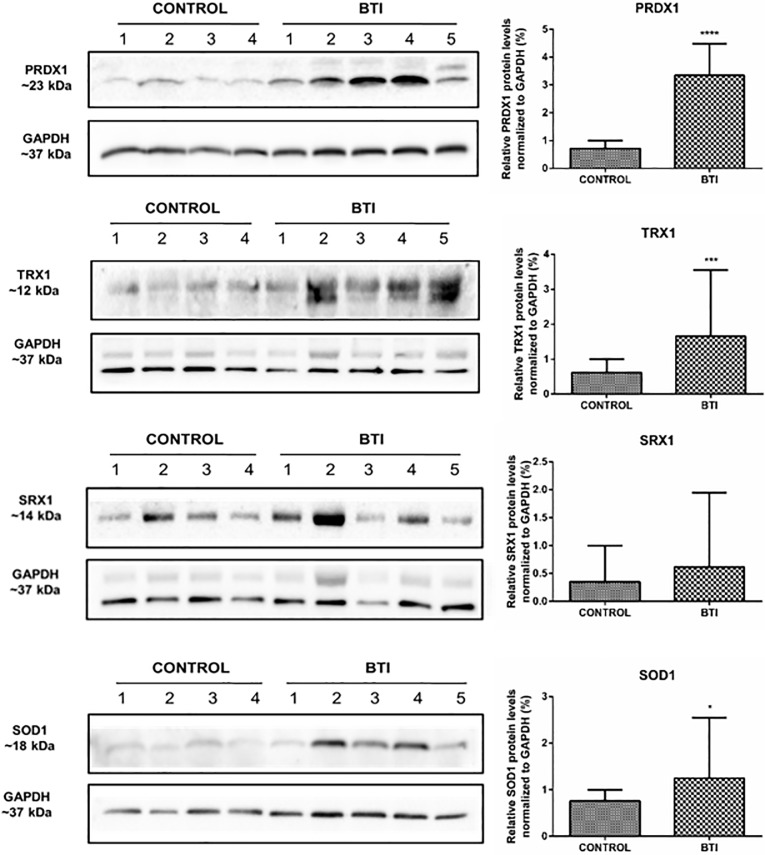
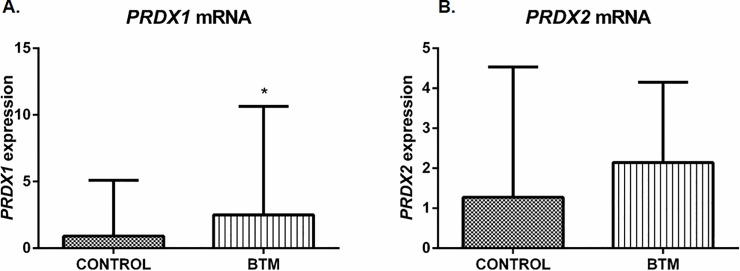
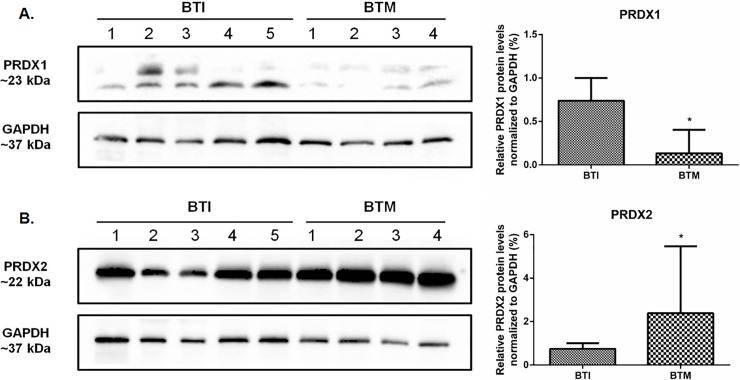
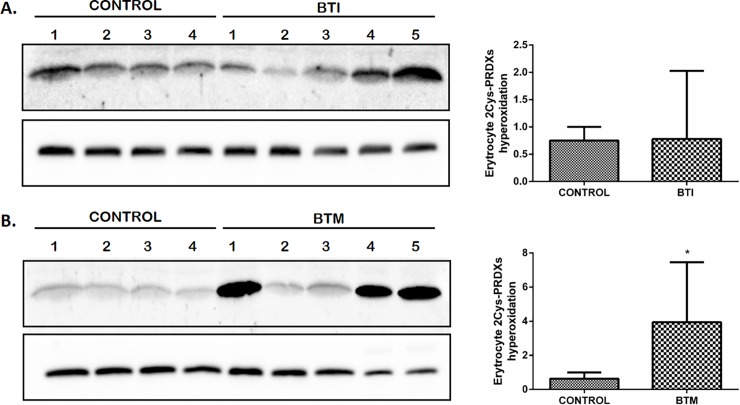
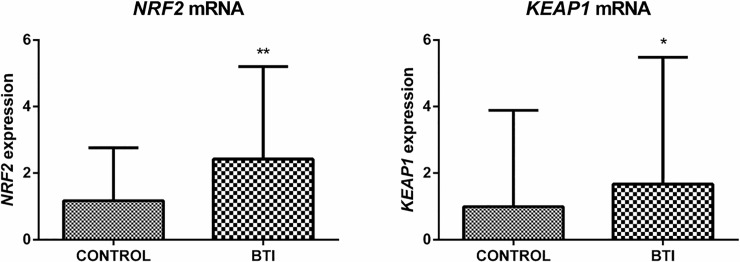
β-thalassemia is a worldwide distributed monogenic red cell disorder, characterized by an absent or reduced beta globin chain synthesis. The unbalance of alpha-gamma chain and the presence of pathological free iron promote severe oxidative damage, playing crucial a role in erythrocyte hemolysis, exacerbating ineffective erythropoiesis and decreasing the lifespan of red blood cells (RBC). Catalase, glutathione peroxidase and peroxiredoxins act together to protect RBCs from hydrogen peroxide insult. Among them, peroxiredoxins stand out for their overall abundance and reactivity. In RBCs, Prdx2 is the third most abundant protein, although Prdxs 1 and 6 isoforms are also found in lower amounts. Despite the importance of these enzymes, Prdx1 and Prdx2 may have their peroxidase activity inactivated by hyperoxidation at high hydroperoxide concentrations, which also promotes the molecular chaperone activity of these proteins. Some studies have demonstrated the importance of Prdx1 and Prdx2 for the development and maintenance of erythrocytes in hemolytic anemia. Now, we performed a global analysis comparatively evaluating the expression profile of several antioxidant enzymes and their physiological reducing agents in patients with beta thalassemia intermedia (BTI) and healthy individuals. Furthermore, increased levels of ROS were observed not only in RBC, but also in neutrophils and mononuclear cells of BTI patients. The level of transcripts and the protein content of Prx1 were increased in reticulocyte and RBCs of BTI patients and the protein content was also found to be higher when compared to beta thalassemia major (BTM), suggesting that this peroxidase could cooperate with Prx2 in the removal of H2O2. Furthermore, Prdx2 production is highly increased in RBCs of BTM patients that present high amounts of hyperoxidized species. A significant increase in the content of Trx1, Srx1 and Sod1 in RBCs of BTI patients suggested protective roles for these enzymes in BTI patients. Finally, the upregulation of Nrf2 and Keap1 transcription factors found in BTI patients may be involved in the regulation of the antioxidant enzymes analyzed in this work.
β-地中海贫血是一种分布广泛的单基因红细胞疾病,其特征是β珠蛋白链合成缺失或减少。α-γ链的不平衡和病理性游离铁的存在促进了严重的氧化损伤,在红细胞溶血中起着至关重要的作用,加剧无效红细胞生成,并降低红细胞(RBC)的寿命。过氧化氢酶、谷胱甘肽过氧化物酶和过氧化物酶在保护 RBC 免受过氧化氢损伤方面共同发挥作用。其中,过氧化物酶在总体丰度和反应性方面表现突出。在 RBC 中,Prdx2 是第三丰富的蛋白质,尽管 Prdxs 1 和 6 同工型也以较低的量存在。尽管这些酶很重要,但 Prdx1 和 Prdx2 的过氧化物酶活性可能会在高过氧化氢浓度下被过度氧化失活,这也促进了这些蛋白质的分子伴侣活性。一些研究已经证明了 Prdx1 和 Prdx2 在溶血性贫血中红细胞的发育和维持中的重要性。现在,我们进行了一项全球分析,比较评估了中间型β地中海贫血(BTI)患者和健康个体中几种抗氧化酶及其生理还原剂的表达谱。此外,不仅在 RBC 中,而且在 BTI 患者的中性粒细胞和单核细胞中也观察到 ROS 水平升高。BTI 患者网织红细胞和 RBC 中的 Prx1 转录本水平和蛋白含量增加,与重型β地中海贫血(BTM)相比,蛋白含量也更高,表明该过氧化物酶可以与 Prx2 一起清除 H2O2。此外,在 BTM 患者 RBC 中 Prdx2 的产量高度增加,这些 RBC 中存在大量高氧化物种。BTI 患者 RBC 中 Trx1、Srx1 和 Sod1 含量的显著增加表明这些酶在 BTI 患者中具有保护作用。最后,在 BTI 患者中发现的 Nrf2 和 Keap1 转录因子的上调可能参与了对本研究中分析的抗氧化酶的调节。