Centro Interdisciplinar de Investigação Marinha e Ambiental, Matosinhos, Portugal.
Instituto de Investigação e Inovação em Saúde, Universidade do Porto, Porto, Portugal.
Front Immunol. 2018 Nov 20;9:2672. doi: 10.3389/fimmu.2018.02672. eCollection 2018.
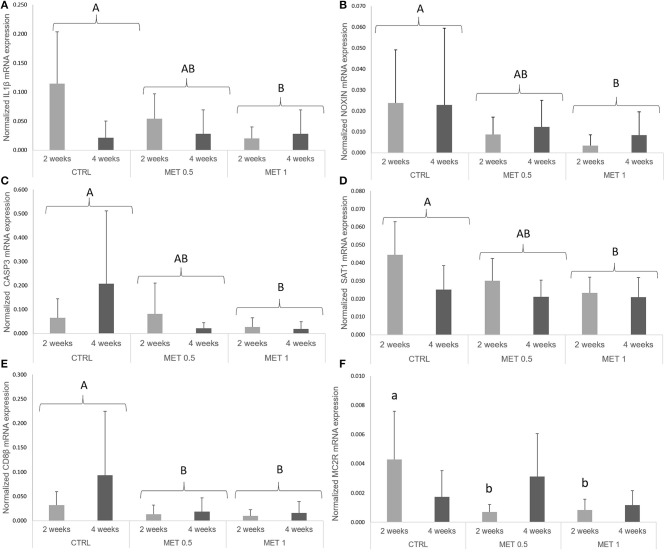
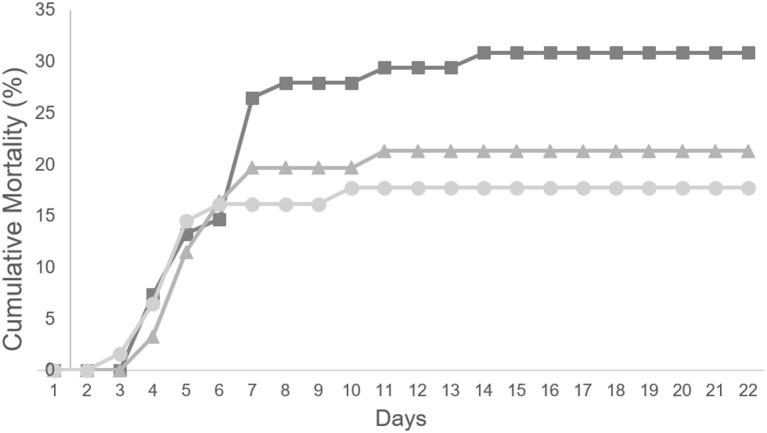
Methionine presents a pivotal role in the regulation of many cellular events with crucial impact on the immune system, such as in processes involved in the control of inflammation and polyamines synthesis. Accordingly, the present study aimed to assess the modulatory effects of dietary methionine on the European seabass () immune status, inflammatory response and disease resistance to subsp. piscicida (). For this purpose, fish were randomly distributed in three independent groups (three replicates per group) and each was fed the corresponding diet: a control diet (CTRL) formulated to meet the established amino acid requirements for the species; a diet supplemented with methionine at 0.5% of feed weight relative to the CTRL diet (8.2% of methionine concentration above CTRL); and one supplemented with methionine at 1% of feed weight to the CTRL diet (11.8% of methionine concentration above CTRL). To evaluate the immune status of fish fed with each of the diets before being submitted to bacterial infection fish were sampled from each group at 2 and 4 weeks after the beginning of feeding. Non-sampled fish were injected intraperitoneally with (5 × 10 cfu/fish) at 4 weeks after initiation of feeding and the inflammatory response (at 4, 24, and 48 h post-infection) and survival (lasting 21 days post-infection) evaluated. Fish hematological profile, peripheral cell dynamics, plasma humoral immune parameters, leucocyte migration to the inflammatory focus and head-kidney gene expression were evaluated. Results show that methionine dietary supplementation improves seabass cellular immune status without evidence of activation of pro-inflammatory mechanisms. Additionally, the observed enhanced immune status provided by methionine supplementation translated into an improved immune response to infection, as higher cellular differentiation/proliferation and recruitment to the inflammatory focus, improved plasma humoral immune parameters and modulation of key immune-related genes was observed. Lastly, after a bacterial challenge, higher survival was observed in fish fed supplemented diets, ultimately corroborating the positive effect of methionine administration for 4 weeks in the cellular immune status.
蛋氨酸在调节许多细胞事件中起着关键作用,对免疫系统有重要影响,如参与控制炎症和多胺合成的过程。因此,本研究旨在评估膳食蛋氨酸对欧洲鲈鱼()免疫状态、炎症反应和对副溶血弧菌()疾病抵抗力的调节作用。为此,将鱼随机分配到三个独立的组(每组三个重复),并分别投喂相应的饲料:对照饲料(CTRL),按照该物种规定的氨基酸需求配制;添加 0.5%饲料重量蛋氨酸的饲料(相对于 CTRL 饲料,蛋氨酸浓度增加 8.2%);添加 1%饲料重量蛋氨酸的饲料(相对于 CTRL 饲料,蛋氨酸浓度增加 11.8%)。为了评估在细菌感染前投喂每种饲料的鱼的免疫状态,在开始投喂后 2 和 4 周从每组中采集鱼样。未取样的鱼在投喂开始后 4 周时经腹腔注射 (5×10 cfu/fish),并评估炎症反应(感染后 4、24 和 48 小时)和存活率(感染后 21 天)。评估鱼的血液学特征、外周细胞动态、血浆体液免疫参数、白细胞向炎症焦点的迁移和头肾基因表达。结果表明,蛋氨酸的膳食补充改善了鲈鱼的细胞免疫状态,而没有炎症机制激活的证据。此外,蛋氨酸补充所观察到的增强的免疫状态转化为对感染的更好的免疫反应,因为观察到更高的细胞分化/增殖和向炎症焦点的募集、改善的血浆体液免疫参数和关键免疫相关基因的调节。最后,在细菌挑战后,投喂补充饲料的鱼的存活率更高,最终证实了在细胞免疫状态下连续 4 周补充蛋氨酸的积极作用。