Azeredo Rita, Machado Marina, Afonso António, Fierro-Castro Camino, Reyes-López Felipe E, Tort Lluis, Gesto Manuel, Conde-Sieira Marta, Míguez Jesús M, Soengas José L, Kreuz Eva, Wuertz Sven, Peres Helena, Oliva-Teles Aires, Costas Benjamin
Centro Interdisciplinar de Investigação Marinha e Ambiental (CIIMAR), Novo Edifício do Terminal de Cruzeiros do Porto de Leixões, Matosinhos, Portugal.
Departamento de Biologia, Faculdade de Ciências da Universidade do Porto (FCUP), Porto, Portugal.
Front Immunol. 2017 Sep 27;8:1226. doi: 10.3389/fimmu.2017.01226. eCollection 2017.
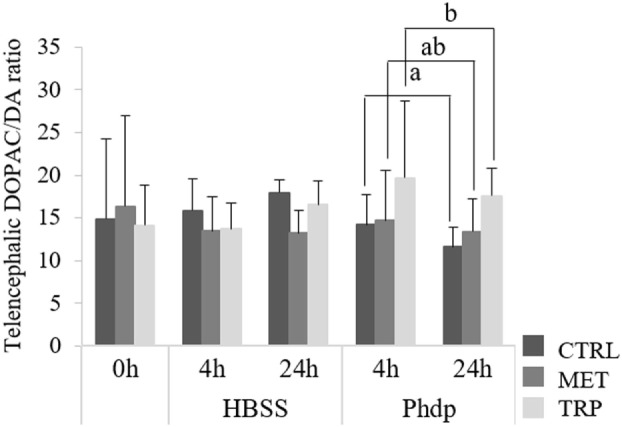
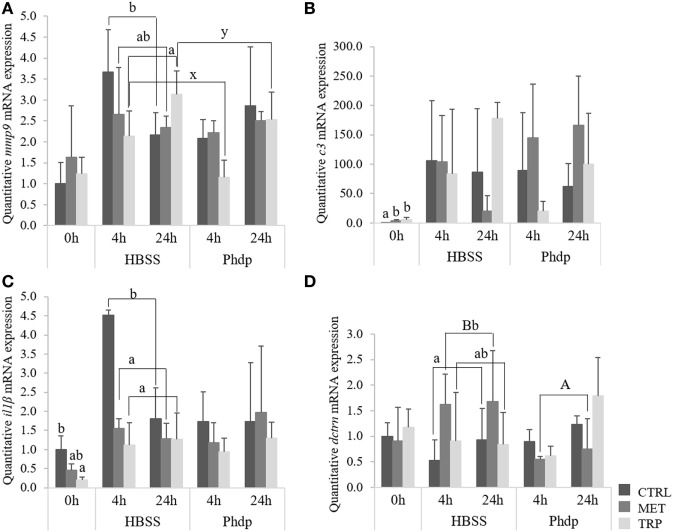
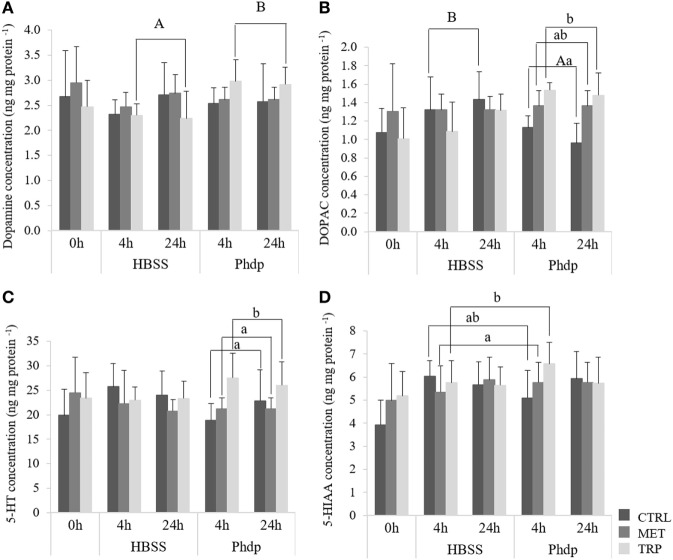
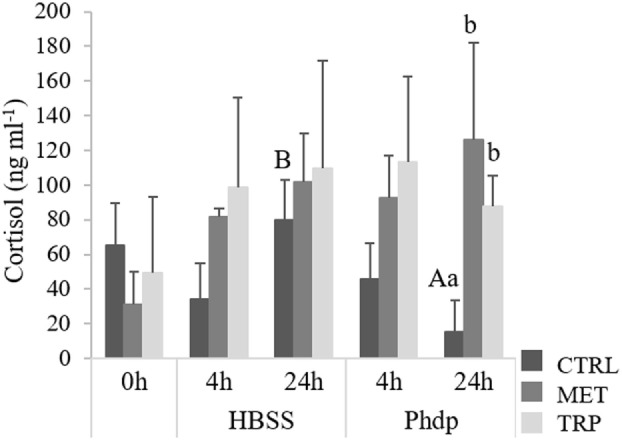
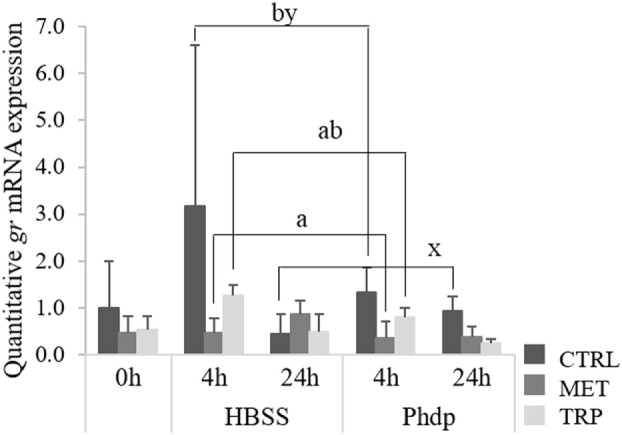
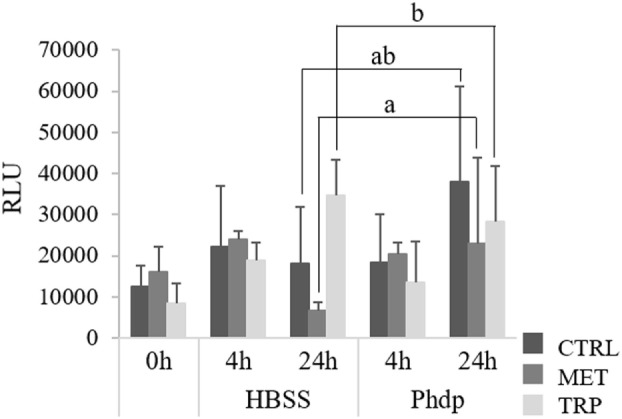
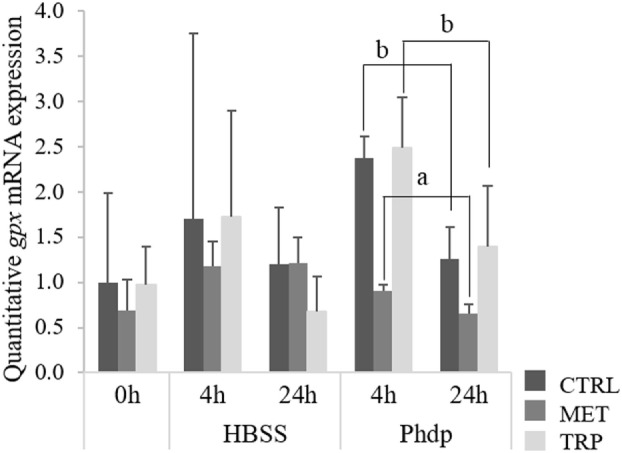
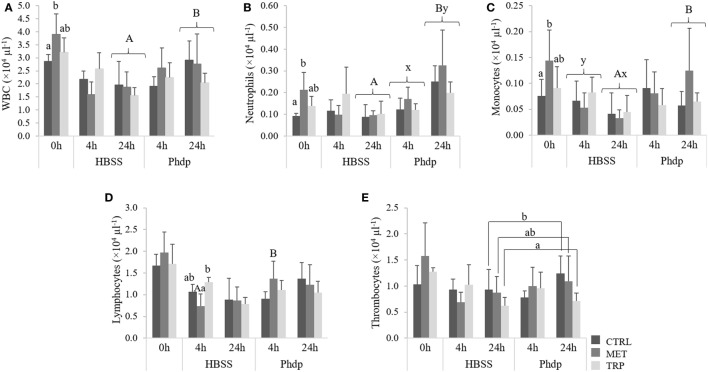
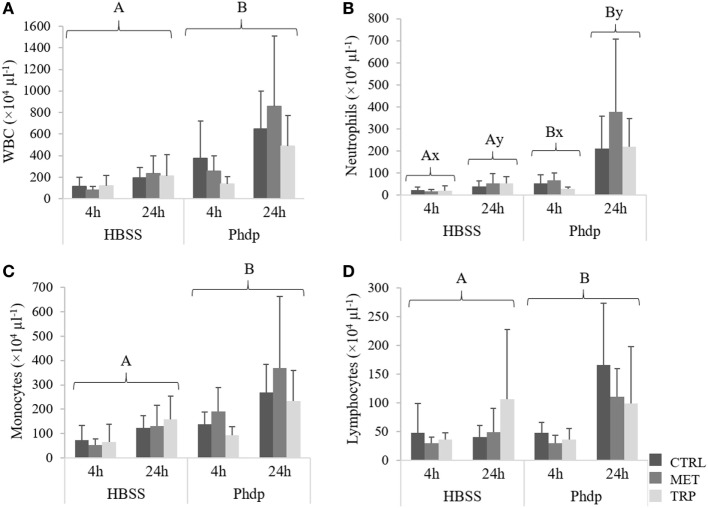
Methionine and tryptophan appear to be fundamental in specific cellular pathways involved in the immune response mechanisms, including stimulation of T-regulatory cells by tryptophan metabolites or pro-inflammatory effects upon methionine supplementation. Thus, the aim of this study was to evaluate the immunomodulatory effect of these amino acids on the inflammatory and neuroendocrine responses in juveniles of European seabass, . To achieve this, goal fish were fed for 14 days methionine and tryptophan-supplemented diets (MET and TRP, respectively, 2× dietary requirement level) or a control diet meeting the amino acids requirement levels (CTRL). Fish were sampled for immune status assessment and the remaining fish were challenged with intraperitoneally injected inactivated subsp. and sampled either 4 or 24 h post-injection. Respiratory burst activity, brain monoamines, plasma cortisol, and immune-related gene expression showed distinct and sometimes opposite patterns regarding the effects of dietary amino acids. While neuroendocrine intermediates were not affected by any dietary treatment at the end of the feeding trial, both supplemented diets led to increased levels of plasma cortisol after the inflammatory insult, while brain monoamine content was higher in TRP-fed fish. Peripheral blood respiratory burst was higher in TRP-fed fish injected with the bacteria inoculum but only compared to those fed MET. However, no changes were detected in total antioxidant capacity. Complement factor 3 was upregulated in MET-fed fish but methionine seemed to poorly affect other genes expression patterns. In contrast, fish fed MET showed increased immune cells numbers both before and after immune challenge, suggesting a strong enhancing effect of methionine on immune cells proliferation. Differently, tryptophan effects on inflammatory transcripts suggested an inhibitory mode of action. This, together with a high production of brain monoamine and cortisol levels, suggests that tryptophan might mediate regulatory mechanisms of neuroendocrine and immune systems cooperation. Overall, more studies are needed to ascertain the role of methionine and tryptophan in modulating (stimulate or regulate) fish immune and neuroendocrine responses.
蛋氨酸和色氨酸在参与免疫反应机制的特定细胞途径中似乎至关重要,包括色氨酸代谢物对调节性T细胞的刺激作用,或补充蛋氨酸后的促炎作用。因此,本研究的目的是评估这些氨基酸对欧洲鲈鱼幼鱼炎症和神经内分泌反应的免疫调节作用。为实现这一目标,将目标鱼投喂14天补充蛋氨酸和色氨酸的饲料(分别为MET和TRP,2倍于日粮需求水平)或满足氨基酸需求水平的对照饲料(CTRL)。采集鱼样本用于免疫状态评估,其余鱼通过腹腔注射灭活的亚种进行攻毒,并在注射后4或24小时采样。呼吸爆发活性、脑单胺、血浆皮质醇和免疫相关基因表达在日粮氨基酸的影响方面呈现出不同且有时相反的模式。虽然在饲养试验结束时神经内分泌中间产物不受任何日粮处理的影响,但两种补充饲料在炎症刺激后均导致血浆皮质醇水平升高,而TRP喂养的鱼脑单胺含量更高。注射细菌接种物的TRP喂养的鱼外周血呼吸爆发更高,但仅与MET喂养的鱼相比。然而,总抗氧化能力未检测到变化。补体因子3在MET喂养的鱼中上调,但蛋氨酸似乎对其他基因表达模式影响较小。相比之下,MET喂养的鱼在免疫挑战前后免疫细胞数量均增加,表明蛋氨酸对免疫细胞增殖有强烈的增强作用。不同的是,色氨酸对炎症转录本的影响表明其作用模式为抑制性。这与脑单胺的高产量和皮质醇水平一起表明,色氨酸可能介导神经内分泌和免疫系统合作的调节机制。总体而言,需要更多研究来确定蛋氨酸和色氨酸在调节(刺激或调节)鱼类免疫和神经内分泌反应中的作用。