Department of Zoology, Lahore College for Women University, Lahore, Punjab, Pakistan.
Department of Biological Sciences, Purdue University Fort Wayne, Fort Wayne, Indiana, United States of America.
PLoS One. 2024 Apr 16;19(4):e0301205. doi: 10.1371/journal.pone.0301205. eCollection 2024.
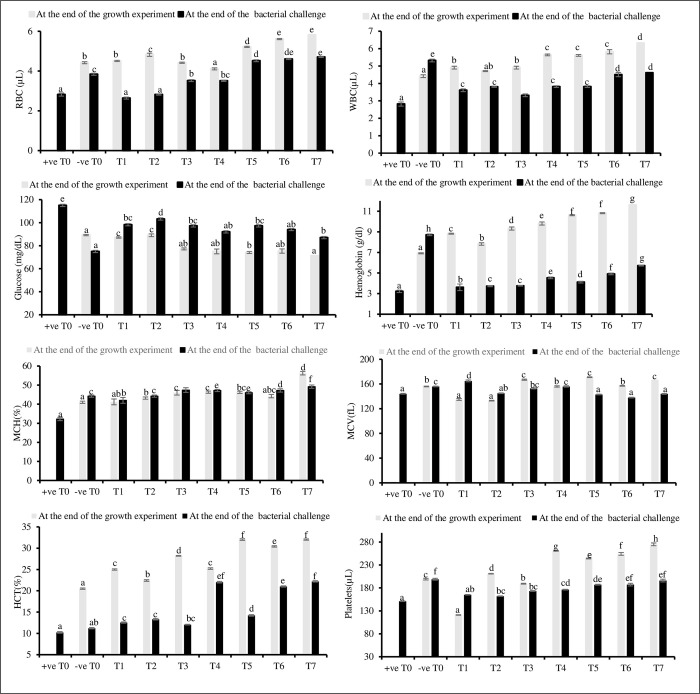
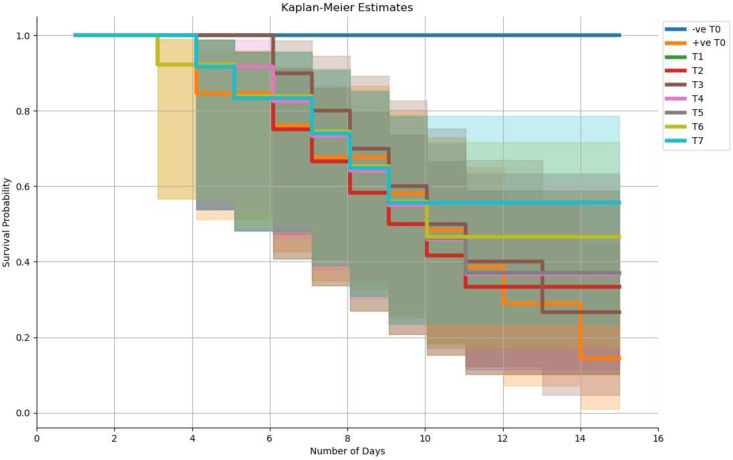
The present study investigated the potential role of different essential amino acids (AA) in striped catfish (Pangasius hypophthalmus). Fish (initial weight = 17.91±0.27 g, n = 260) were fed with eight isonitrogenous (30%), and isolipidic diets (6%) formulated to include different combinations of tryptophan (Trp), methionine (Met), and lysine (Lys) (T0: Zero AA, T1: Trp, T2: Lys, T3: Met, T4: Trp+Met, T5: Lys+Trp, T6: Met+Lys, T7: Lys+Trp+Met) for eight weeks. The dose of amino acid supplementation, whether individually or in combination, was 5g of each amino acid per kg of diet. The trial comprised eight treatments, with each treatment consisted of three replicates (n = 10/replicate). At the end of the growth experiment, the highest total body weight, crude protein, digestive enzymatic activity, immune response, and amino acids level were observed in treatments supplemented with amino acids compared to T0. After the growth experiment, fish in all treatments were exposed to Staphylococcus aureus (5×10⁵ CFU/ml). For bacterial challenge trial, the T0 treatment was designated as positive (+ve T0) and negative control (-ve T0). Following the S. aureus challenge, fish fed with amino acids showed a better response to reactive oxygen species and lipid peroxidation, as indicated by the increased levels of catalase and superoxide dismutase. Conversely, the concentration of malondialdehyde gradually decreased in all treatments compared to the +ve T0 treatment. It is concluded that supplementation of amino acids improved the growth, protein content, and immunocompetency against S. aureus in striped catfish. The most favorable outcomes in striped catfish were shown by fish supplemented with T7 diet. These essential amino acids hold potential as efficient supplements for use in the intensive aquaculture for striped catfish.
本研究探讨了不同必需氨基酸(AA)在条纹鱠(Pangasius hypophthalmus)中的潜在作用。试验选用初始体重为 17.91±0.27g 的条纹鱠 260 尾,投喂 8 种等氮(30%)等脂(6%)的饲料,这些饲料的设计包含了不同组合的色氨酸(Trp)、蛋氨酸(Met)和赖氨酸(Lys)(T0:零 AA,T1:Trp,T2:Lys,T3:Met,T4:Trp+Met,T5:Lys+Trp,T6:Met+Lys,T7:Lys+Trp+Met),为期 8 周。氨基酸的添加剂量,无论是单独添加还是组合添加,均为 5g 每种氨基酸/公斤饲料。试验包括 8 种处理,每种处理设 3 个重复(n = 10/重复)。生长试验结束时,与 T0 相比,添加氨基酸的处理组鱼体的总重、粗蛋白、消化酶活性、免疫反应和氨基酸水平最高。生长试验结束后,所有处理组的鱼均暴露于金黄色葡萄球菌(5×10⁵ CFU/ml)。在细菌攻毒试验中,T0 处理被指定为阳性(+ve T0)和阴性对照(-ve T0)。金黄色葡萄球菌攻毒后,与+ve T0 相比,投喂氨基酸的鱼对活性氧和脂质过氧化的反应更好,这表现为过氧化氢酶和超氧化物歧化酶的水平增加。相反,与+ve T0 处理相比,所有处理组的丙二醛浓度逐渐降低。综上所述,氨基酸的添加提高了条纹鱠的生长、蛋白质含量和对金黄色葡萄球菌的免疫能力。在条纹鱠中,T7 饮食组表现出最有利的结果。这些必需氨基酸有望成为条纹鱠集约化养殖的有效补充。