Shojaei Moslem, Tahmoorespur Mojtaba, Soltani Mahdi, Sekhavati Mohammad Hadi
Department of Animal Science, Faculty of Agriculture, Ferdowsi University of Mashhad, Mashhad, Iran.
Department of Biotechnology, Institute of Science and High Technology and Environmental Sciences, Graduate University of Advanced Technology, Kerman, Iran.
Iran J Basic Med Sci. 2018 Sep;21(9):957-964. doi: 10.22038/IJBMS.2018.27540.6722.
Vaccination is one of the most effective means to protect humans and animals against brucellosis. Live attenuated Brucella vaccines are considered effective in animals but they may be potentially infectious to humans, so it is vital to improve the immunoprotective effects and safety of vaccines against Brucella. This study was designed to evaluate the immunogenicity of DNA vaccines encoding outer membrane proteins (Omp25 and Omp31) against Rev1 in a mouse model.
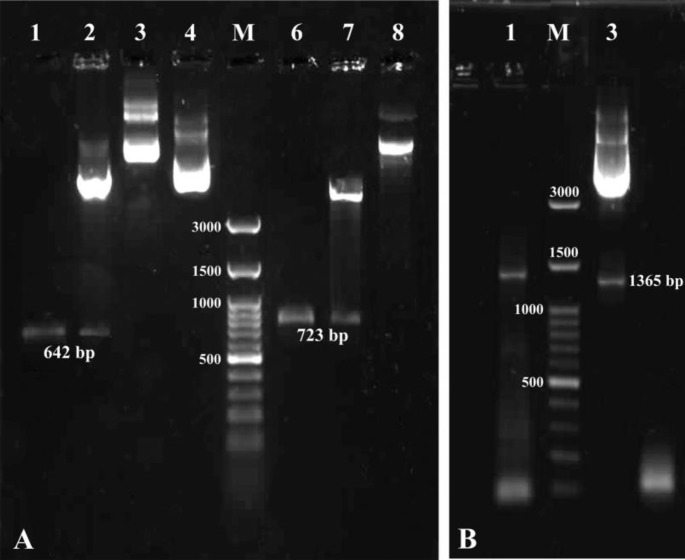
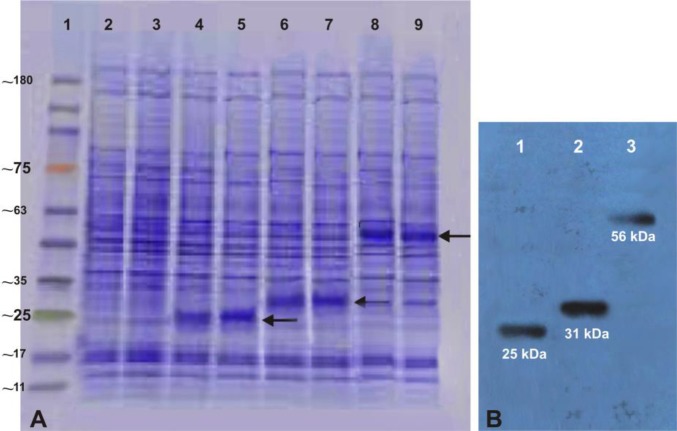
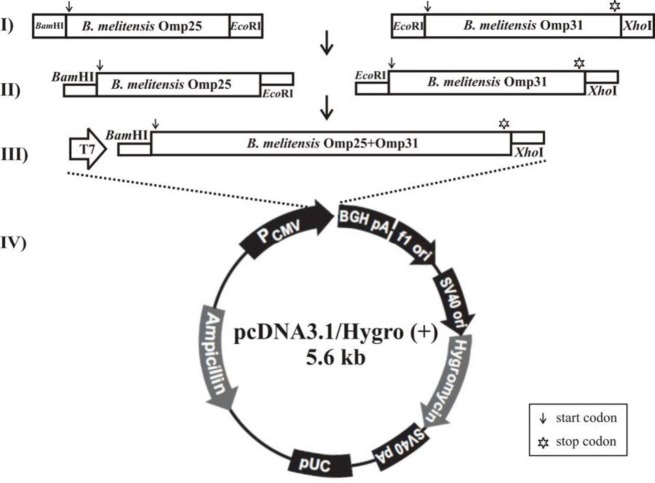
For this propose, Omp25 and Omp31 genes were cloned (individually and together) into the eukaryotic expression vector pcDNA3.1/Hygro (+). Expressions of recombinant plasmids were confirmed by SDS-PAGE and Western blot analysis. Six groups of BALB/c mice (seven mice per group) were intramuscularly injected with three recombinant constructs, native pcDNA3.1/Hygro (+) and phosphate-buffered saline (PBS) as controls and subcutaneous injection of attenuated live vaccine Rev1.
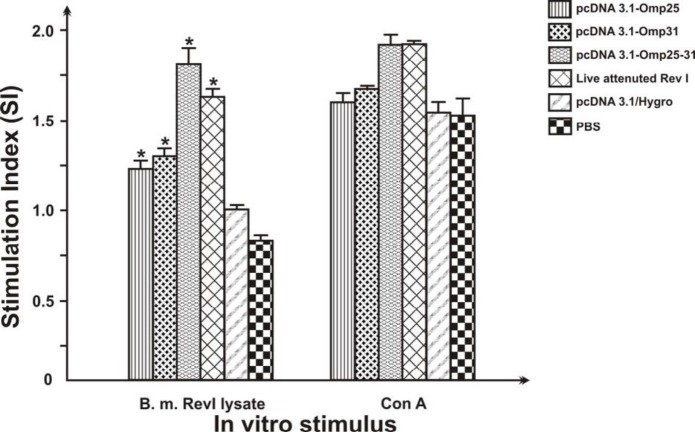
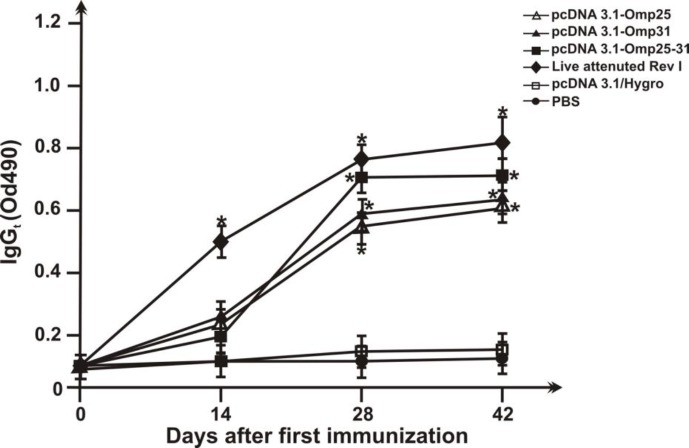
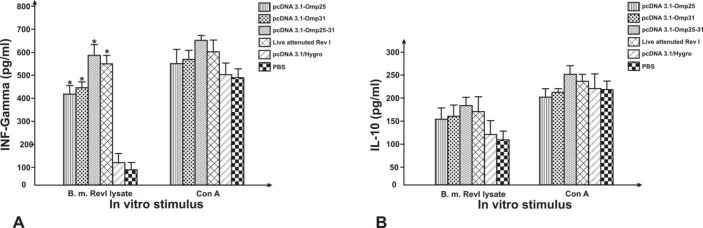
Results indicated that DNA vaccine immunized BALB/c mice had a dominant immunoglobulin G response and elicited a T-cell-proliferative response and induced significant levels of interferon gamma (INF-γ) compared to the control groups.
Collectively, these finding suggested that the pcDNA3.1/Hygro DNA vaccines encoding Omp25 and Omp31 genes and divalent plasmid were able to induce both humoral and cellular immunity, and had the potential to be a vaccine candidate for prevention of infections.
接种疫苗是保护人类和动物免受布鲁氏菌病侵害的最有效手段之一。减毒活布鲁氏菌疫苗在动物中被认为是有效的,但它们可能对人类具有潜在传染性,因此提高抗布鲁氏菌疫苗的免疫保护效果和安全性至关重要。本研究旨在评估编码外膜蛋白(Omp25和Omp31)的DNA疫苗针对Rev1在小鼠模型中的免疫原性。
为此,将Omp25和Omp31基因(单独和一起)克隆到真核表达载体pcDNA3.1/Hygro(+)中。通过SDS-PAGE和蛋白质免疫印迹分析确认重组质粒的表达。六组BALB/c小鼠(每组七只小鼠)肌肉注射三种重组构建体、天然pcDNA3.1/Hygro(+)和作为对照的磷酸盐缓冲盐水(PBS),并皮下注射减毒活疫苗Rev1。
结果表明,与对照组相比,DNA疫苗免疫的BALB/c小鼠具有占主导地位的免疫球蛋白G反应,引发T细胞增殖反应,并诱导显著水平的干扰素γ(INF-γ)。
总体而言,这些发现表明,编码Omp25和Omp31基因的pcDNA3.1/Hygro DNA疫苗和二价质粒能够诱导体液免疫和细胞免疫,并且有潜力成为预防感染的候选疫苗。