Foster Byron A, Winkler Paula, Weinstein Kelsey, Parra-Medina Deborah
1Departments of Pediatrics and Dermatology, Oregon Health & Science University, Portland, OR USA.
2Center for Research to Advance Community Health, University of Texas Health San Antonio, San Antonio, TX USA.
BMC Obes. 2018 Dec 3;5:39. doi: 10.1186/s40608-018-0216-2. eCollection 2018.
Patient-centered outcome measures for childhood obesity are limited. Identifying outcomes that patients and families consider important could be a viable avenue for better engagement of patients and interventions that are efficacious and acceptable to patients. Latino children experience high rates of obesity, and under-recognition of obesity in preschool aged children is common.
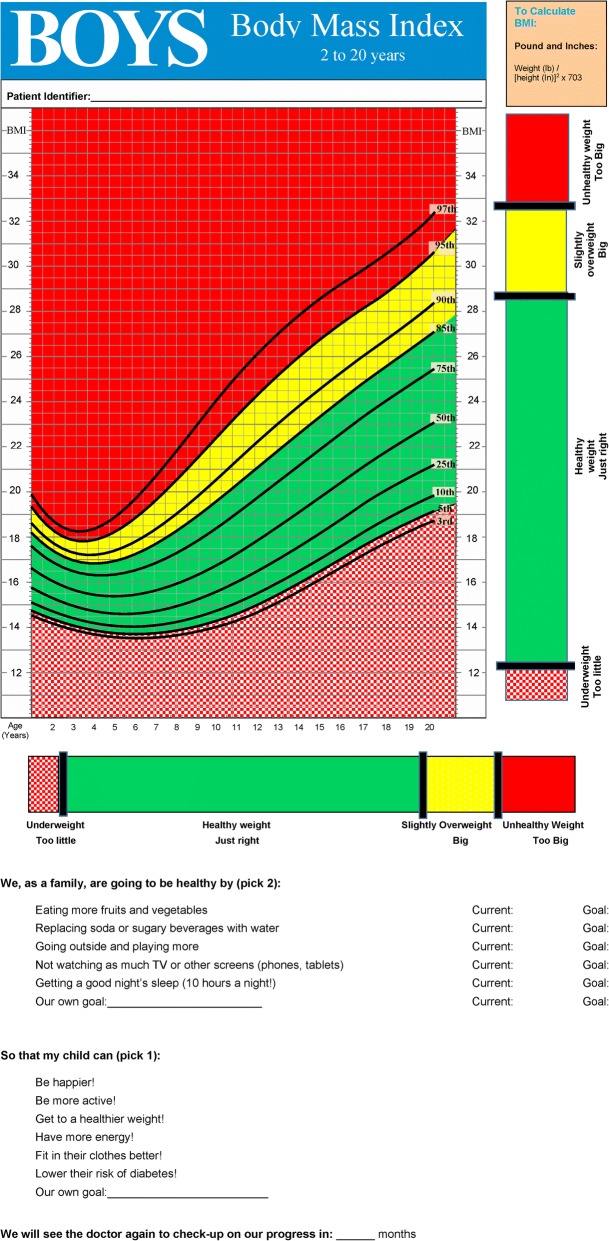
We used growth chart data to identify low-income, Latino children 2-5 years of age with obesity who decreased their adiposity (positive deviants) and a set of controls. We used qualitative interview data to identify themes around goals parents used in addressing weight. Then, we applied a modified Delphi approach across groups of caregivers and providers to identify common goals. We conducted focus groups to explore conflicts and congruency between caregivers and providers related to goals. Using the focus group data, we developed a decision tool for use between patients and providers relevant for early childhood obesity.
We identified 257 children who successfully reduced adiposity (positive deviants) from 1621 eligible growth charts. From interviews with 44 parents (21 positive deviants and 23 controls), we coded and categorized outcomes such as increased happiness, clothing size and improved activity. We recruited 81 parents, grandparents and health care providers to participate in the modified Delphi process of ranking outcomes by importance and feasibility. Focus groups (2, total = 24) suggested potential methods for a common framework to discuss goals, including a modified growth chart. We created a decision-tool that incorporated a growth chart and a section for discussion of patient-centered goals. A final focus group (1, = 10) provided feedback on the tool as acceptable and potentially useful.
The development of a patient-centered tool around achieving a healthy weight in early childhood identified common goals between providers and parents. While the tool has been developed, prospective testing of this patient-centered tool and its effects on engagement, parent motivation, and behavior change would be a useful next step.
以患者为中心的儿童肥胖症结局指标有限。确定患者及其家庭认为重要的结局,可能是更好地让患者参与进来以及开展对患者有效且可接受的干预措施的可行途径。拉丁裔儿童肥胖率较高,学龄前儿童肥胖未得到充分认识的情况很常见。
我们利用生长图表数据,确定了2至5岁肥胖且体脂减少的低收入拉丁裔儿童(正向偏差者)以及一组对照儿童。我们利用定性访谈数据,确定了家长在解决体重问题时所使用目标的相关主题。然后,我们对护理人员和提供者群体应用了改良的德尔菲法,以确定共同目标。我们开展了焦点小组讨论,以探讨护理人员和提供者在目标方面的冲突与一致性。利用焦点小组数据,我们开发了一种供患者和提供者使用的决策工具,用于解决幼儿肥胖问题。
我们从1621份符合条件的生长图表中确定了257名成功减少体脂的儿童(正向偏差者)。通过对44名家长(21名正向偏差者和23名对照者)的访谈,我们对诸如幸福感增强、衣服尺码和活动改善等结局进行了编码和分类。我们招募了81名家长、祖父母和医疗保健提供者,参与按重要性和可行性对结局进行排序的改良德尔菲法流程。焦点小组(共2个,总计24人)提出了一个通用框架讨论目标的潜在方法,包括改良的生长图表。我们创建了一个决策工具,其中纳入了生长图表以及一个用于讨论以患者为中心目标的部分。最后一个焦点小组(1个,共10人)对该工具给予了反馈,认为其可接受且可能有用。
围绕实现幼儿健康体重开发以患者为中心的工具,确定了提供者和家长之间的共同目标。虽然该工具已开发出来,但对这个以患者为中心的工具进行前瞻性测试及其对参与度、家长积极性和行为改变的影响,将是下一步有益的举措。