Zhang Yunqiang, Tu Lijun, Zhou Xiuhong, Li Bin
Department of Neurosurgery, Chenzhou No. 1 People's Hospital, Chenzhou, Hunan, China (mainland).
Electrocardiographic Room, Chenzhou No. 1 People's Hospital, Chenzhou, Hunan, China (mainland).
Med Sci Monit Basic Res. 2018 Dec 10;24:216-224. doi: 10.12659/MSMBR.912313.
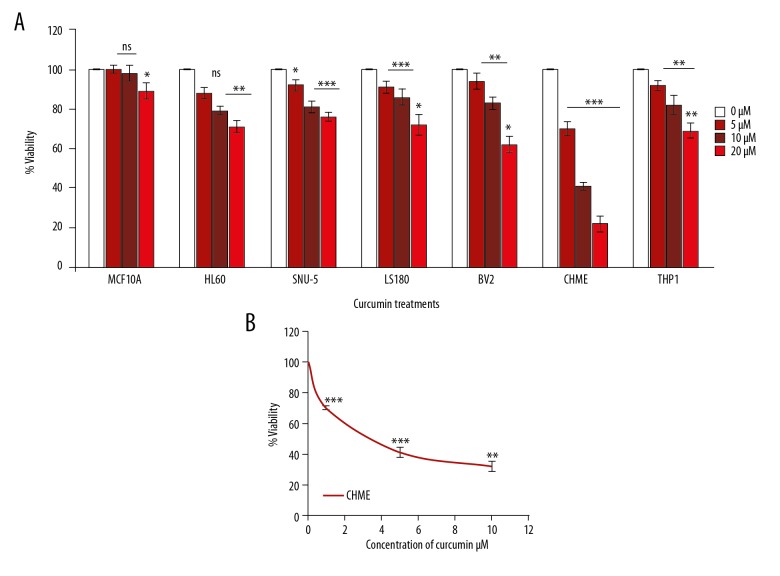
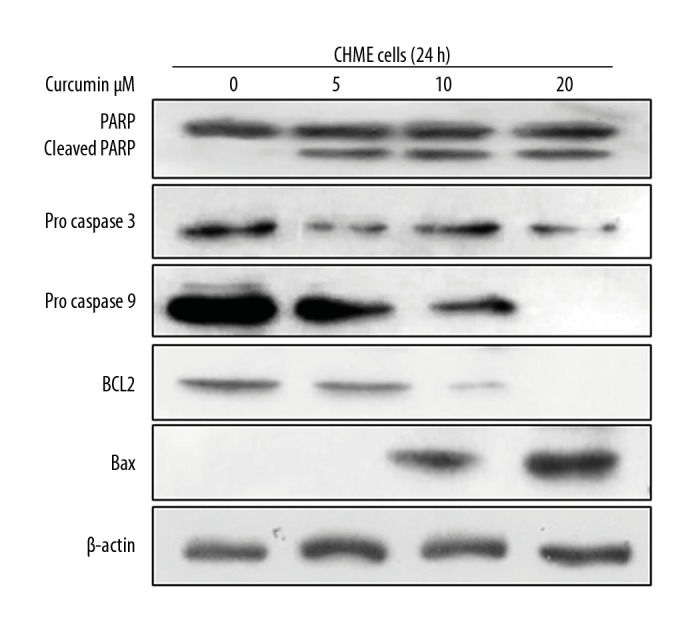
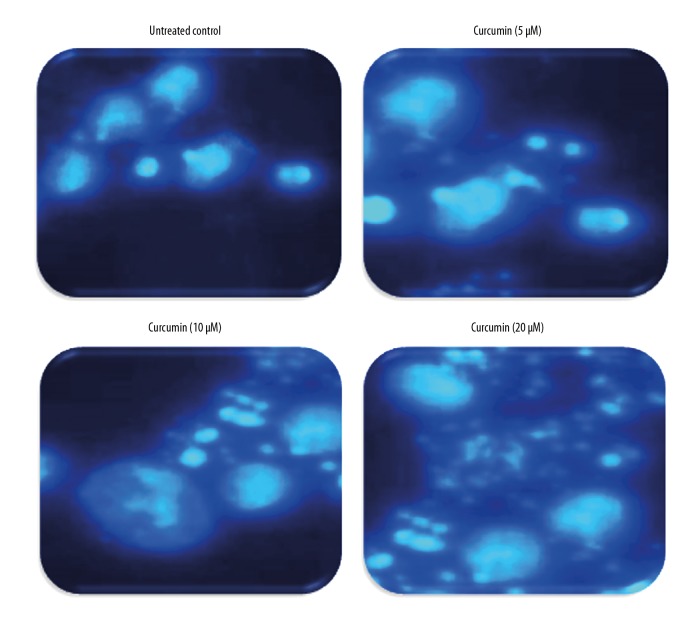
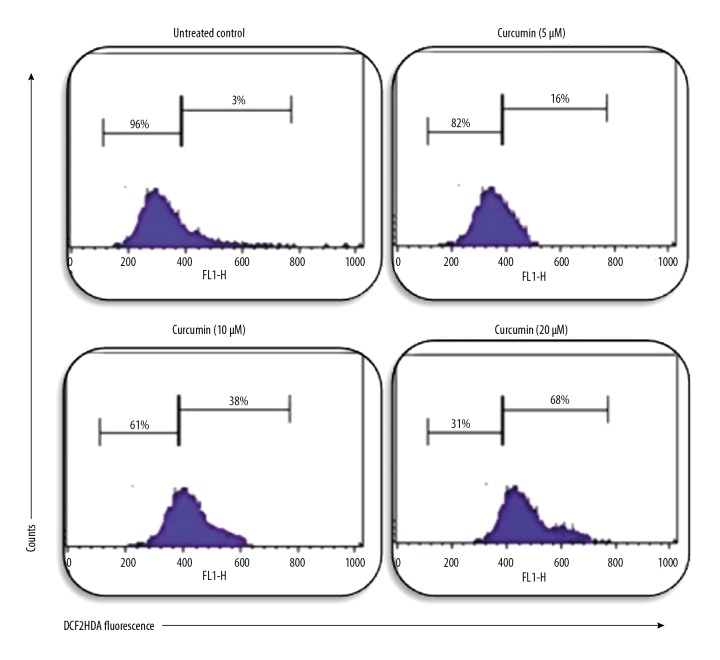
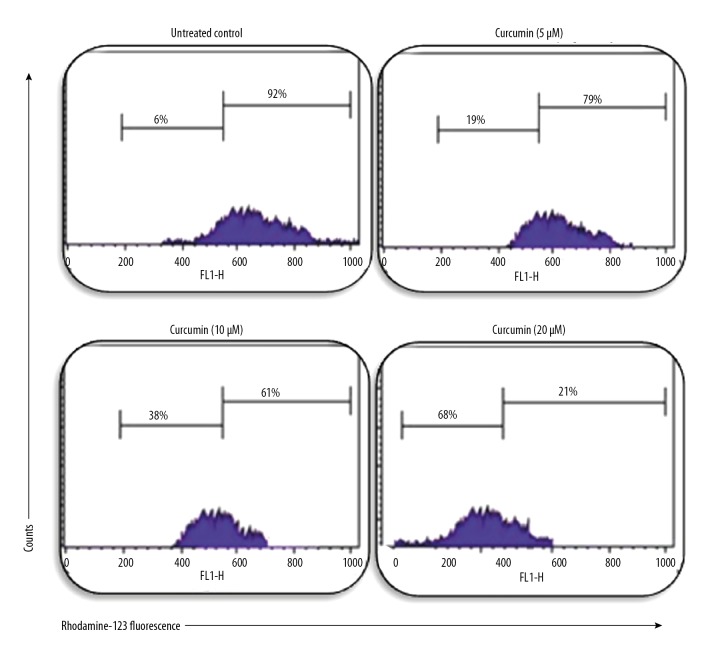
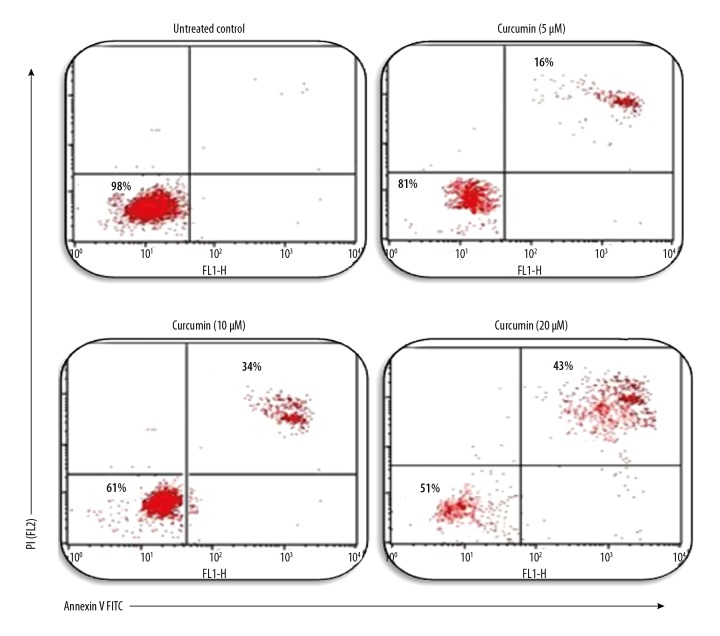
BACKGROUND Curcumin has clear anti-tumor activity in various carcinomas. It regulates various signaling pathways like Wnt/β-catenin and JAK2/STAT3, which play vital roles in cell proliferation of several carcinomas, but to the best of our knowledge, there are currently no published reports on human glioma CHME cells. Therefore, the aim of this study was to explore the effect of curcumin on human glioma CHME cells. MATERIAL AND METHODS The CHME cell line was purchased from American Type Culture Collection (ATCC). The expressions of caspases 3, caspases 9, PARP, BAX, and BCL2 were detected by Western blot. Annexin V FITC, mitochondrial membrane potential, and reactive oxygen species were detected by flow cytometry. DAPI staining was detected by fluorescence microscopy. Cell viability was assessed by 3-(4,5-Dimethylthiazol-2-yl)-2,5-Diphenyltetrazolium Bromide (MTT) assay. RESULTS We found that curcumin has cytotoxic activity in human glioma CHME cells, as shown by DAPI staining, annexin V/PI, and nuclear morphology. We found that cell growth decreased with increased concentration of curcumin, as well as sowing effects on expression of caspase-3, caspase-9, and cleavage of PARP, which suggests apoptotic cascade activity. The increase in reactive oxygen species and loss of mitochondrial membrane potential (Δψmt) in concentration-dependent manners suggests biochemical induction of apoptosis in CHME cells. CONCLUSIONS Curcumin has effective anticancer activity in human glioma CHME cells by inducing the apoptotic pathway.
姜黄素在多种癌症中具有明确的抗肿瘤活性。它可调节多种信号通路,如Wnt/β-连环蛋白和JAK2/STAT3,这些信号通路在多种癌症的细胞增殖中起着至关重要的作用,但据我们所知,目前尚无关于人胶质瘤CHME细胞的已发表报告。因此,本研究的目的是探讨姜黄素对人胶质瘤CHME细胞的影响。
CHME细胞系购自美国典型培养物保藏中心(ATCC)。通过蛋白质免疫印迹法检测半胱天冬酶3、半胱天冬酶9、聚(ADP-核糖)聚合酶(PARP)、Bax和Bcl-2的表达。通过流式细胞术检测膜联蛋白V FITC、线粒体膜电位和活性氧。通过荧光显微镜检测4',6-二脒基-2-苯基吲哚(DAPI)染色。通过3-(4,5-二甲基噻唑-2-基)-2,5-二苯基四氮唑溴盐(MTT)法评估细胞活力。
我们发现姜黄素对人胶质瘤CHME细胞具有细胞毒性活性,如DAPI染色、膜联蛋白V/碘化丙啶(PI)和核形态所示。我们发现随着姜黄素浓度的增加,细胞生长减少,同时对半胱天冬酶-3、半胱天冬酶-9的表达及PARP的裂解有影响,这表明存在凋亡级联反应活性。活性氧的增加和线粒体膜电位(Δψmt)以浓度依赖性方式丧失,提示CHME细胞凋亡的生化诱导。
姜黄素通过诱导凋亡途径在人胶质瘤CHME细胞中具有有效的抗癌活性。