Jin Zhuping, Sun Limin, Yang Guangdong, Pei Yanxi
School of Life Science, Shanxi University, Taiyuan, China.
Department of Chemistry and Biochemistry, Laurentian University, Sudbury, ON, Canada.
Front Plant Sci. 2018 Nov 23;9:1722. doi: 10.3389/fpls.2018.01722. eCollection 2018.
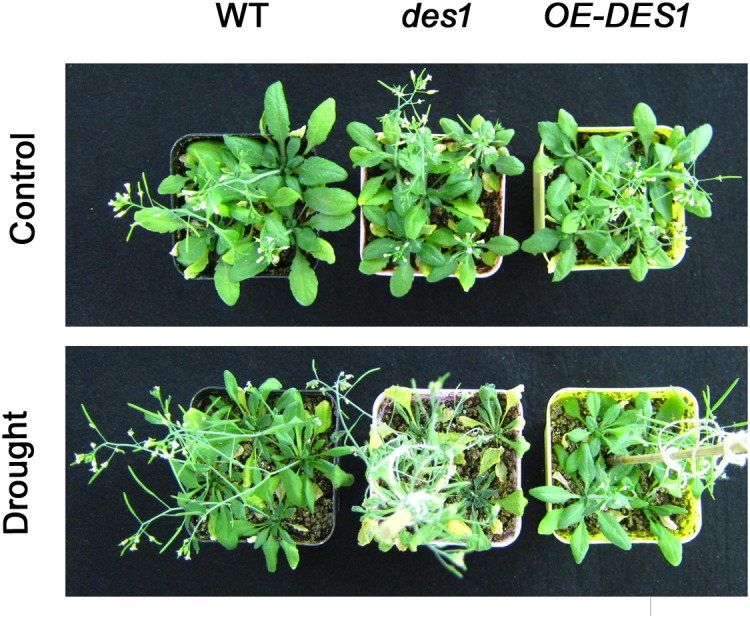
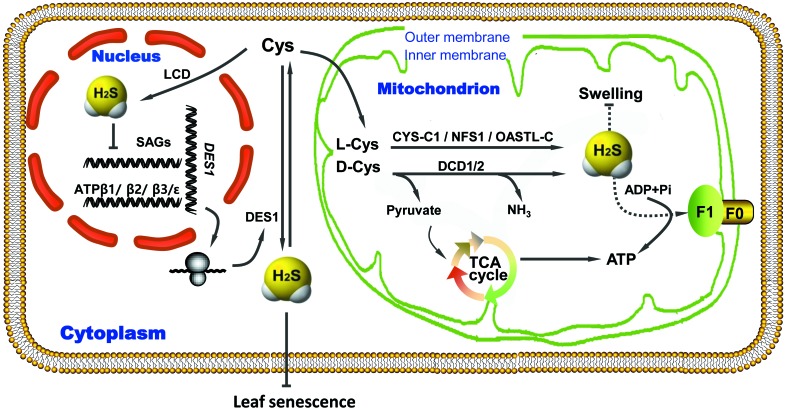
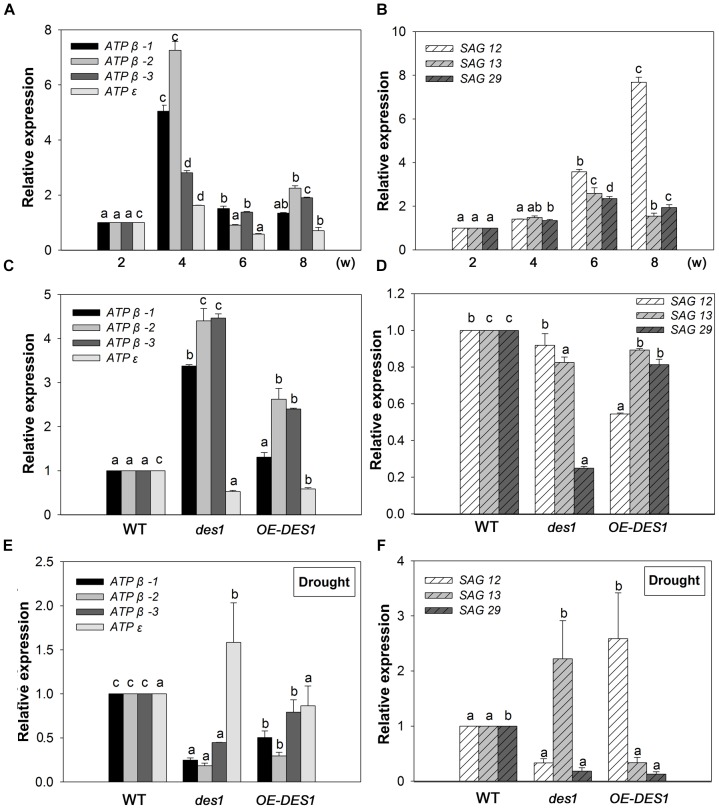
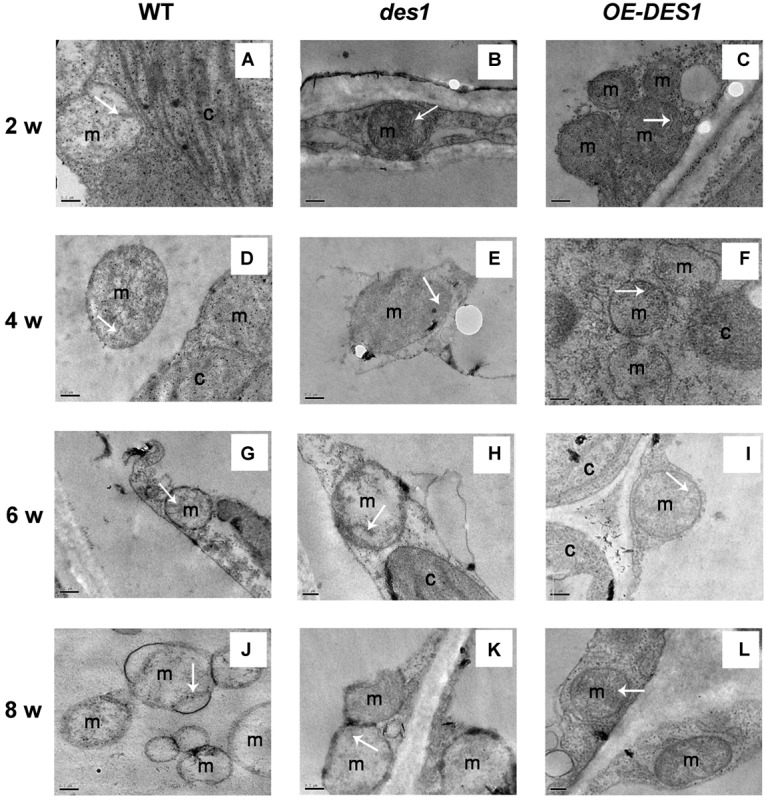
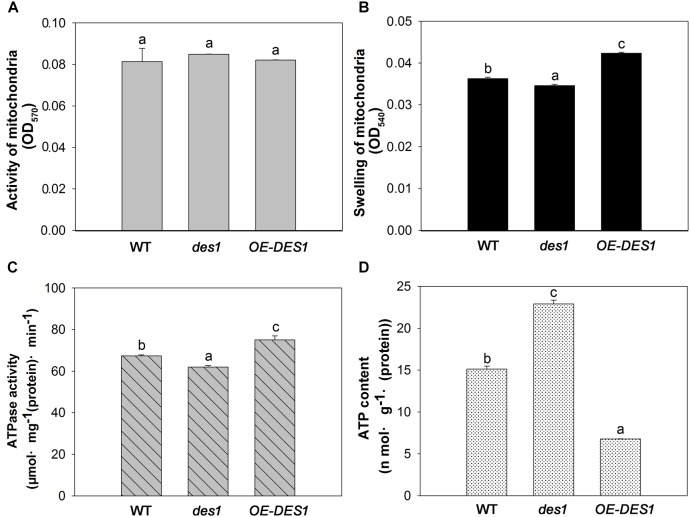
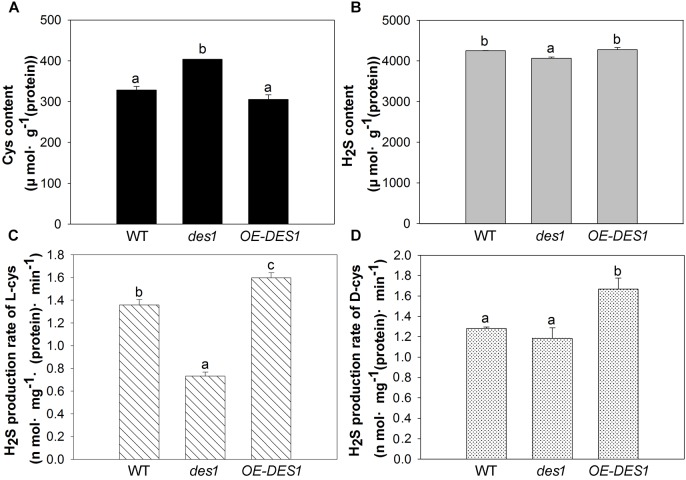
Hydrogen sulfide (HS) is a novel gasotransmitter in both mammals and plants. HS plays important roles in various plant developmental processes and stress responses. Leaf senescence is the last developmental stage and is a sequential degradation process that eventually leads to leaf death. A mutation of the HS-producing enzyme-encoding gene L-cysteine desulfhydrase1 () leads to premature leaf senescence but the underlying mechanisms are not clear. In this present study, wild-type, defective mutant () and over-expression () plants were used to investigate the underlying mechanism of HS signaling in energy production and leaf senescence under drought stress. The mutant was more sensitive to drought stress and displayed accelerated leaf senescence, while the leaves of contained adequate chlorophyll levels, accompanied by significantly increased drought resistance. Under drought stress, the expression levels of β-, and were significantly downregulated in and significantly upregulated in , and ε showed the opposite trend. Senescence-associated gene () correlated with age-dependent senescence and participated in the drought resistance of . , which was induced by environmental factors, responded positively to drought stress in plants, while there was no significant difference in the expression between and . Using transmission electron microscopy, the mitochondria of were severely damaged and bubbled in older leaves, while had complete mitochondrial structures and a homogeneous matrix. Additionally, mitochondria isolated from increased the HS production rate, HS content and ATPase activity level, as well as reduced swelling and lowered the ATP content in contrast with wild-type and significantly. Therefore, at subcellular levels, HS appeared to determine the ability of mitochondria to regulate energy production and protect against cellular aging, which subsequently delayed leaf senescence under drought-stress conditions in plants.
硫化氢(HS)在哺乳动物和植物中都是一种新型气体信号分子。HS在植物的各种发育过程和应激反应中发挥着重要作用。叶片衰老作为植物发育的最后阶段,是一个渐进的降解过程,最终导致叶片死亡。编码产生HS的酶的基因L-半胱氨酸脱硫酶1()发生突变会导致叶片过早衰老,但其潜在机制尚不清楚。在本研究中,利用野生型、缺陷突变体()和过表达()植株来研究干旱胁迫下HS信号在能量产生和叶片衰老中的潜在机制。突变体对干旱胁迫更敏感,叶片衰老加速,而过表达植株的叶片叶绿素含量充足,同时抗旱性显著增强。在干旱胁迫下,β-、和的表达水平在突变体中显著下调,而过表达植株中显著上调,ε则呈现相反趋势。衰老相关基因()与年龄依赖性衰老相关,并参与了过表达植株的抗旱性。受环境因子诱导,在过表达植株中对干旱胁迫有正向响应,而在突变体和野生型之间的表达没有显著差异。通过透射电子显微镜观察发现,突变体老叶中的线粒体严重受损并出现气泡,而过表达植株的线粒体结构完整且基质均匀。此外,与野生型和突变体相比,从过表达植株中分离得到的线粒体HS产生速率、HS含量和ATP酶活性水平增加,肿胀程度降低,ATP含量减少。因此,在亚细胞水平上,HS似乎决定了线粒体调节能量产生和防止细胞衰老的能力,从而在干旱胁迫条件下延缓了植物叶片衰老。