Trofa David P, Noback Peter C, Caldwell Jon-Michael E, Miller J Chance, Greisberg Justin K, Ahmad Christopher S, Vosseller J Turner
Department of Orthopaedics, New York Presbyterian, Columbia University Medical Center, New York, New York, USA.
Orthop J Sports Med. 2018 Nov 28;6(11):2325967118810772. doi: 10.1177/2325967118810772. eCollection 2018 Nov.
The majority of Achilles tendon ruptures are sports related; however, no investigation has examined the impact of surgical repair for complete ruptures on professional soccer players.
To examine the return to play, playing time, and performance of professional soccer players following Achilles tendon repair.
Cohort study; Level of evidence, 3.
Union of European Football Associations (UEFA) and Major League Soccer (MLS) athletes who sustained a primary complete Achilles tendon rupture and were treated surgically between 1988 and 2014 were identified via public injury reports. Demographic information and performance-related statistics for the identified athletes were recorded for the season before surgery and 2 seasons after surgery and were compared with information for matched controls. Statistical analyses were used to assess differences in recorded metrics.
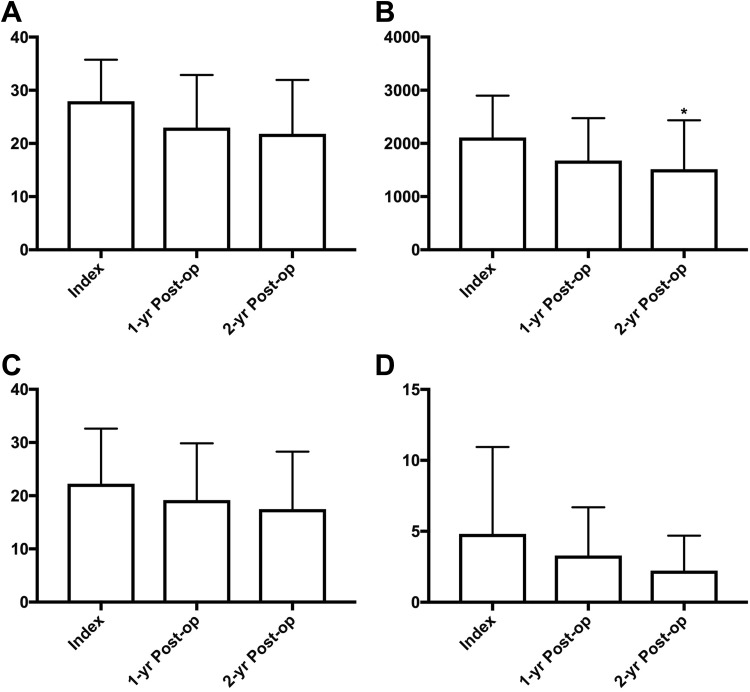
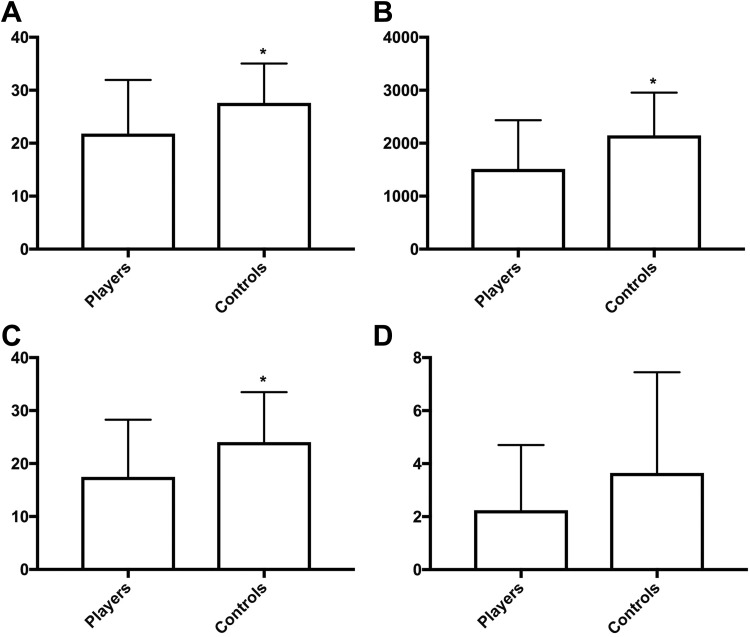
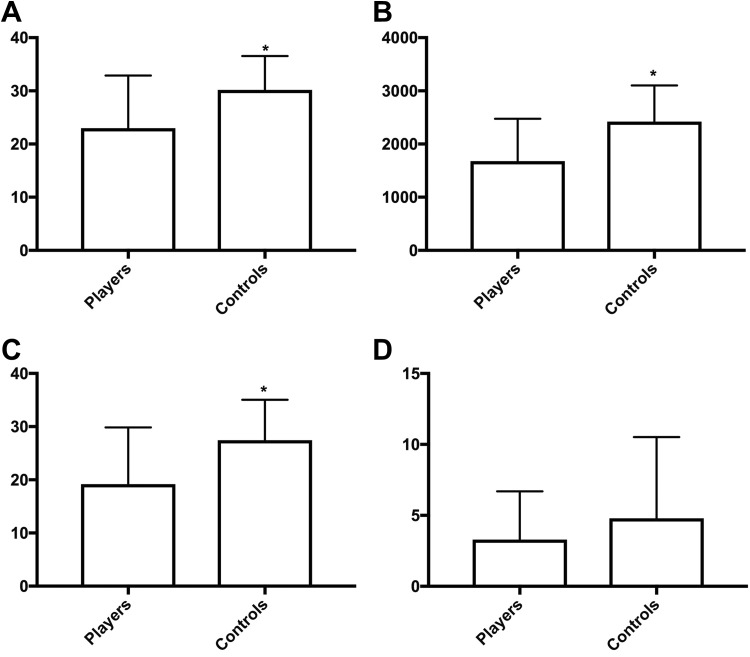
A total of 24 athletes with Achilles ruptures met inclusion criteria, 17 (70.8%) of whom were able to return to play. On average, players had 8.3 years of professional-level experience prior to sustaining an Achilles rupture. Among athletes who returned to play, no differences were found in the number of games played or started, minutes played, or goals scored 1 year postoperatively compared with the year prior to injury. However, 2 years postoperatively, these athletes played 28.3% ( = .028) fewer minutes compared with their preoperative season, despite starting and playing in an equivalent number of games. Matched controls had baseline playing time and performance statistics similar to those of players. However, controls played and started in significantly more games and played more minutes at 1 and 2 years compared with players ( < .05). No differences were found in goals scored at any time point.
This is the first investigation examining the effect of an Achilles repair on the career of professional soccer players. This is a difficult injury that most commonly occurs in veteran players and prevents 29.2% of players from returning to play despite surgical management. Additionally, athletes able to return to play were found to play fewer minutes 2 years postoperatively compared with their baseline as well as playing less at 1 and 2 years postoperatively compared with uninjured matched controls. The reduction in playing time following an Achilles repair has significant implications for professional players and teams.
大多数跟腱断裂与运动相关;然而,尚无研究探讨手术修复完全性跟腱断裂对职业足球运动员的影响。
研究职业足球运动员跟腱修复后的重返赛场情况、上场时间及表现。
队列研究;证据等级,3级。
通过公开的伤病报告,确定1988年至2014年间发生原发性完全性跟腱断裂并接受手术治疗的欧洲足球协会联盟(UEFA)和美国职业足球大联盟(MLS)运动员。记录入选运动员术前赛季及术后2个赛季的人口统计学信息和与表现相关的统计数据,并与匹配对照组的信息进行比较。采用统计分析评估记录指标的差异。
共有24例跟腱断裂运动员符合纳入标准,其中17例(70.8%)能够重返赛场。运动员在发生跟腱断裂前平均有8.3年的职业水平比赛经验。在重返赛场的运动员中,术后1年与受伤前一年相比,比赛场次、首发次数、上场分钟数或进球数均无差异。然而,术后2年,尽管这些运动员的首发场次和参赛场次相当,但与术前赛季相比,上场时间减少了28.3%(P = .028)。匹配对照组的基线上场时间和表现统计数据与运动员相似。然而,与运动员相比,对照组在术后1年和2年的比赛场次更多、首发次数更多且上场时间更长(P < .05)。在任何时间点的进球数均无差异。
这是首次研究跟腱修复对职业足球运动员职业生涯影响的调查。这是一种严重的伤病,最常发生在经验丰富的运动员身上,尽管进行了手术治疗,仍有29.2%的运动员无法重返赛场。此外,发现能够重返赛场的运动员术后2年的上场时间比基线水平少,且与未受伤的匹配对照组相比,术后1年和2年的上场时间也更少。跟腱修复后上场时间的减少对职业运动员和球队具有重大影响。