Department of Nephrology, Chinese PLA General Hospital, Chinese PLA Institute of Nephrology, State Key Laboratory of Kidney Diseases, National Clinical Research Center for Kidney Diseases, Chinese PLA Medical School, Beijing, China.
Kidney Therapeutic Center of Traditional Chinese and Western Medicine, Beidaihe Sanatorium of Beijing Military Region, Qinhuangdao, China.
J Diabetes Investig. 2019 Jul;10(4):972-984. doi: 10.1111/jdi.12986. Epub 2019 Jan 21.
AIMS/INTRODUCTION: The aim of the present study was to identify candidate differentially expressed genes (DEGs) and pathways using bioinformatics analysis, and to improve our understanding of the cause and potential molecular events of diabetic nephropathy.
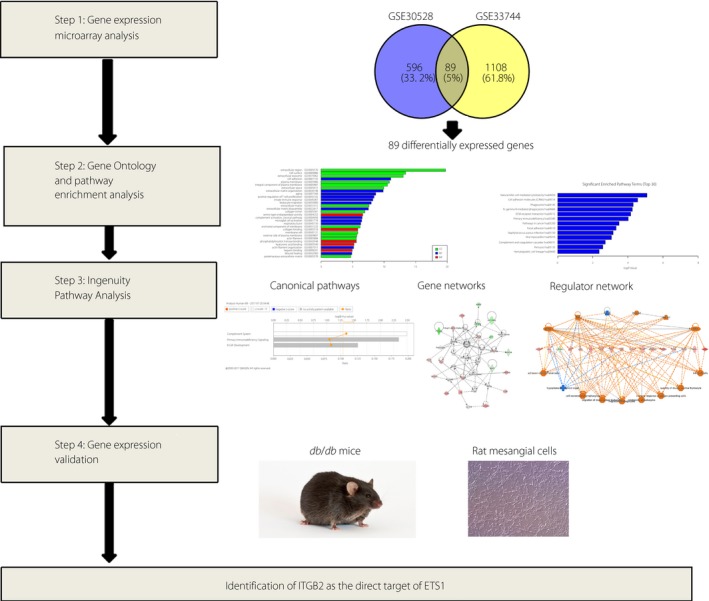
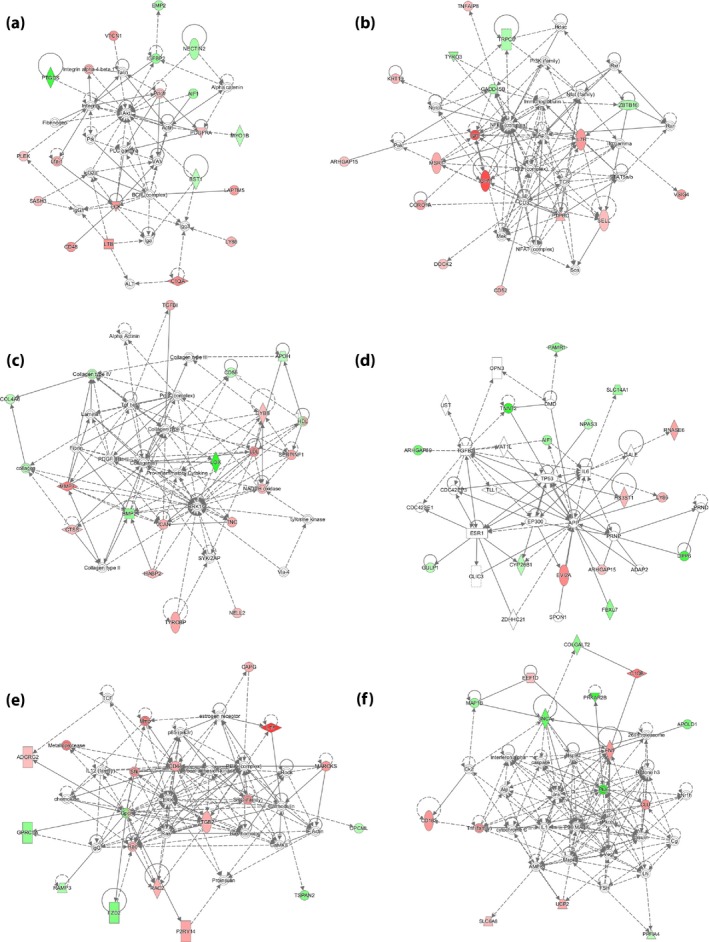
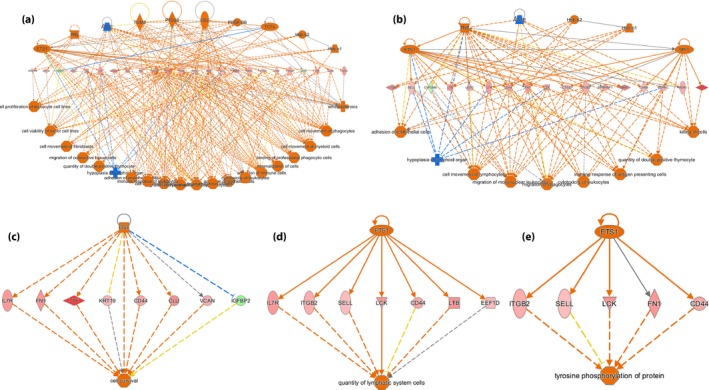
Two cohort profile datasets (GSE30528 and GSE33744) were integrated and used for deep analysis. We sorted DEGs and analyzed differential pathway enrichment. DEG-associated ingenuity pathway analysis was carried out. The screened gene expression feature was verified in the db/db mouse kidney cortex. Then, rat mesangial cells cultured with high-concentration glucose were used for verification. The target genes of transcriptional factor E26 transformation-specific-1 (ETS1) were predicted with online tools and validated using chromatin immunoprecipitation assay quantitative polymerase chain reaction.
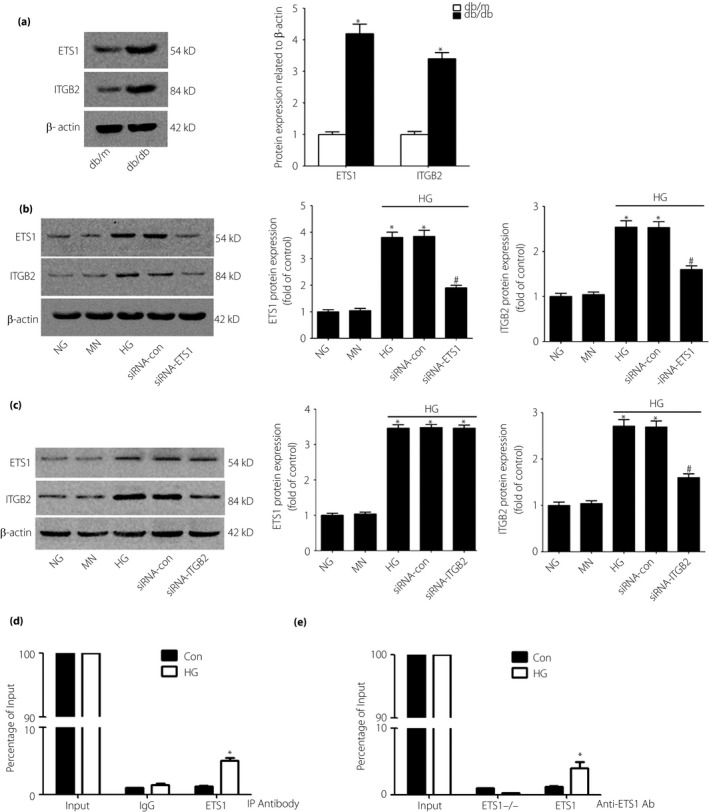
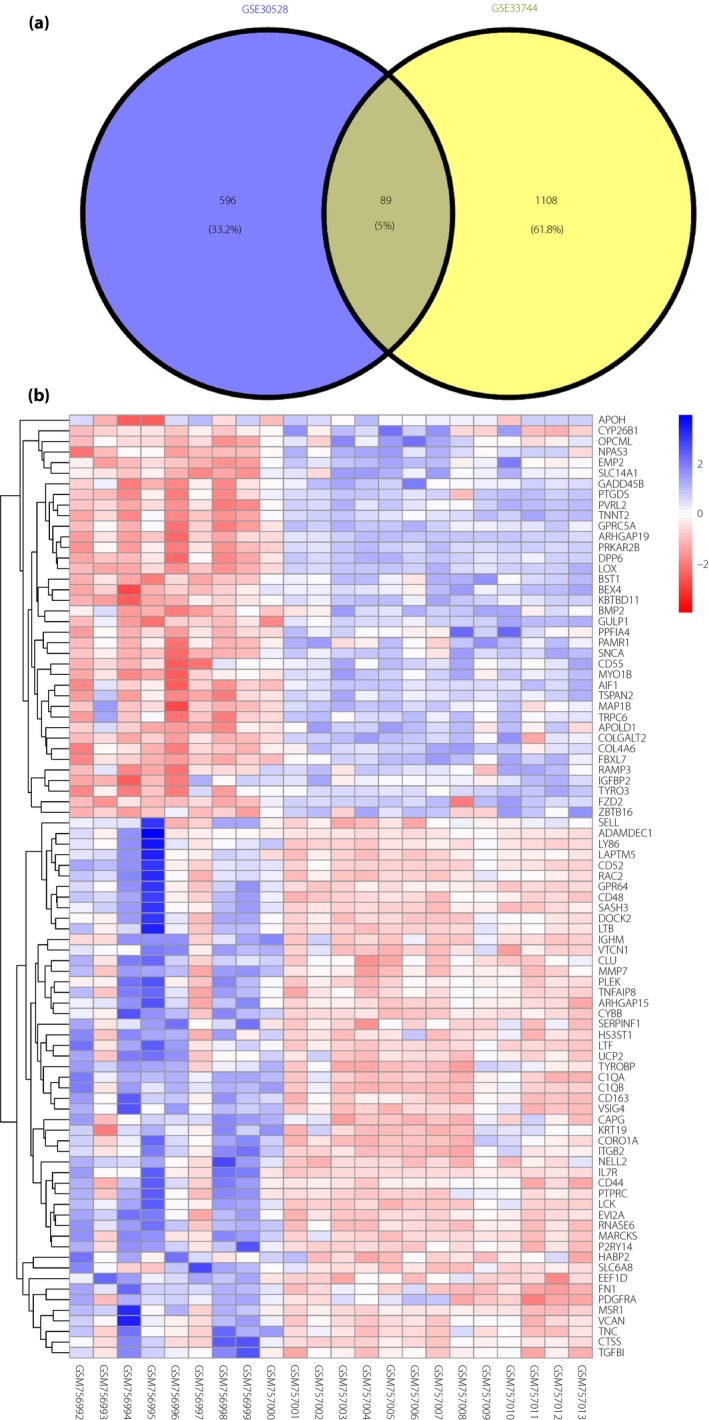
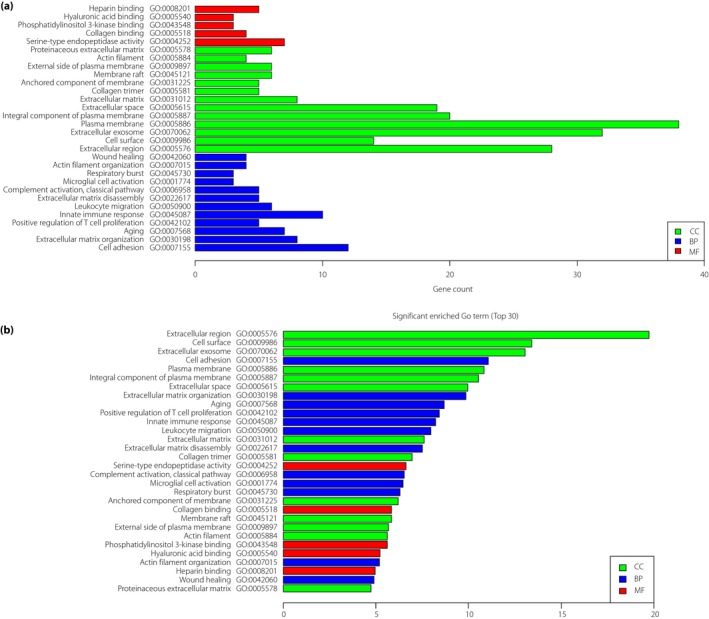
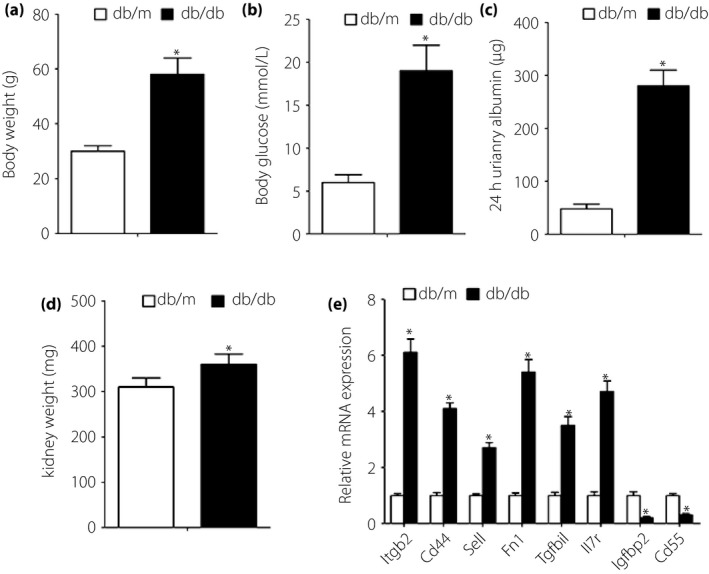
The two GSE datasets identified 89 shared DEGs; 51 were upregulated; and 38 were downregulated. Most of the DEGs were significantly enriched in cell adhesion, the plasma membrane, the extracellular matrix and the extracellular region. Quantitative reverse transcription polymerase chain reaction analysis validated the upregulated expression of Itgb2, Cd44, Sell, Fn1, Tgfbi and Il7r, and the downregulated expression of Igfbp2 and Cd55 in the db/db mouse kidney cortex. Chromatin immunoprecipitation assay quantitative polymerase chain reaction showed that Itgb2 was the target gene of transcription factor Ets1. ETS1 knockdown in rat mesangial cells decreased integrin subunit beta 2 expression.
We found that EST1 functioned as an important transcription factor in diabetic nephropathy development through the promotion of integrin subunit beta 2 expression. EST1 might be a drug target for diabetic nephropathy treatment.
目的/引言:本研究旨在通过生物信息学分析鉴定候选差异表达基因(DEGs)和途径,以提高对糖尿病肾病发病原因和潜在分子事件的认识。
整合并使用了两个队列谱数据集(GSE30528 和 GSE33744)进行深入分析。我们对 DEGs 进行排序并分析了差异途径富集。进行了 DEG 相关的启发性途径分析。在 db/db 小鼠肾皮质中验证了筛选出的基因表达特征。然后,使用高浓度葡萄糖培养大鼠系膜细胞进行验证。使用在线工具预测转录因子 E26 转化特异性-1(ETS1)的靶基因,并使用染色质免疫沉淀测定定量聚合酶链反应进行验证。
两个 GSE 数据集共鉴定出 89 个共享 DEGs;其中 51 个上调,38 个下调。大多数 DEGs 显著富集在细胞黏附、质膜、细胞外基质和细胞外区域。定量逆转录聚合酶链反应分析验证了 db/db 小鼠肾皮质中 Itgb2、Cd44、Sell、Fn1、Tgfbi 和 Il7r 的上调表达,以及 Igfbp2 和 Cd55 的下调表达。染色质免疫沉淀测定定量聚合酶链反应显示,Itgb2 是转录因子 Ets1 的靶基因。大鼠系膜细胞中 ETS1 的敲低降低了整合素亚基β2 的表达。
我们发现,EST1 通过促进整合素亚基β2 的表达,在糖尿病肾病的发展中作为一个重要的转录因子发挥作用。EST1 可能成为治疗糖尿病肾病的药物靶点。