Biomedical Research Foundation, Academy of Athens, Department of Biotechnology, Soranou Efessiou 4, 11527 Athens, Greece.
Institut National de la Santé et de la Recherche Médicale (INSERM), UMR1297, Institute of Cardiovascular and Metabolic Disease, 31432 Toulouse, France.
Int J Mol Sci. 2024 Jan 23;25(3):1387. doi: 10.3390/ijms25031387.
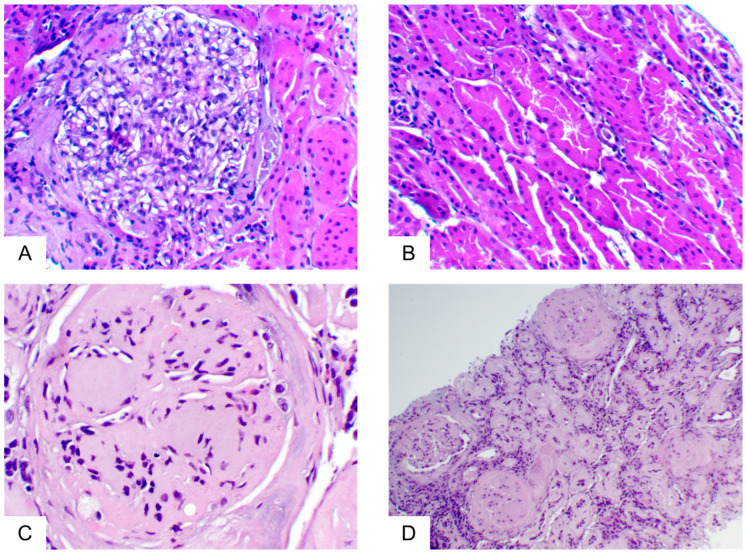
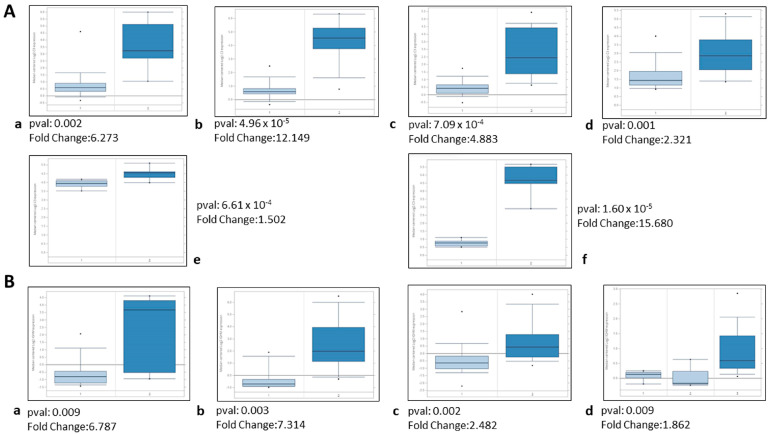
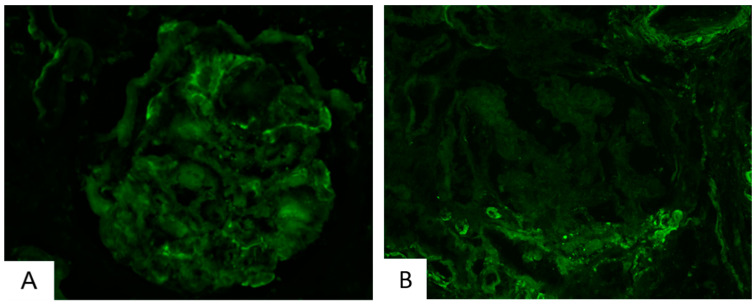
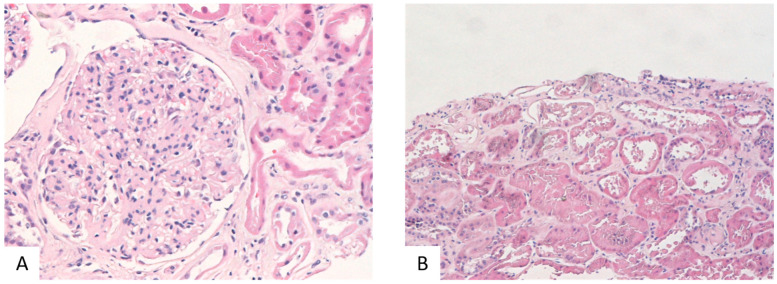
Diabetic kidney disease (DKD) is characterized by histological changes including fibrosis and inflammation. Evidence supports that DKD is mediated by the innate immune system and more specifically by the complement system. Using Ins2Akita T1D diabetic mice, we studied the connection between the complement cascade, inflammation, and fibrosis in early DKD. Data were extracted from a previously published quantitative-mass-spectrometry-based proteomics analysis of kidney glomeruli of 2 (early DKD) and 4 months (moderately advanced DKD)-old Ins2Akita mice and their controls A Spearman rho correlation analysis of complement- versus inflammation- and fibrosis-related protein expression was performed. A cross-omics validation of the correlation analyses' results was performed using public-domain transcriptomics datasets (Nephroseq). Tissue sections from 43 patients with DKD were analyzed using immunofluorescence. Among the differentially expressed proteins, the complement cascade proteins C3, C4B, and IGHM were significantly increased in both early and later stages of DKD. Inflammation-related proteins were mainly upregulated in early DKD, and fibrotic proteins were induced in moderately advanced stages of DKD. The abundance of complement proteins with fibrosis- and inflammation-related proteins was mostly positively correlated in early stages of DKD. This was confirmed in seven additional human and mouse transcriptomics DKD datasets. Moreover, C3 and IGHM mRNA levels were found to be negatively correlated with the estimated glomerular filtration rate (range for C3 rs = -0.58 to -0.842 and range for IGHM rs = -0.6 to -0.74) in these datasets. Immunohistology of human kidney biopsies revealed that C3, C1q, and IGM proteins were induced in patients with DKD and were correlated with fibrosis and inflammation. Our study shows for the first time the potential activation of the complement cascade associated with inflammation-mediated kidney fibrosis in the Ins2Akita T1D mouse model. Our findings could provide new perspectives for the treatment of early DKD as well as support the use of Ins2Akita T1D in pre-clinical studies.
糖尿病肾病(DKD)的特征是包括纤维化和炎症在内的组织学变化。有证据表明,DKD 是由先天免疫系统介导的,更具体地说是由补体系统介导的。本研究使用 Ins2Akita T1D 糖尿病小鼠,研究了早期 DKD 中补体级联、炎症和纤维化之间的联系。从以前发表的基于定量质谱的肾脏肾小球蛋白质组学分析中提取数据,该分析涉及 2 个月(早期 DKD)和 4 个月(中度进展性 DKD)龄的 Ins2Akita 小鼠及其对照,进行补体与炎症和纤维化相关蛋白表达的 Spearman rho 相关性分析。使用公共领域转录组学数据集(Nephroseq)对关联分析结果进行了跨组学验证。使用免疫荧光法分析了 43 名 DKD 患者的组织切片。在差异表达的蛋白质中,补体级联蛋白 C3、C4B 和 IGHM 在 DKD 的早期和晚期阶段均显著增加。炎症相关蛋白主要在早期 DKD 中上调,而纤维化蛋白在中度进展性 DKD 中诱导。在早期 DKD 中,补体蛋白与纤维化和炎症相关蛋白的丰度大多呈正相关。这在另外七个人类和小鼠转录组学 DKD 数据集得到了证实。此外,在这些数据集,C3 和 IGHM mRNA 水平与估计的肾小球滤过率(C3 rs 的范围为-0.58 至-0.842,IGHM rs 的范围为-0.6 至-0.74)呈负相关。对人类肾活检组织的免疫组织化学分析表明,C3、C1q 和 IGM 蛋白在 DKD 患者中诱导,并与纤维化和炎症相关。本研究首次显示了在 Ins2Akita T1D 小鼠模型中,补体级联与炎症介导的肾脏纤维化相关的潜在激活。我们的研究结果为早期 DKD 的治疗提供了新的视角,并支持在临床前研究中使用 Ins2Akita T1D。