Jonska-Gmyrek Joanna, Gmyrek Leszek, Zolciak-Siwinska Agnieszka, Kowalska Maria, Fuksiewicz Malgorzata, Kotowicz Beata
Department of Uro-oncology, Maria Sklodowska-Curie Institute - Oncology Center, Warsaw 02-781, Poland,
Department of Gynecological Oncology, The Holy Family Hospital, Warsaw 02-544, Poland.
Cancer Manag Res. 2018 Nov 22;10:6029-6038. doi: 10.2147/CMAR.S178745. eCollection 2018.
Our study assessed the clinical utility and prognostic value of pretreatment hematological parameters and calculated coefficients including the platelet to lymphocyte ratio (PLR), neutrophil to lymphocyte ratio (NLR), and monocyte to lymphocyte ratio (MLR) in patients with cervical adenocarcinoma (CA).
Among 738 cervical cancer patients with International Federation of Gynecology and Obstetrics (FIGO) stages IA-IV treated at our institution, 96 (13%) presented with CA histology. The blood samples, collected within 10 days before treatment, were analyzed using a Sysmex XN-2000 system. The statistical tests included Mann-Whitney -tests, log-rank tests, and Cox regression models. The cutoff points for the calculated hematological coefficients (NLR, PLR, and MLR) were determined using the MedCalc statistical program.
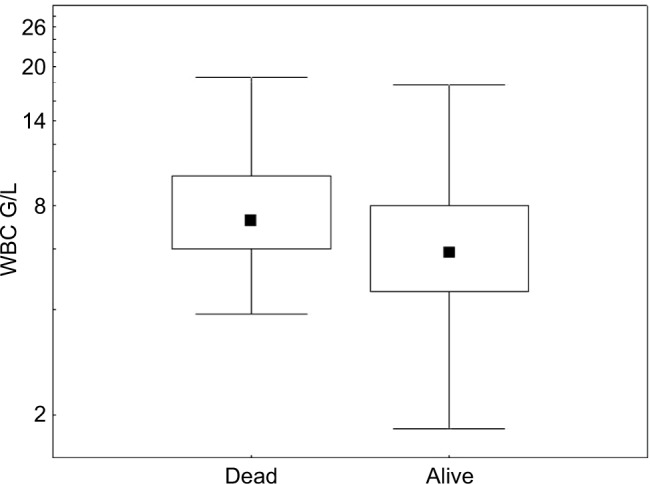
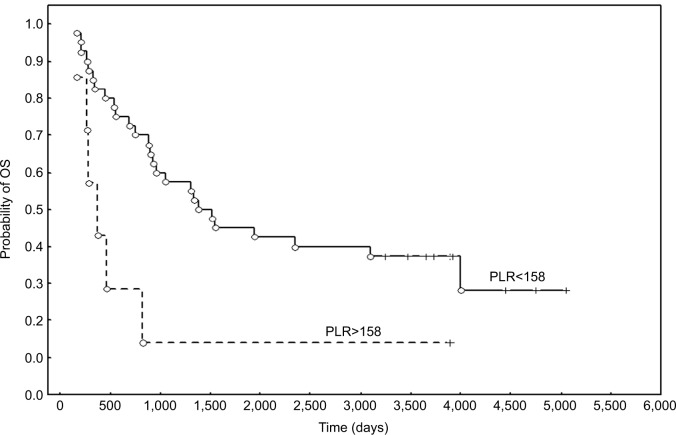
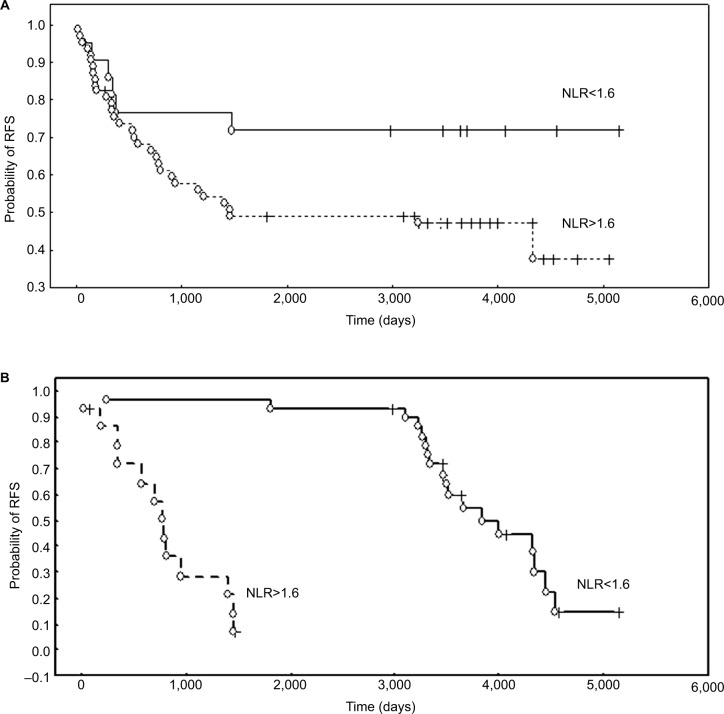
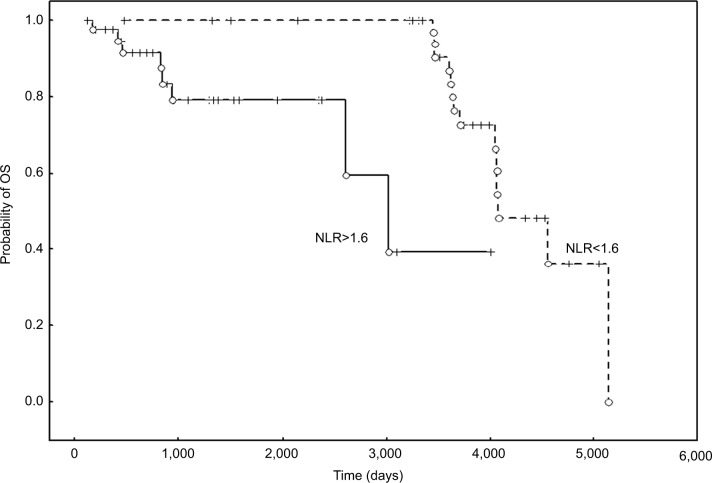
The prognostic factor for overall survival (OS) and recurrence-free survival (RFS) in CA was clinical stage according to FIGO classification (FIGO IIB-IV vs I-IIA) (=0.0001; =0.002). Among patients with FIGO stage IIB-IV treated with radiotherapy/chemoradiotherapy, an elevated PLR was a negative prognostic factor for OS (=0.017; HR: 2.96; 95% CI: 2.069-3.853). Among all patients, an elevated pretreatment NLR was a poor prognostic factor for OS (=0.014; HR: 2.85; 95% CI: 2.011-3.685) and RFS (=0.049; HR: 4.0; 95% CI: 2.612-5.392). The white blood cell count (WBC) before treatment was significantly higher in patients who died during follow-up (=0.009).
Elevated NLR values before treatment may be associated with a shorter time of RFS and OS, while PLR index may have prognostic significance for OS in patients with advanced disease (FIGO IIB-IV). Both indexes and WBC may be a cost-effective biomarker that can be used conveniently for stratification of recurrence risk and death.
我们的研究评估了治疗前血液学参数以及计算得出的系数(包括血小板与淋巴细胞比值(PLR)、中性粒细胞与淋巴细胞比值(NLR)和单核细胞与淋巴细胞比值(MLR))在宫颈腺癌(CA)患者中的临床实用性和预后价值。
在我院接受治疗的738例国际妇产科联盟(FIGO)IA-IV期宫颈癌患者中,96例(13%)为CA组织学类型。在治疗前10天内采集的血样使用Sysmex XN-2000系统进行分析。统计检验包括曼-惠特尼检验、对数秩检验和Cox回归模型。计算得出的血液学系数(NLR、PLR和MLR)的截断点使用MedCalc统计程序确定。
CA患者总生存(OS)和无复发生存(RFS)的预后因素是根据FIGO分类的临床分期(FIGO IIB-IV期与I-IIA期相比)(P = 0.0001;P = 0.002)。在接受放疗/放化疗的FIGO IIB-IV期患者中,PLR升高是OS的不良预后因素(P = 0.017;HR:2.96;95%CI:2.069 - 3.853)。在所有患者中,治疗前NLR升高是OS(P = 0.014;HR:2.85;95%CI:2.011 - 3.685)和RFS(P = 0.049;HR:4.0;95%CI:2.612 - 5.392)的不良预后因素。随访期间死亡的患者治疗前白细胞计数(WBC)显著更高(P = 0.009)。
治疗前NLR值升高可能与RFS和OS时间缩短有关,而PLR指数可能对晚期疾病(FIGO IIB-IV期)患者的OS具有预后意义。这两个指数以及WBC可能是一种经济有效的生物标志物,可方便地用于复发风险和死亡分层。