Department of Zoology, University of Cambridge, Cambridge, United Kingdom.
HHMI Janelia Research Campus, Ashburn, United States.
Elife. 2018 Dec 17;7:e39393. doi: 10.7554/eLife.39393.
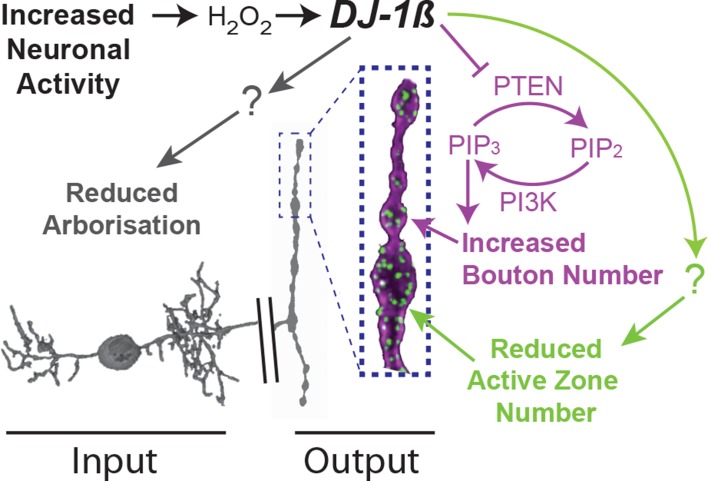
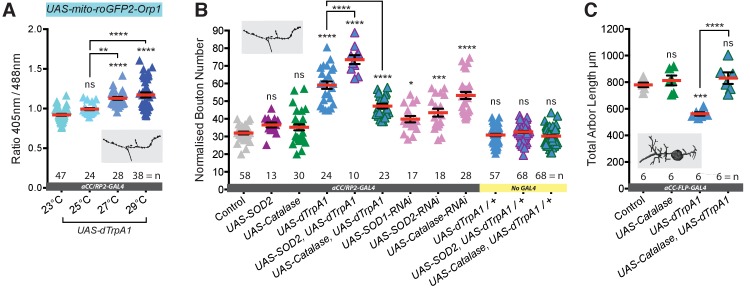
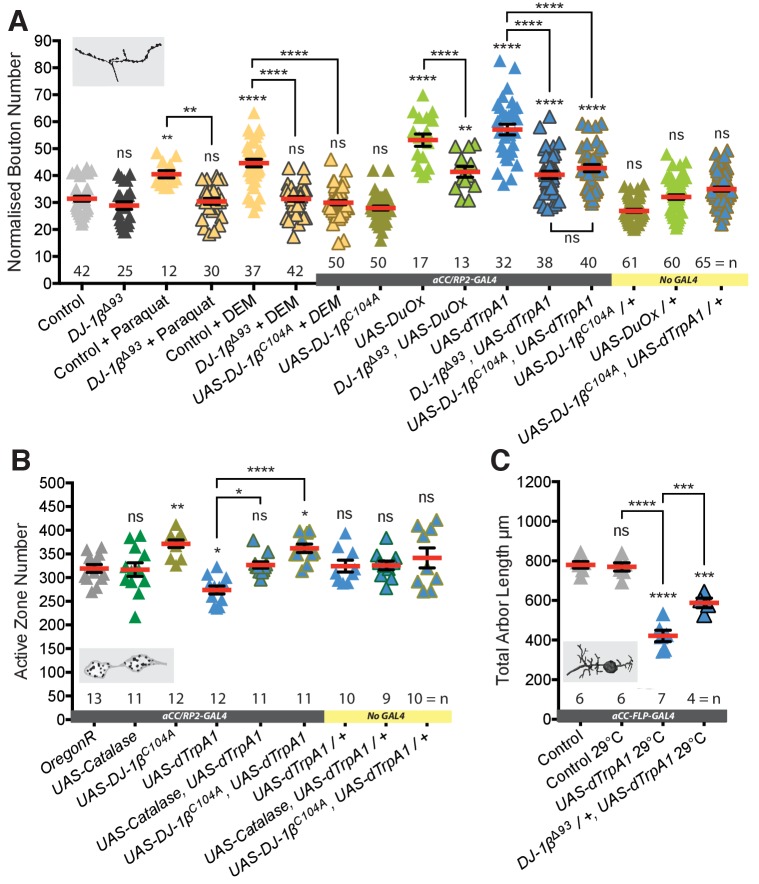
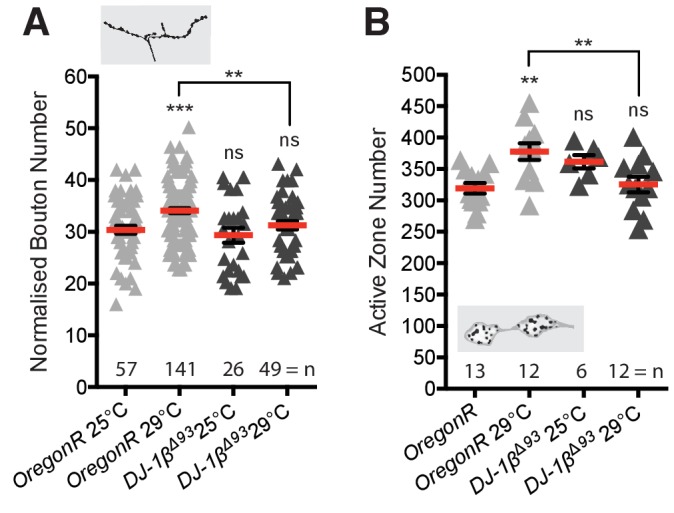
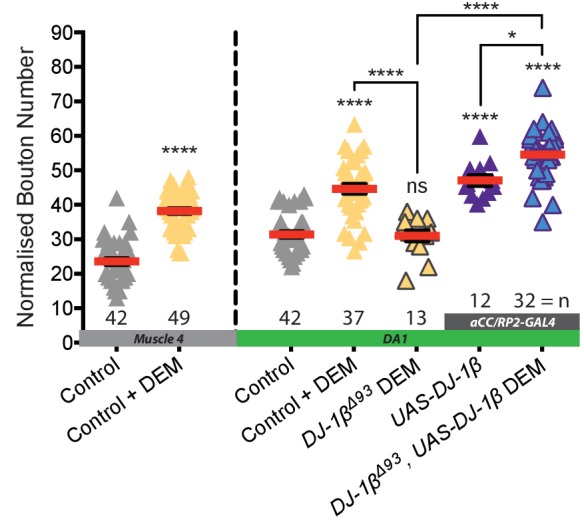
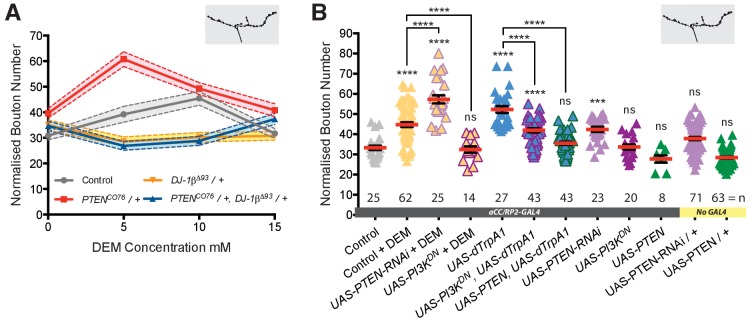
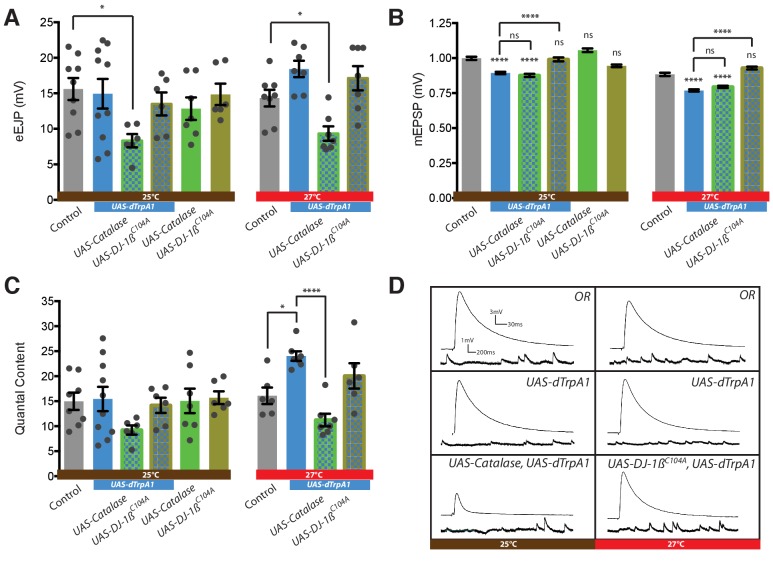
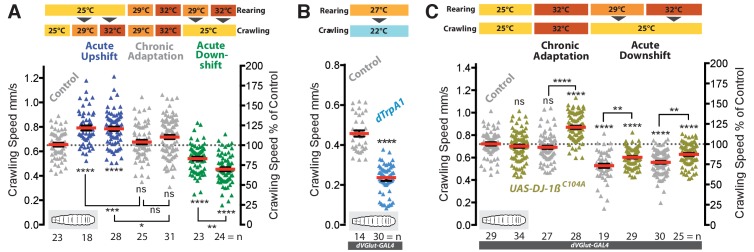
Reactive oxygen species (ROS) have been extensively studied as damaging agents associated with ageing and neurodegenerative conditions. Their role in the nervous system under non-pathological conditions has remained poorly understood. Working with the larval locomotor network, we show that in neurons ROS act as obligate signals required for neuronal activity-dependent structural plasticity, of both pre- and postsynaptic terminals. ROS signaling is also necessary for maintaining evoked synaptic transmission at the neuromuscular junction, and for activity-regulated homeostatic adjustment of motor network output, as measured by larval crawling behavior. We identified the highly conserved Parkinson's disease-linked protein DJ-1β as a redox sensor in neurons where it regulates structural plasticity, in part via modulation of the PTEN-PI3Kinase pathway. This study provides a new conceptual framework of neuronal ROS as second messengers required for neuronal plasticity and for network tuning, whose dysregulation in the ageing brain and under neurodegenerative conditions may contribute to synaptic dysfunction.
活性氧(ROS)作为与衰老和神经退行性疾病相关的损伤因子,已被广泛研究。其在非病理条件下的神经系统中的作用仍知之甚少。我们通过幼虫运动网络研究发现,ROS 在神经元中作为必需信号,参与神经元活动依赖性的结构可塑性,包括突触前和突触后末梢。ROS 信号对于维持神经肌肉接头的诱发突触传递,以及对于运动网络输出的活性调节的平衡调节也是必需的,这可以通过幼虫爬行行为来衡量。我们鉴定出高度保守的帕金森病相关蛋白 DJ-1β 作为神经元中的氧化还原传感器,其通过调节 PTEN-PI3K 通路,部分调节结构可塑性。本研究为神经元 ROS 作为第二信使的新概念框架提供了依据,ROS 对于神经元可塑性和网络调谐是必需的,其在衰老大脑和神经退行性疾病中的失调可能导致突触功能障碍。