Ludwig Oliver, Kelm Jens, Hammes Annette, Schmitt Eduard, Fröhlich Michael
Technische Universität Kaiserslautern, Fachgebiet Sportwissenschaft, Kaiserslautern, Germany.
Chirurgisch-Orthopädisches Zentrum, Illingen, Germany.
Front Physiol. 2018 Nov 27;9:1620. doi: 10.3389/fphys.2018.01620. eCollection 2018.
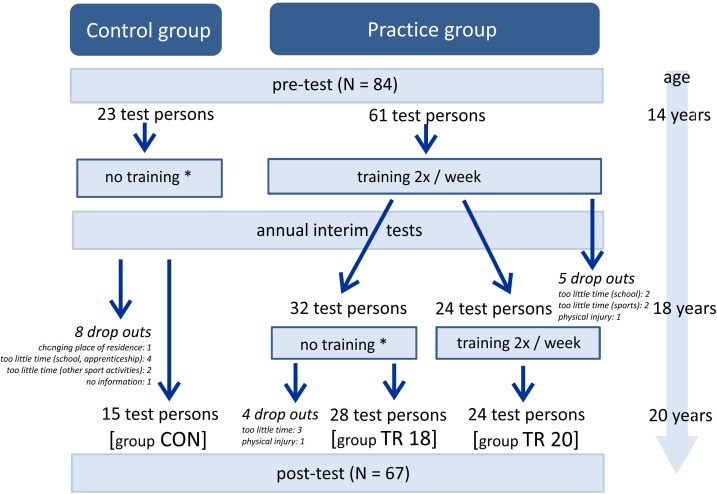
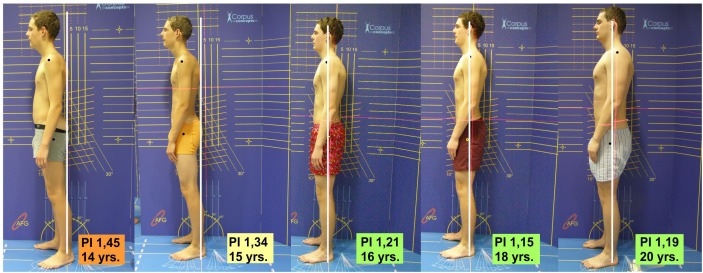
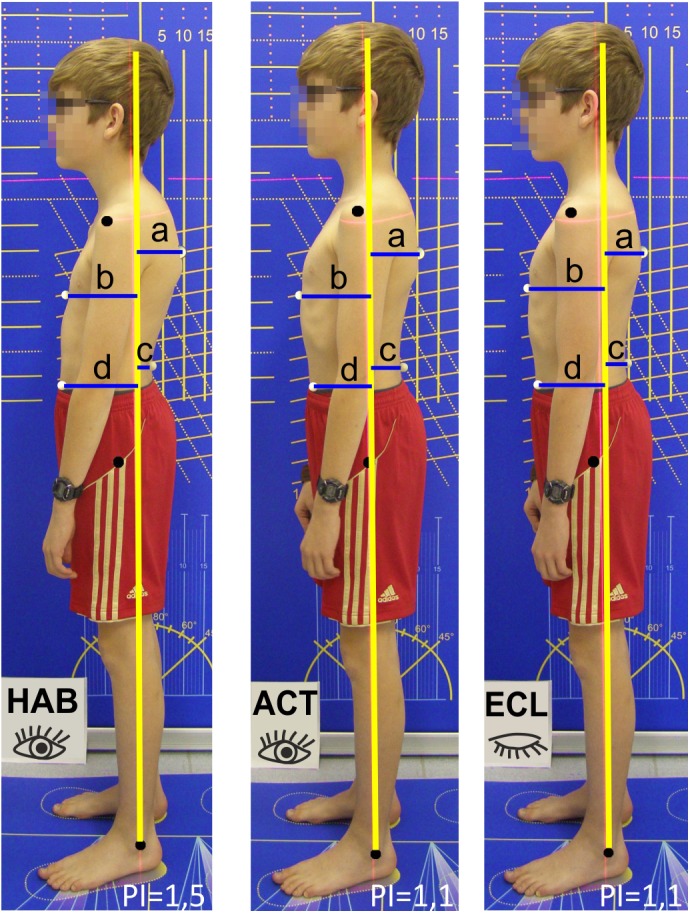
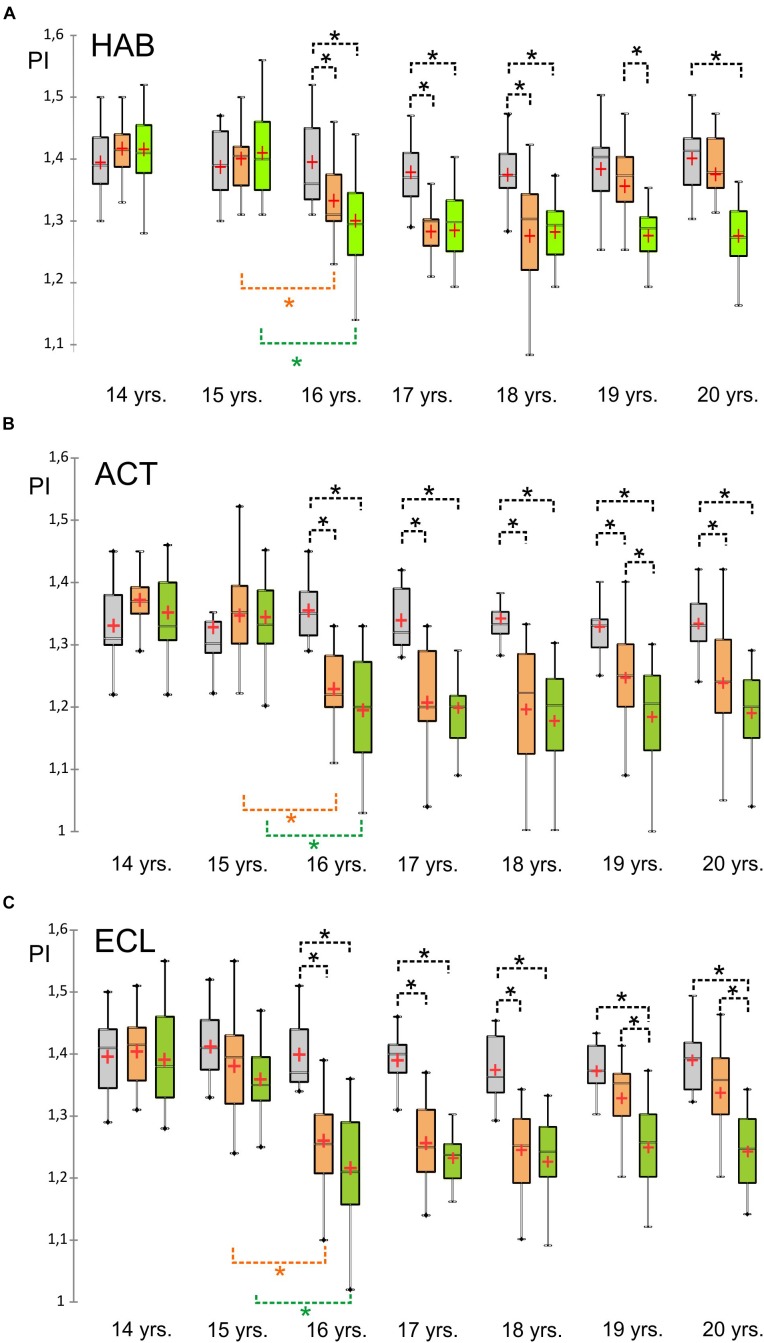
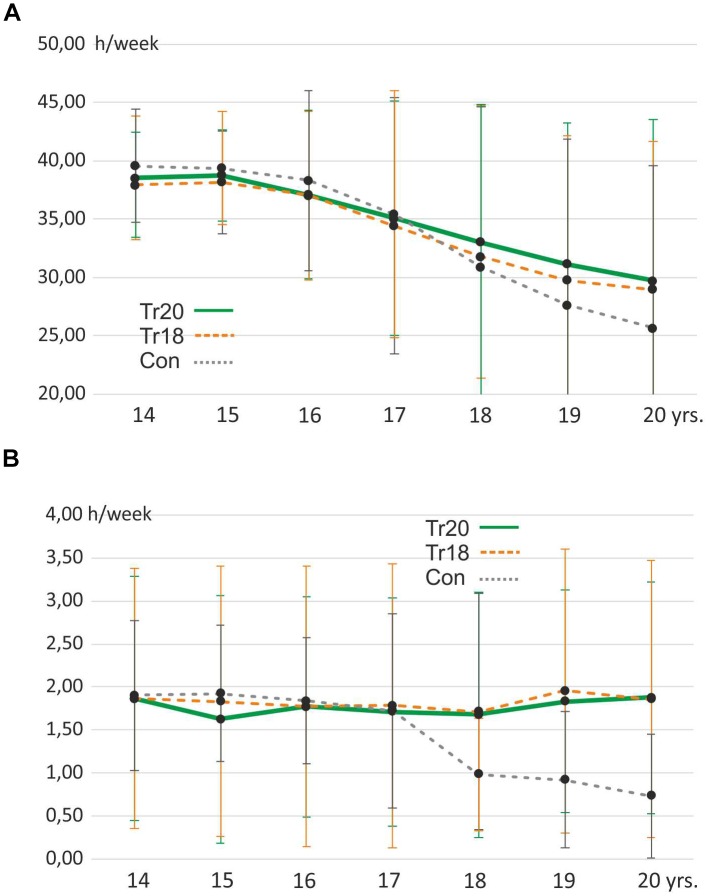
Poor posture in childhood and adolescence is held responsible for the occurrence of associated disorders in adult age. This study aimed to verify whether body posture in adolescence can be enhanced through the improvement of neuromuscular performance, attained by means of targeted strength, stretch, and body perception training, and whether any such improvement might also transition into adulthood. From a total of 84 volunteers, the posture development of 67 adolescents was checked annually between the age of 14 and 20 based on index values in three posture situations. 28 adolescents exercised twice a week for about 2 h up to the age of 18, 24 adolescents exercised continually up to the age of 20. Both groups practiced other additional sports for about 1.8 h/week. Fifteen persons served as a non-exercising control group, practicing optional sports of about 1.8 h/week until the age of 18, after that for 0.9 h/week. Group allocation was not random, but depended on the participants' choice. A linear mixed model was used to analyze the development of posture indexes among the groups and over time and the possible influence of anthropometric parameters (weight, size), of optional athletic activity and of sedentary behavior. The pairwise comparison was performed applying the Scheffé test. The significance level was set at 0.05. The group that exercised continually (TR20) exhibited a significant posture parameter improvement in all posture situations from the 2nd year of exercising on. The group that terminated their training when reaching adulthood (TR18) retained some improvements, such as conscious straightening of the body posture. In other posture situations (habitual, closed eyes), their posture results declined again from age 18. The effect sizes determined were between η = 0.12 and η = 0.19 and represent moderate to strong effects. The control group did not exhibit any differences. Anthropometric parameters, additional athletic activities and sedentary behavior did not influence the posture parameters significantly. An additional athletic training of 2 h per week including elements for improved body perception seems to have the potential to improve body posture in symptom free male adolescents and young adults.
儿童期和青少年期的不良姿势被认为是成年后相关疾病发生的原因。本研究旨在验证青少年的身体姿势是否可以通过改善神经肌肉性能来提高,而神经肌肉性能的改善是通过有针对性的力量、拉伸和身体感知训练实现的,以及这种改善是否也能延续到成年期。在总共84名志愿者中,根据三种姿势情况下的指标值,每年对67名青少年在14岁至20岁之间的姿势发育情况进行检查。28名青少年每周锻炼两次,每次约2小时,直至18岁;24名青少年持续锻炼至20岁。两组都进行其他额外的运动,每周约1.8小时。15人作为不锻炼的对照组,在18岁之前每周进行约1.8小时的自选运动,之后每周进行0.9小时。分组不是随机的,而是取决于参与者的选择。使用线性混合模型分析各组之间以及随时间变化的姿势指标的发展情况,以及人体测量参数(体重、身高)、自选体育活动和久坐行为的可能影响。采用谢费检验进行两两比较。显著性水平设定为0.05。持续锻炼的组(TR20)从锻炼的第二年起,在所有姿势情况下都表现出姿势参数的显著改善。成年后停止训练的组(TR18)保留了一些改善,如身体姿势有意识地挺直。在其他姿势情况下(习惯性、闭眼),他们的姿势结果从18岁起再次下降。确定的效应大小在η = 0.12至η = 0.19之间,代表中等至强效应。对照组没有表现出任何差异。人体测量参数、额外的体育活动和久坐行为对姿势参数没有显著影响。每周额外进行2小时的体育训练,包括改善身体感知的元素,似乎有可能改善无症状男性青少年和青年的身体姿势。