Elms Lucas, Shannon Scott, Hughes Shannon, Lewis Nicole
1 Rocky Vista University, Osteopathic Medical Student IV, Parker, CO.
2 Department of Psychiatry, University of Colorado Denver, Denver, CO.
J Altern Complement Med. 2019 Apr;25(4):392-397. doi: 10.1089/acm.2018.0437. Epub 2018 Dec 13.
Cannabidiol (CBD) is a non-psychotomimetic cannabinoid compound that is found in plants of the genus Cannabis. Preclinical research has suggested that CBD may have a beneficial effect in rodent models of post-traumatic stress disorder (PTSD). This effect is believed to be due to the action of CBD on the endocannabinoid system. CBD has seen a recent surge in research regarding its potential value in a number of neuro-psychiatric conditions. This is the first study to date examining the clinical benefit of CBD for patients with PTSD.
This retrospective case series examines the effect of oral CBD administration on symptoms of PTSD in a series of 11 adult patients at an outpatient psychiatry clinic. CBD was given on an open-label, flexible dosing regimen to patients diagnosed with PTSD by a mental health professional. Patients also received routine psychiatric care, including concurrent treatment with psychiatric medications and psychotherapy. The length of the study was 8 weeks. PTSD symptom severity was assessed every 4 weeks by patient-completed PTSD Checklist for the DSM-5 (PCL-5) questionnaires.
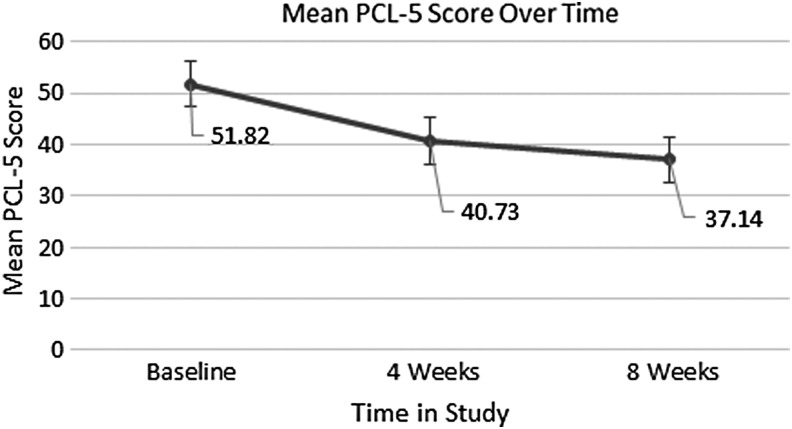
From the total sample of 11 patients, 91% (n = 10) experienced a decrease in PTSD symptom severity, as evidenced by a lower PCL-5 score at 8 weeks than at their initial baseline. The mean total PCL-5 score decreased 28%, from a mean baseline score of 51.82 down to 37.14, after eight consecutive weeks of treatment with CBD. CBD was generally well tolerated, and no patients discontinued treatment due to side effects.
Administration of oral CBD in addition to routine psychiatric care was associated with PTSD symptom reduction in adults with PTSD. CBD also appeared to offer relief in a subset of patients who reported frequent nightmares as a symptom of their PTSD. Additional clinical investigation, including double-blind, placebo-controlled trials, would be necessary to further substantiate the response to CBD that was observed in this study.
大麻二酚(CBD)是一种在大麻属植物中发现的非致幻性大麻素化合物。临床前研究表明,CBD可能对创伤后应激障碍(PTSD)的啮齿动物模型有有益作用。据信这种作用是由于CBD对内源性大麻素系统的作用。最近,关于CBD在多种神经精神疾病中的潜在价值的研究激增。这是迄今为止第一项研究CBD对PTSD患者临床益处的研究。
本回顾性病例系列研究了在一家门诊精神病诊所对11名成年患者口服CBD对PTSD症状的影响。CBD以开放标签、灵活给药方案给予经心理健康专业人员诊断为PTSD的患者。患者还接受常规精神科护理,包括同时使用精神科药物和心理治疗。研究时长为8周。每4周通过患者填写的DSM-5创伤后应激障碍检查表(PCL-5)问卷评估PTSD症状严重程度。
在11名患者的总样本中,91%(n = 10)的患者PTSD症状严重程度有所降低,8周时PCL-5评分低于初始基线即可证明。连续8周接受CBD治疗后,PCL-5总平均分从基线时的51.82降至37.14,下降了28%。CBD总体耐受性良好,没有患者因副作用而停药。
除常规精神科护理外,口服CBD与PTSD成年患者的PTSD症状减轻有关。CBD似乎也能缓解一部分报告频繁噩梦为PTSD症状的患者的症状。需要进行更多临床研究,包括双盲、安慰剂对照试验,以进一步证实本研究中观察到的对CBD的反应。