Wang Ruirui, Wang Min, Chen Kehao, Wang Shiyu, Mur Luis Alejandro Jose, Guo Shiwei
Jiangsu Provincial Key Lab of Solid Organic Waste Utilization, Jiangsu Collaborative Innovation Center of Solid Organic Wastes, Educational Ministry Engineering Center of Resource-Saving Fertilizers, Nanjing Agricultural University, Nanjing 210095, Jiangsu, China.
Institute of Biological, Environmental and Rural Sciences, Aberystwyth University, Aberystwyth SY23 3DA, UK.
Cells. 2018 Dec 11;7(12):267. doi: 10.3390/cells7120267.
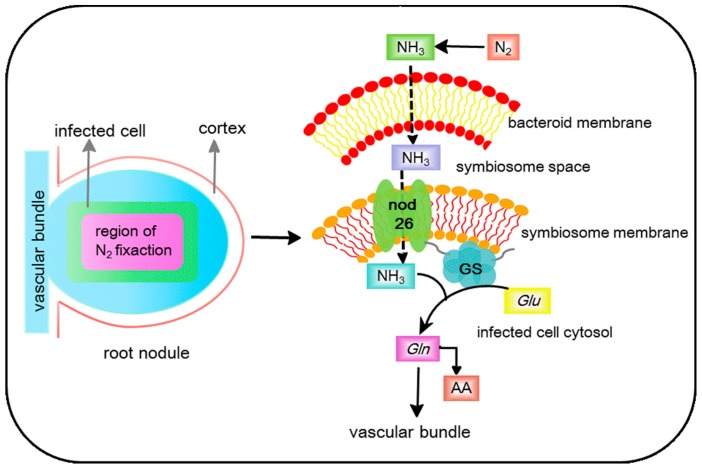
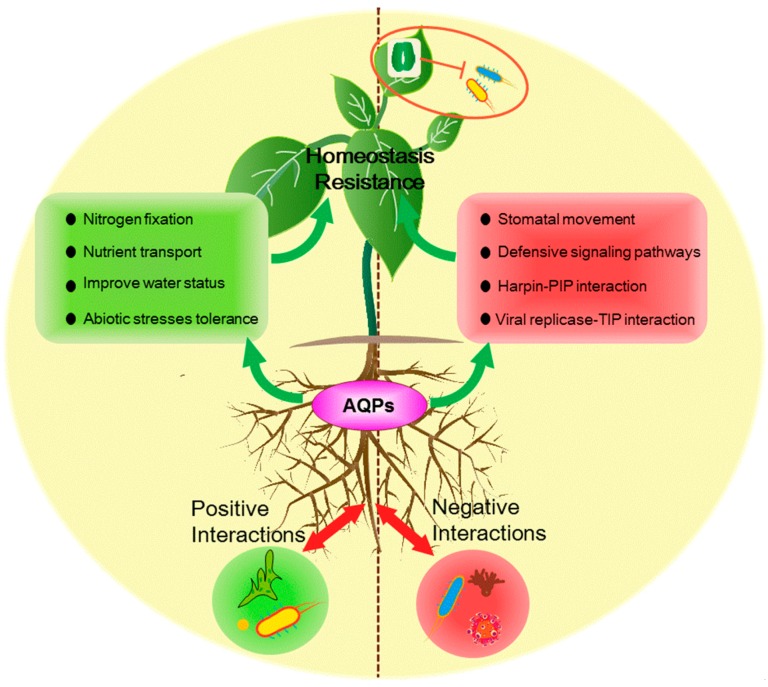
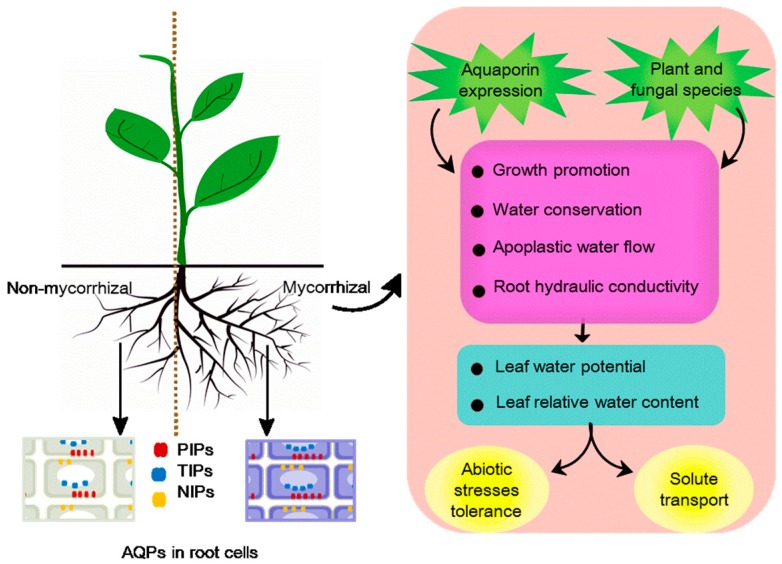
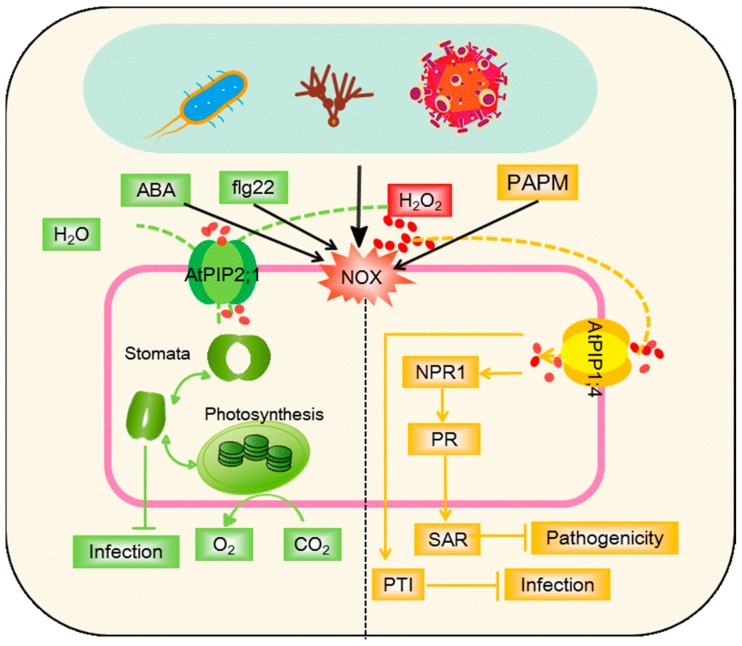
Aquaporins (AQPs) are membrane channel proteins regulating the flux of water and other various small solutes across membranes. Significant progress has been made in understanding the roles of AQPs in plants' physiological processes, and now their activities in various plant⁻microbe interactions are receiving more attention. This review summarizes the various roles of different AQPs during interactions with microbes which have positive and negative consequences on the host plants. In positive plant⁻microbe interactions involving rhizobia, arbuscular mycorrhizae (AM), and plant growth-promoting rhizobacteria (PGPR), AQPs play important roles in nitrogen fixation, nutrient transport, improving water status, and increasing abiotic stress tolerance. For negative interactions resulting in pathogenesis, AQPs help plants resist infections by preventing pathogen ingress by influencing stomata opening and influencing defensive signaling pathways, especially through regulating systemic acquired resistance. Interactions with bacterial or viral pathogens can be directly perturbed through direct interaction of AQPs with harpins or replicase. However, whilst these observations indicate the importance of AQPs, further work is needed to develop a fuller mechanistic understanding of their functions.
水通道蛋白(AQPs)是调节水和其他各种小分子溶质跨膜通量的膜通道蛋白。在理解水通道蛋白在植物生理过程中的作用方面已经取得了重大进展,现在它们在各种植物-微生物相互作用中的活性受到了更多关注。这篇综述总结了不同水通道蛋白在与微生物相互作用过程中的各种作用,这些作用对宿主植物有正面和负面的影响。在涉及根瘤菌、丛枝菌根(AM)和植物促生细菌(PGPR)的积极植物-微生物相互作用中,水通道蛋白在固氮、养分运输、改善水分状况和提高非生物胁迫耐受性方面发挥着重要作用。对于导致发病的负面相互作用,水通道蛋白通过影响气孔开放和影响防御信号通路,特别是通过调节系统获得性抗性,帮助植物抵抗感染。与细菌或病毒病原体的相互作用可以通过水通道蛋白与harpins或复制酶的直接相互作用而直接受到干扰。然而,尽管这些观察结果表明了水通道蛋白的重要性,但仍需要进一步开展工作,以更全面地从机制上理解它们的功能。