Inova Fairfax Hospital, Falls Church, VA, USA.
Dept of Pulmonary Medicine, Hospital Clínic-IDIBAPS, University of Barcelona, Barcelona, Spain.
Eur Respir J. 2019 Jan 24;53(1). doi: 10.1183/13993003.01914-2018. Print 2019 Jan.
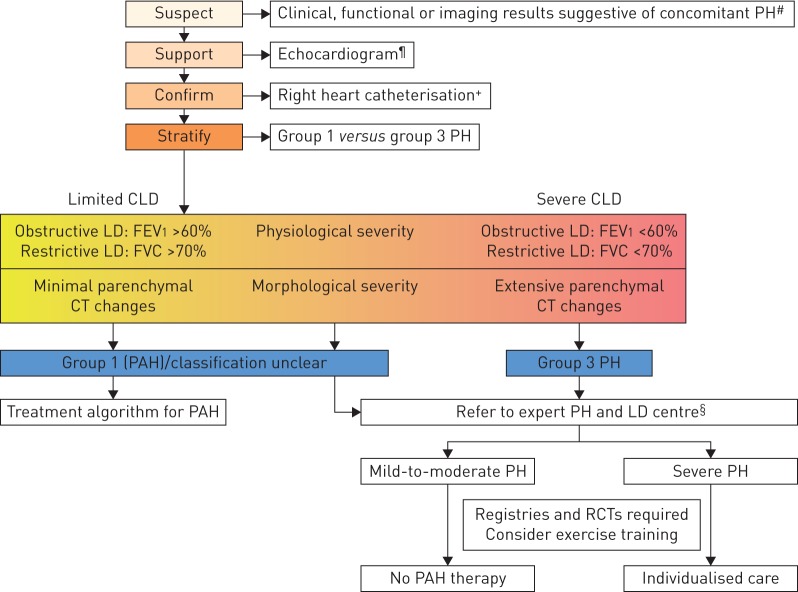
Pulmonary hypertension (PH) frequently complicates the course of patients with various forms of chronic lung disease (CLD). CLD-associated PH (CLD-PH) is invariably associated with reduced functional ability, impaired quality of life, greater oxygen requirements and an increased risk of mortality. The aetiology of CLD-PH is complex and multifactorial, with differences in the pathogenic sequelae between the diverse forms of CLD. Haemodynamic evaluation of PH severity should be contextualised within the extent of the underlying lung disease, which is best gauged through a combination of physiological and imaging assessment. Who, when, if and how to screen for PH will be addressed in this article, as will the current state of knowledge with regard to the role of treatment with pulmonary vasoactive agents. Although such therapy cannot be endorsed given the current state of findings, future studies in this area are strongly encouraged.
肺动脉高压(PH)常使各种形式的慢性肺部疾病(CLD)患者的病情复杂化。与 CLD 相关的 PH(CLD-PH)总是与功能能力下降、生活质量受损、更高的氧气需求以及更高的死亡率相关。CLD-PH 的病因复杂且具有多因素性,不同形式的 CLD 之间其致病后果存在差异。PH 严重程度的血流动力学评估应结合基础肺部疾病的范围,这最好通过生理和影像学评估的组合来评估。本文将讨论 PH 的筛查时机、对象、方法和适应证,以及治疗肺动脉高压药物的作用的现有知识状况。尽管鉴于目前的研究结果,不能推荐这种治疗方法,但强烈鼓励在该领域开展未来的研究。