Bulamu Norma B, Kaambwa Billingsley, Ratcliffe Julie
Health Economics Unit, Flinders Health Care and Workforce Innovations, School of Medicine, Flinders University, Adelaide, SA, Australia.
Institute for Choice, University of South Australia Business School, Adelaide, SA, Australia.
BMC Health Serv Res. 2018 Dec 14;18(1):967. doi: 10.1186/s12913-018-3785-3.
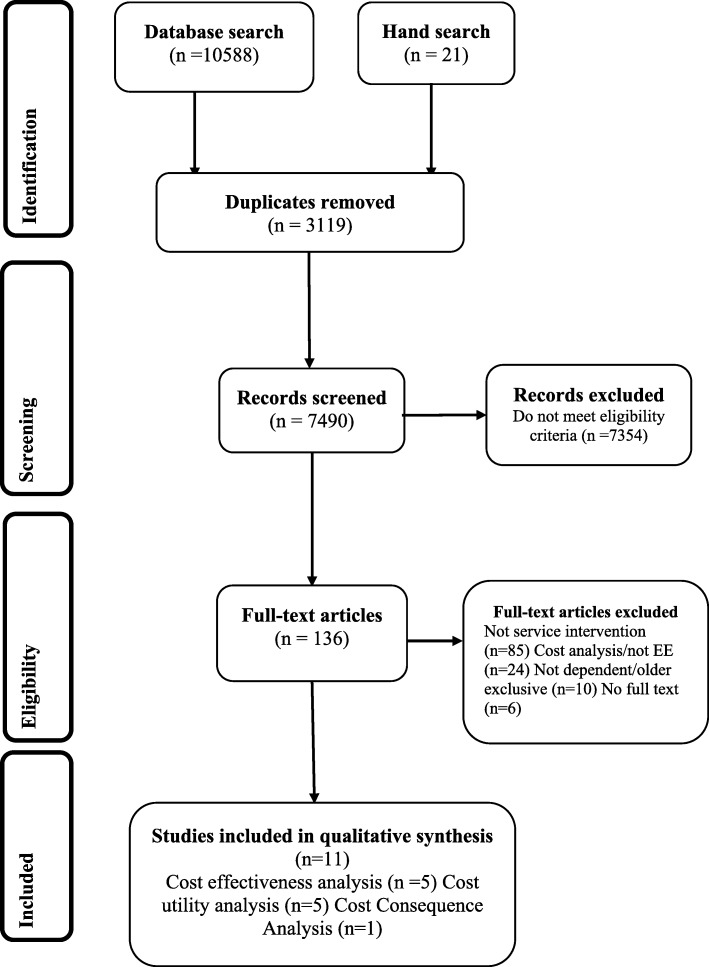
This paper reports the methods and findings from a systematic review of economic evaluations conducted in the community aged care sector between 2000 and 2016.
Online databases searched were PubMed, Medline, Scopus, and web of science, CINAHL and informit. Studies were included if they 1) were full economic evaluations that compared both the costs and outcomes of two or more interventions 2) in study population of people aged 65 years and over 3) dependent older people living in the community 4) alternatives being compared were care models or service delivery interventions in the community aged care sector (a group of programs that have been established as a support system to allow older people to remain living in their own homes for as long as possible, as an alternative to institutional or residential care) and 5) published in the English language between 2000 and November 2016.
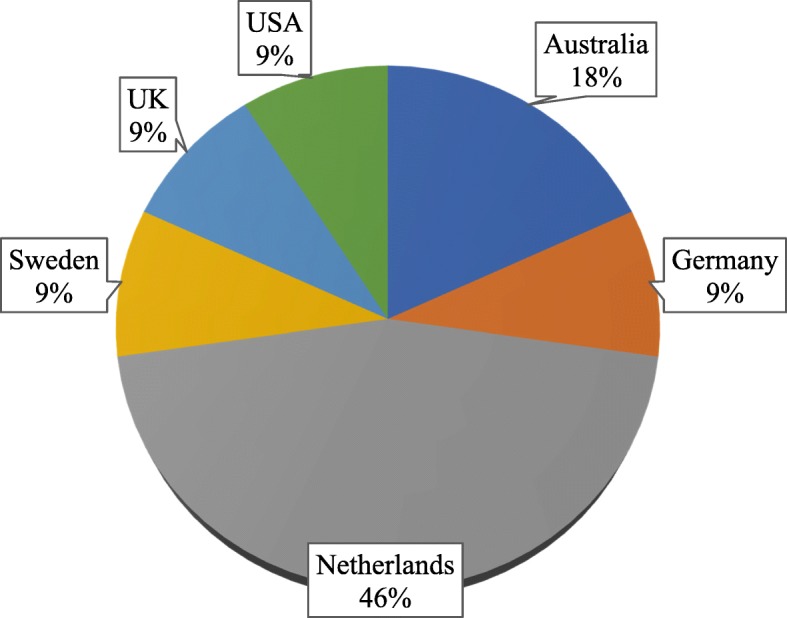
Eleven studies reporting upon economic evaluations of service delivery interventions in community aged care were identified; the majority of which were undertaken in Europe. Critical appraisal of the identified studies highlighted the methodological rigour in these evaluations.
This systematic review highlights the paucity of economic evaluation studies conducted to date in the community aged care sector. The findings highlight the importance of cost utility analysis methodology as it allows for a uniform outcome measure, that facilitates the comparison of different interventions. In addition, multi-attribute utility measures that represent those quality of life domains that are most important to older people should be used and attention must be paid to the inclusion of informal care costs and outcomes as this is a key resource in community aged care service delivery.
本文报告了对2000年至2016年间社区老年护理部门进行的经济评估进行系统评价的方法和结果。
检索的在线数据库有PubMed、Medline、Scopus、科学网、CINAHL和informit。纳入的研究需满足以下条件:1)为全面的经济评估,比较了两种或更多干预措施的成本和结果;2)研究人群为65岁及以上的老年人;3)居住在社区的依赖他人照顾的老年人;4)所比较的替代方案为社区老年护理部门的护理模式或服务提供干预措施(一组已建立的支持系统项目,旨在让老年人尽可能长时间地住在自己家中,作为机构或寄宿护理的替代方案);5)在2000年至2016年11月期间以英文发表。
确定了11项报告社区老年护理服务提供干预措施经济评估的研究;其中大部分在欧洲进行。对已确定研究的严格评价突出了这些评估中的方法严谨性。
本系统评价凸显了迄今为止社区老年护理部门进行的经济评估研究的匮乏。研究结果强调了成本效用分析方法的重要性,因为它允许采用统一的结果衡量标准,便于比较不同的干预措施。此外,应使用代表对老年人最重要的生活质量领域的多属性效用衡量标准,并必须关注纳入非正式护理成本和结果,因为这是社区老年护理服务提供中的关键资源。