Department of Medicine, Divisions of Medical Oncology and Palliative Medicine, University of Kansas Medical Center, 2330 Shawnee Mission Pkwy, MS 5003, Westwood, KS, 66205, USA.
Center for Quantitative Sciences, Vanderbilt University School of Medicine, 2220 Pierce Ave, 571 Preston Research Building, Nashville, TN, 37232, USA.
Support Care Cancer. 2019 Aug;27(8):2893-2902. doi: 10.1007/s00520-018-4577-3. Epub 2018 Dec 15.
Neuroinflammation and central sensitization from cancer and its therapy may result in chronic systemic symptoms (CSS) such as fatigue, sleep disturbance, chronic widespread pain, mood disorders, neuropsychiatric symptoms, and temperature dysregulation. We undertook a cross-sectional study of CSS in head and neck cancer (HNC) survivors to determine their frequency, severity, and impact.
HNC patients without evidence of recurrence who were at least 12 months post-treatment completed a one-time battery of self-report measures including the Vanderbilt Head and Neck Symptom survey plus the General Symptom Subscale, the Body Image Quality of Life Inventory, Neurotoxicity Rating Scale, the Profile of Mood States, and a five-item quality of life measure.
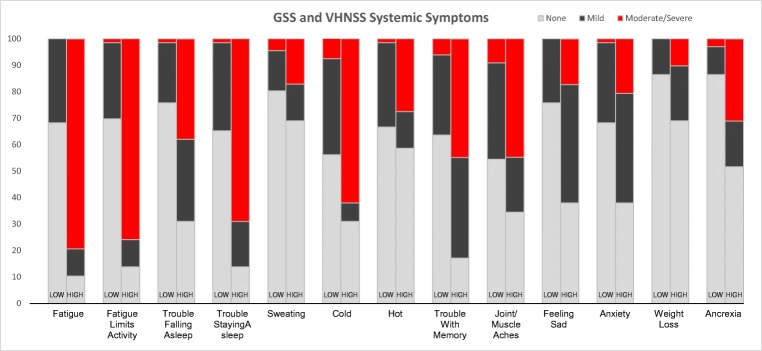
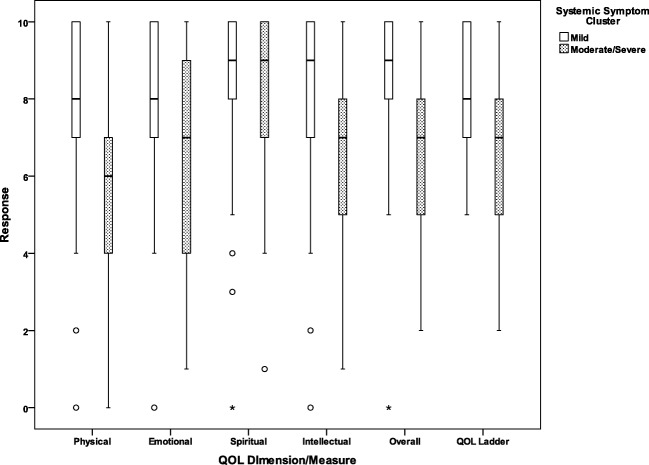
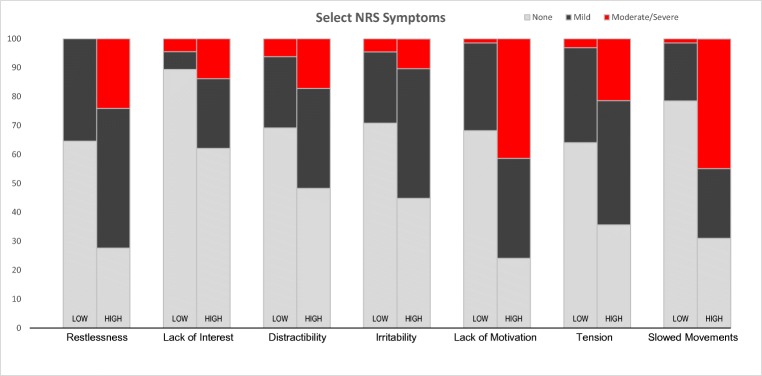
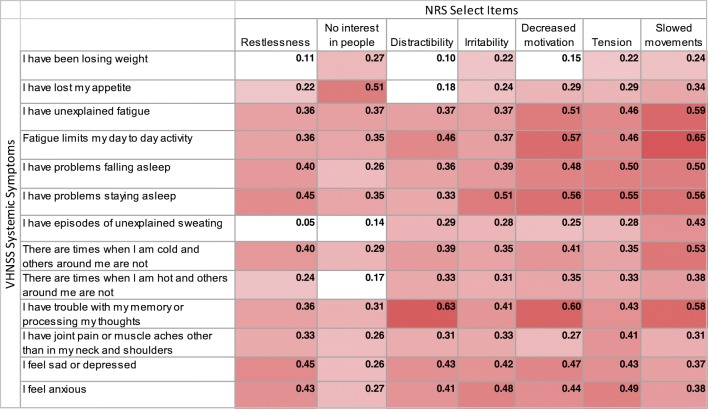
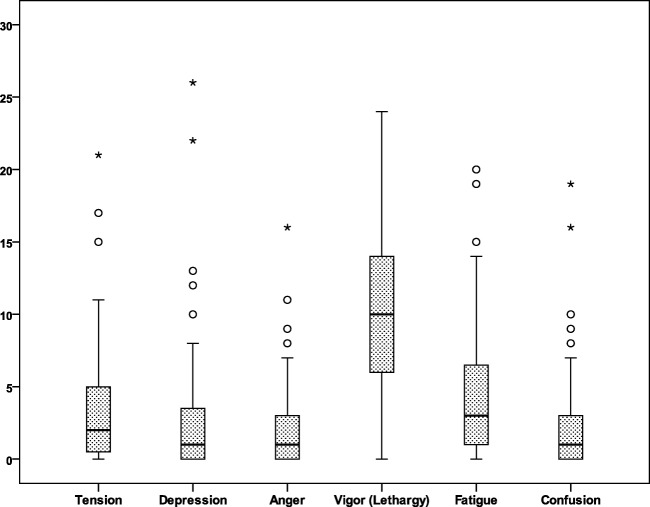
One hundred five patients completed the surveys. Forty-eight point four percent of patients experienced one or more moderate-to-severe systemic symptom. The frequency of individual symptoms was between 20% and 56% with almost half of patients rating symptoms as moderate-to-severe in intensity. Low and high systemic symptom burden populations were identified. Previously undescribed chronic neuropsychiatric symptoms were also found to be frequent and severe. The vigor score on the POMS was low. Body image was not adversely impacted. At least 40% of HNC survivors have diminished quality of life, and up to 15% have a poor quality of life.
CSS are common among HNC survivors and are frequently moderate to severe in intensity. Of note, previously underrecognized neuropsychiatric symptoms were endorsed by a significant cohort of patients warranting further study. Quality of life was diminished in a significant cohort.
癌症及其治疗引起的神经炎症和中枢敏化可能导致慢性全身症状(CSS),如疲劳、睡眠障碍、慢性广泛性疼痛、情绪障碍、神经精神症状和体温失调。我们对头颈部癌症(HNC)幸存者的 CSS 进行了横断面研究,以确定其频率、严重程度和影响。
无复发证据且至少治疗后 12 个月的 HNC 患者完成了一次性自我报告量表,包括范德比尔特头颈部症状调查加一般症状子量表、身体形象生活质量量表、神经毒性量表、心境状态量表和五项生活质量量表。
105 例患者完成了调查。48.4%的患者出现一种或多种中重度全身性症状。个体症状的频率在 20%到 56%之间,近一半的患者将症状评为中重度。确定了低和高全身症状负担人群。还发现了以前未描述的慢性神经精神症状,且频率高、严重程度高。POMS 的活力评分较低。身体形象没有受到不利影响。至少有 40%的 HNC 幸存者生活质量下降,多达 15%的幸存者生活质量较差。
CSS 在 HNC 幸存者中很常见,且通常为中重度。值得注意的是,以前被低估的神经精神症状被相当一部分患者认可,这需要进一步研究。相当一部分患者的生活质量下降。