• 文献检索
  • 文档翻译
  • 深度研究
  • 学术资讯
  • Suppr Zotero 插件Zotero 插件
  • 邀请有礼
  • 套餐&价格
  • 历史记录
应用&插件
Suppr Zotero 插件Zotero 插件浏览器插件Mac 客户端Windows 客户端微信小程序
定价
高级版会员购买积分包购买API积分包
服务
文献检索文档翻译深度研究API 文档MCP 服务
关于我们
关于 Suppr公司介绍联系我们用户协议隐私条款
关注我们

Suppr 超能文献

核心技术专利:CN118964589B侵权必究
粤ICP备2023148730 号-1Suppr @ 2026

文献检索

告别复杂PubMed语法,用中文像聊天一样搜索,搜遍4000万医学文献。AI智能推荐,让科研检索更轻松。

立即免费搜索

文件翻译

保留排版,准确专业,支持PDF/Word/PPT等文件格式,支持 12+语言互译。

免费翻译文档

深度研究

AI帮你快速写综述,25分钟生成高质量综述,智能提取关键信息,辅助科研写作。

立即免费体验

将集成学习与基于片段的拓扑方法相结合以在药物发现中产生新的分子多样性:热休克蛋白90抑制剂的计算机辅助设计

Combining Ensemble Learning with a Fragment-Based Topological Approach To Generate New Molecular Diversity in Drug Discovery: In Silico Design of Hsp90 Inhibitors.

作者信息

Speck-Planche Alejandro

机构信息

Research Program on Biomedical Informatics (GRIB), Hospital del Mar Medical Research Institute (IMIM), 08003 Barcelona, Spain.

出版信息

ACS Omega. 2018 Nov 30;3(11):14704-14716. doi: 10.1021/acsomega.8b02419. Epub 2018 Nov 2.

DOI:10.1021/acsomega.8b02419
PMID:30555986
原文链接:https://pmc.ncbi.nlm.nih.gov/articles/PMC6289491/
Abstract

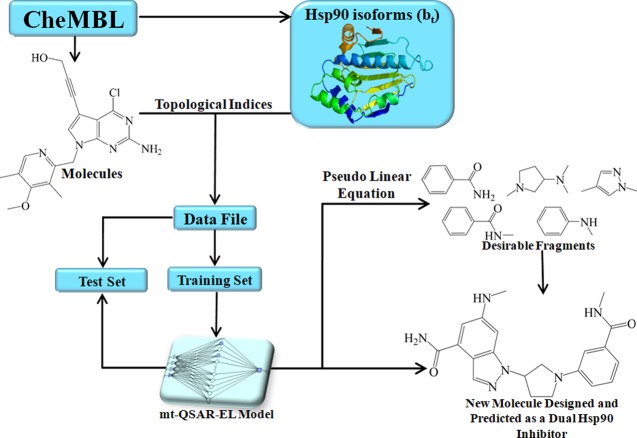
Machine learning methods have revolutionized modern science, providing fast and accurate solutions to multiple problems. However, they are commonly treated as "black boxes". Therefore, in important scientific fields such as medicinal chemistry and drug discovery, machine learning methods are restricted almost exclusively to the task of performing predictions of large and heterogeneous data sets of chemicals. The lack of interpretability prevents the full exploitation of the machine learning models as generators of new chemical knowledge. This work focuses on the development of an ensemble learning model for the prediction and design of potent dual heat shock protein 90 (Hsp90) inhibitors. The model displays accuracy higher than 80% in both training and test sets. To use the ensemble model as a generator of new chemical knowledge, three steps were followed. First, a physicochemical and/or structural interpretation was provided for each molecular descriptor present in the ensemble learning model. Second, the term "pseudolinear equation" was introduced within the context of machine learning to calculate the relative quantitative contributions of different molecular fragments to the inhibitory activity against the two Hsp90 isoforms studied here. Finally, by assembling the fragments with positive contributions, new molecules were designed, being predicted as potent Hsp90 inhibitors. According to Lipinski's rule of five, the designed molecules were found to exhibit potentially good oral bioavailability, a primordial property that chemicals must have to pass early stages in drug discovery. The present approach based on the combination of ensemble learning and fragment-based topological design holds great promise in drug discovery, and it can be adapted and applied to many different scientific disciplines.

摘要

机器学习方法彻底改变了现代科学,为多种问题提供了快速准确的解决方案。然而,它们通常被视为“黑匣子”。因此,在药物化学和药物发现等重要科学领域,机器学习方法几乎仅局限于对大量异构化学数据集进行预测的任务。缺乏可解释性阻碍了将机器学习模型充分用作新化学知识的生成器。这项工作专注于开发一种用于预测和设计强效双热休克蛋白90(Hsp90)抑制剂的集成学习模型。该模型在训练集和测试集中的准确率均高于80%。为了将集成模型用作新化学知识的生成器,我们采取了三个步骤。首先,对集成学习模型中存在的每个分子描述符进行了物理化学和/或结构解释。其次,在机器学习的背景下引入了“伪线性方程”,以计算不同分子片段对本文研究的两种Hsp90亚型抑制活性的相对定量贡献。最后,通过组装具有正贡献的片段,设计了新分子,并被预测为强效Hsp90抑制剂。根据Lipinski的五规则,发现所设计的分子具有潜在良好的口服生物利用度,这是化学物质在药物发现早期阶段必须具备的首要特性。基于集成学习和基于片段的拓扑设计相结合的本方法在药物发现中具有很大的前景,并且可以适用于许多不同的科学学科。

https://cdn.ncbi.nlm.nih.gov/pmc/blobs/93e7/6646556/58d0f9dc0e86/ao-2018-024197_0005.jpg
https://cdn.ncbi.nlm.nih.gov/pmc/blobs/93e7/6646556/0e44fc455fe3/ao-2018-024197_0001.jpg
https://cdn.ncbi.nlm.nih.gov/pmc/blobs/93e7/6646556/a7396b48fd99/ao-2018-024197_0002.jpg
https://cdn.ncbi.nlm.nih.gov/pmc/blobs/93e7/6646556/28b6bc7492b0/ao-2018-024197_0003.jpg
https://cdn.ncbi.nlm.nih.gov/pmc/blobs/93e7/6646556/3c5defdb1378/ao-2018-024197_0004.jpg
https://cdn.ncbi.nlm.nih.gov/pmc/blobs/93e7/6646556/58d0f9dc0e86/ao-2018-024197_0005.jpg
https://cdn.ncbi.nlm.nih.gov/pmc/blobs/93e7/6646556/0e44fc455fe3/ao-2018-024197_0001.jpg
https://cdn.ncbi.nlm.nih.gov/pmc/blobs/93e7/6646556/a7396b48fd99/ao-2018-024197_0002.jpg
https://cdn.ncbi.nlm.nih.gov/pmc/blobs/93e7/6646556/28b6bc7492b0/ao-2018-024197_0003.jpg
https://cdn.ncbi.nlm.nih.gov/pmc/blobs/93e7/6646556/3c5defdb1378/ao-2018-024197_0004.jpg
https://cdn.ncbi.nlm.nih.gov/pmc/blobs/93e7/6646556/58d0f9dc0e86/ao-2018-024197_0005.jpg

相似文献

1
Combining Ensemble Learning with a Fragment-Based Topological Approach To Generate New Molecular Diversity in Drug Discovery: In Silico Design of Hsp90 Inhibitors.将集成学习与基于片段的拓扑方法相结合以在药物发现中产生新的分子多样性:热休克蛋白90抑制剂的计算机辅助设计
ACS Omega. 2018 Nov 30;3(11):14704-14716. doi: 10.1021/acsomega.8b02419. Epub 2018 Nov 2.
2
Multi-target Drug Discovery via PTML Modeling: Applications to the Design of Virtual Dual Inhibitors of CDK4 and HER2.通过PTML建模进行多靶点药物发现:在CDK4和HER2虚拟双抑制剂设计中的应用
Curr Top Med Chem. 2021;21(7):661-675. doi: 10.2174/1568026621666210119112845.
3
BET bromodomain inhibitors: fragment-based in silico design using multi-target QSAR models.BET 溴结构域抑制剂:基于多靶标 QSAR 模型的基于片段的计算设计。
Mol Divers. 2019 Aug;23(3):555-572. doi: 10.1007/s11030-018-9890-8. Epub 2018 Nov 12.
4
Speeding up Early Drug Discovery in Antiviral Research: A Fragment-Based in Silico Approach for the Design of Virtual Anti-Hepatitis C Leads.加速抗病毒研究中的早期药物发现:一种基于片段的计算机辅助方法用于设计虚拟抗丙型肝炎先导化合物。
ACS Comb Sci. 2017 Aug 14;19(8):501-512. doi: 10.1021/acscombsci.7b00039. Epub 2017 May 1.
5
Ligand-Based Approach for Multi-Target Drug Discovery: PTML Modeling of Triple-Target Inhibitors.基于配体的多靶点药物发现方法:三靶点抑制剂的PTML建模
Curr Top Med Chem. 2024 Aug 21. doi: 10.2174/0115680266325897240815112505.
6
Fragment-based in silico modeling of multi-target inhibitors against breast cancer-related proteins.基于片段的针对乳腺癌相关蛋白的多靶抑制剂的计算机模拟。
Mol Divers. 2017 Aug;21(3):511-523. doi: 10.1007/s11030-017-9731-1. Epub 2017 Feb 13.
7
A big data approach with artificial neural network and molecular similarity for chemical data mining and endocrine disruption prediction.一种结合人工神经网络和分子相似性的大数据方法用于化学数据挖掘和内分泌干扰预测。
Indian J Pharmacol. 2018 Jul-Aug;50(4):169-176. doi: 10.4103/ijp.IJP_304_17.
8
Comprehensive ensemble in QSAR prediction for drug discovery.用于药物发现的 QSAR 预测的综合集成。
BMC Bioinformatics. 2019 Oct 26;20(1):521. doi: 10.1186/s12859-019-3135-4.
9
Exploiting ensemble learning to improve prediction of phospholipidosis inducing potential.利用集成学习提高磷脂蓄积诱导潜力预测。
J Theor Biol. 2019 Oct 21;479:37-47. doi: 10.1016/j.jtbi.2019.07.009. Epub 2019 Jul 13.
10
An Ensemble Structure and Physicochemical (SPOC) Descriptor for Machine-Learning Prediction of Chemical Reaction and Molecular Properties.用于机器学习预测化学反应和分子性质的集成结构和物理化学(SPOC)描述符。
Chemphyschem. 2022 Jul 19;23(14):e202200255. doi: 10.1002/cphc.202200255. Epub 2022 May 19.

引用本文的文献

1
Modeling and Interpretability Study of the Structure-Activity Relationship for Multigeneration EGFR Inhibitors.多代表皮生长因子受体(EGFR)抑制剂构效关系的建模与可解释性研究
ACS Omega. 2025 Mar 14;10(11):11176-11187. doi: 10.1021/acsomega.4c10464. eCollection 2025 Mar 25.
2
Perturbation-theory machine learning for mood disorders: virtual design of dual inhibitors of NET and SERT proteins.用于情绪障碍的微扰理论机器学习:去甲肾上腺素转运体(NET)和5-羟色胺转运体(SERT)蛋白双重抑制剂的虚拟设计
BMC Chem. 2025 Jan 2;19(1):2. doi: 10.1186/s13065-024-01376-z.
3
Recent advances from computer-aided drug design to artificial intelligence drug design.

本文引用的文献

1
PTML Combinatorial Model of ChEMBL Compounds Assays for Multiple Types of Cancer.PTML 组合模型分析多个类型癌症的 ChEMBL 化合物检测结果。
ACS Comb Sci. 2018 Nov 12;20(11):621-632. doi: 10.1021/acscombsci.8b00090. Epub 2018 Oct 3.
2
Perturbation Theory-Machine Learning Study of Zeolite Materials Desilication.沸石材料脱硅的微扰理论-机器学习研究。
J Chem Inf Model. 2018 Dec 24;58(12):2414-2419. doi: 10.1021/acs.jcim.8b00383. Epub 2018 Sep 7.
3
Perturbation-Theory and Machine Learning (PTML) Model for High-Throughput Screening of Parham Reactions: Experimental and Theoretical Studies.
从计算机辅助药物设计到人工智能药物设计的最新进展。
RSC Med Chem. 2024 Oct 11;15(12):3978-4000. doi: 10.1039/d4md00522h.
4
Multi-Condition QSAR Model for the Virtual Design of Chemicals with Dual Pan-Antiviral and Anti-Cytokine Storm Profiles.具有双泛抗病毒和抗细胞因子风暴特性的化学品虚拟设计的多条件定量构效关系模型
ACS Omega. 2022 Aug 29;7(36):32119-32130. doi: 10.1021/acsomega.2c03363. eCollection 2022 Sep 13.
5
Moving Average-Based Multitasking In Silico Classification Modeling: Where Do We Stand and What Is Next?基于移动平均的计算机辅助分类模型的多任务处理:现状如何,下一步如何发展?
Int J Mol Sci. 2022 Apr 29;23(9):4937. doi: 10.3390/ijms23094937.
6
PTML Modeling for Pancreatic Cancer Research: In Silico Design of Simultaneous Multi-Protein and Multi-Cell Inhibitors.用于胰腺癌研究的PTML建模:同时针对多种蛋白质和多种细胞的抑制剂的计算机模拟设计
Biomedicines. 2022 Feb 18;10(2):491. doi: 10.3390/biomedicines10020491.
7
In Silico Drug Repurposing for Anti-Inflammatory Therapy: Virtual Search for Dual Inhibitors of Caspase-1 and TNF-Alpha.计算机药物重定位用于抗炎治疗:靶向 Caspase-1 和 TNF-α 的双重抑制剂的虚拟筛选。
Biomolecules. 2021 Dec 4;11(12):1832. doi: 10.3390/biom11121832.
8
PTML modeling for peptide discovery: in silico design of non-hemolytic peptides with antihypertensive activity.PTML 模型在肽类发现中的应用:具有降血压活性的非溶血肽的计算机设计。
Mol Divers. 2022 Oct;26(5):2523-2534. doi: 10.1007/s11030-021-10350-z. Epub 2021 Nov 21.
9
Artificial intelligence for assisting cancer diagnosis and treatment in the era of precision medicine.人工智能在精准医学时代辅助癌症诊断和治疗。
Cancer Commun (Lond). 2021 Nov;41(11):1100-1115. doi: 10.1002/cac2.12215. Epub 2021 Oct 6.
10
Computational Drug Repurposing for Antituberculosis Therapy: Discovery of Multi-Strain Inhibitors.用于抗结核治疗的计算药物重新利用:多菌株抑制剂的发现
Antibiotics (Basel). 2021 Aug 19;10(8):1005. doi: 10.3390/antibiotics10081005.
用于高通量筛选 Parham 反应的摄动理论和机器学习 (PTML) 模型:实验和理论研究。
J Chem Inf Model. 2018 Jul 23;58(7):1384-1396. doi: 10.1021/acs.jcim.8b00286. Epub 2018 Jun 27.
4
It's not magic - Hsp90 and its effects on genetic and epigenetic variation.这不是魔法 - Hsp90 及其对遗传和表观遗传变异的影响。
Semin Cell Dev Biol. 2019 Apr;88:21-35. doi: 10.1016/j.semcdb.2018.05.015. Epub 2018 Jun 6.
5
Perturbation Theory/Machine Learning Model of ChEMBL Data for Dopamine Targets: Docking, Synthesis, and Assay of New l-Prolyl-l-leucyl-glycinamide Peptidomimetics.ChEMBL 数据的微扰理论/机器学习模型用于多巴胺靶点:新型 l-脯氨酰-l-亮氨酰-甘氨酰胺类肽类似物的对接、合成和测定。
ACS Chem Neurosci. 2018 Nov 21;9(11):2572-2587. doi: 10.1021/acschemneuro.8b00083. Epub 2018 Jun 25.
6
Reinforced Adversarial Neural Computer for de Novo Molecular Design.强化对抗神经网络计算机用于从头分子设计。
J Chem Inf Model. 2018 Jun 25;58(6):1194-1204. doi: 10.1021/acs.jcim.7b00690. Epub 2018 Jun 12.
7
Machine learning in chemoinformatics and drug discovery.机器学习在化学生信学和药物发现中的应用。
Drug Discov Today. 2018 Aug;23(8):1538-1546. doi: 10.1016/j.drudis.2018.05.010. Epub 2018 May 8.
8
Automatic Chemical Design Using a Data-Driven Continuous Representation of Molecules.使用数据驱动的分子连续表示法进行自动化学设计。
ACS Cent Sci. 2018 Feb 28;4(2):268-276. doi: 10.1021/acscentsci.7b00572. Epub 2018 Jan 12.
9
Discussion on Regression Methods Based on Ensemble Learning and Applicability Domains of Linear Submodels.基于集成学习的回归方法与线性子模型适用域的探讨。
J Chem Inf Model. 2018 Feb 26;58(2):480-489. doi: 10.1021/acs.jcim.7b00649. Epub 2018 Feb 15.
10
Generating Focused Molecule Libraries for Drug Discovery with Recurrent Neural Networks.使用递归神经网络生成用于药物发现的聚焦分子库。
ACS Cent Sci. 2018 Jan 24;4(1):120-131. doi: 10.1021/acscentsci.7b00512. Epub 2017 Dec 28.