Department of Continuing Education University of Oxford, Oxford, United Kingdom.
Institute of Primary Health Care (BIHAM), University of Bern, Bern, Switzerland.
PLoS One. 2018 Dec 17;13(12):e0202616. doi: 10.1371/journal.pone.0202616. eCollection 2018.
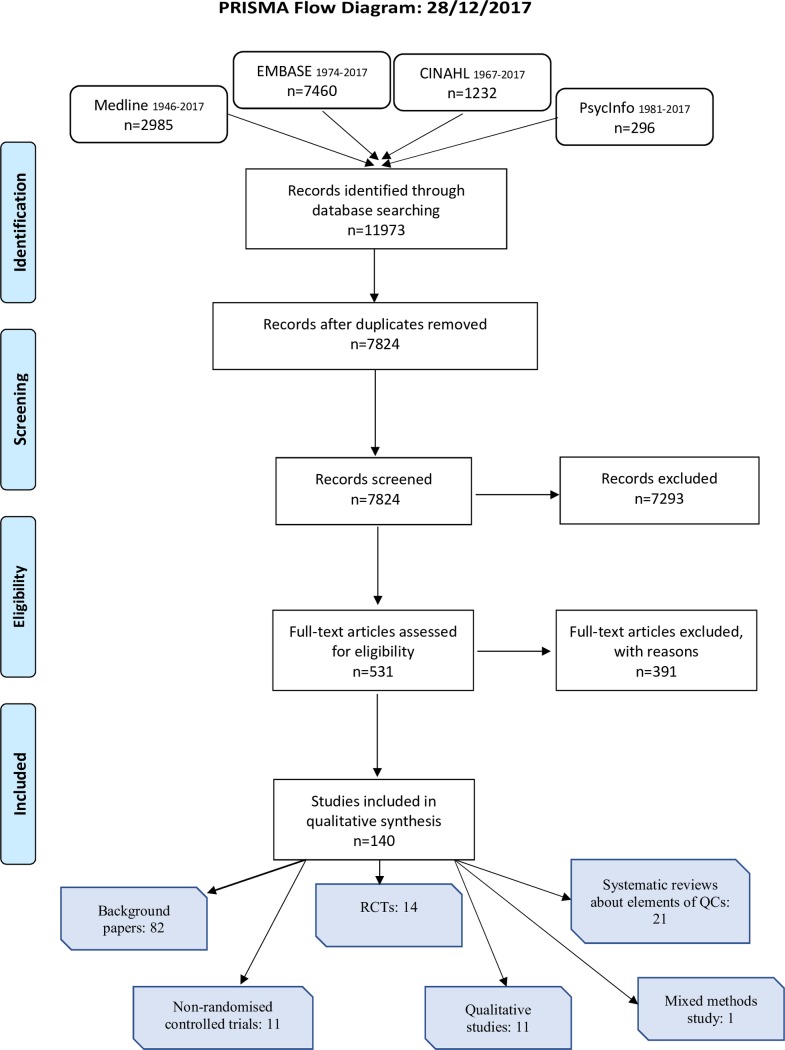
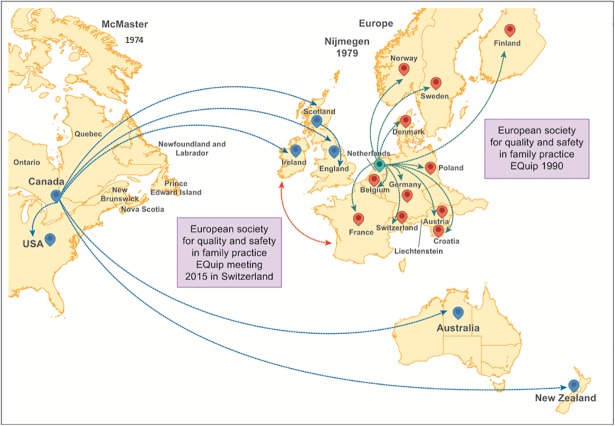
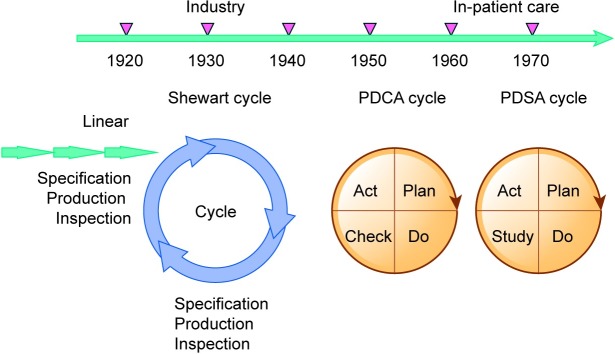
Quality circles or peer review groups, and similar structured small groups of 6-12 health care professionals meet regularly across Europe to reflect on and improve their standard practice. There is debate over their effectiveness in primary health care, especially over their potential to change practitioners' behaviour. Despite their popularity, we could not identify broad surveys of the literature on quality circles in a primary care context. Our scoping review was intended to identify possible definitions of quality circles, their origins, and reported effectiveness in primary health care, and to identify gaps in our knowledge. We searched appropriate databases and included any relevant paper on quality circles published until December 2017. We then compared information we found in the articles to that we found in books and on websites. Our search returned 7824 citations, from which we identified 82 background papers and 58 papers about quality circles. We found that they originated in manufacturing industry and that many countries adopted them for primary health care to continuously improve medical education, professional development, and quality of care. Quality circles are not standardized and their techniques are complex. We identified 19 papers that described individual studies, one paper that summarized 3 studies, and 1 systematic review that suggested that quality circles can effectively change behaviour, though effect sizes varied, depending on topic and context. Studies also suggested participation may affirm self-esteem and increase professional confidence. Because reports of the effect of quality circles on behaviour are variable, we recommend theory-driven research approaches to analyse and improve the effectiveness of this complex intervention.
质量圈或同行评审小组等类似的 6-12 名医疗保健专业人员组成的结构化小团体在欧洲各地定期开会,反思和改进他们的标准实践。关于它们在初级保健中的有效性存在争议,尤其是关于它们改变从业者行为的潜力。尽管它们很受欢迎,但我们无法在初级保健环境中找到关于质量圈的广泛文献调查。我们的范围审查旨在确定质量圈的可能定义、它们的起源以及在初级保健中的报告效果,并确定我们知识中的差距。我们搜索了适当的数据库,并包括了截至 2017 年 12 月发表的任何关于质量圈的相关论文。然后,我们将在文章中找到的信息与在书籍和网站上找到的信息进行比较。我们的搜索返回了 7824 条引文,从中我们确定了 82 份背景文件和 58 篇关于质量圈的论文。我们发现它们起源于制造业,许多国家将其用于初级保健,以不断提高医学教育、专业发展和护理质量。质量圈没有标准化,其技术也很复杂。我们确定了 19 篇描述个别研究的论文,1 篇总结 3 项研究的论文,以及 1 篇系统评价,表明质量圈可以有效地改变行为,尽管效果大小因主题和背景而异。研究还表明,参与可以肯定自尊并增强专业信心。由于关于质量圈对行为影响的报告各不相同,我们建议采用理论驱动的研究方法来分析和提高这种复杂干预措施的效果。