Institute of Primary Health Care (BIHAM), University of Bern, Bern, Switzerland
Medical Center, Medbase, Wil, Switzerland.
BMJ Open. 2022 May 4;12(5):e058453. doi: 10.1136/bmjopen-2021-058453.
To understand how and why participation in quality circles (QCs) improves general practitioners' (GPs) psychological well-being and the quality of their clinical practice. To provide evidence-informed and practical guidance to maintain QCs at local and policy levels.
A theory-driven mixed method.
Primary healthcare.
We collected data in four stages to develop and refine the programme theory of QCs: (1) coinquiry with Swiss and European expert stakeholders to develop a preliminary programme theory; (2) realist review with systematic searches in MEDLINE, Embase, PsycINFO and CINHAL (1980-2020) to inform the preliminary programme theory; (3) programme refinement through interviews with participants, facilitators, tutors and managers of QCs and (4) consolidation of theory through interviews with QC experts across Europe and examining existing theories.
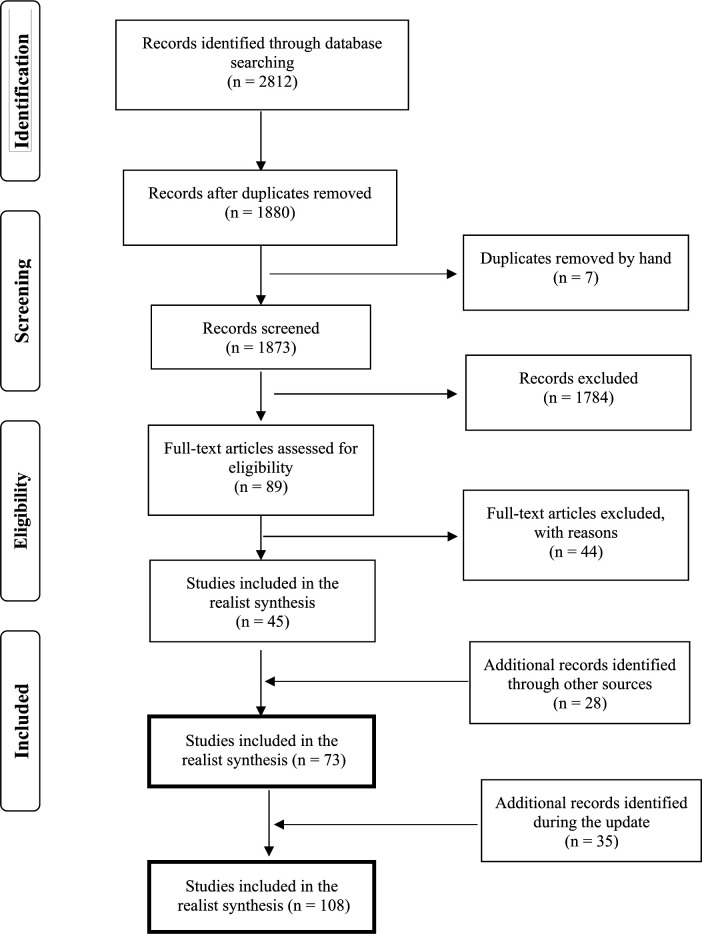
The coinquiry comprised 4 interviews and 3 focus groups with 50 European experts. From the literature search, we included 108 papers to develop the literature-based programme theory. In stage 3, we used data from 40 participants gathered in 6 interviews and 2 focus groups to refine the programme theory. In stage 4, five interviewees from different healthcare systems consolidated our programme theory.
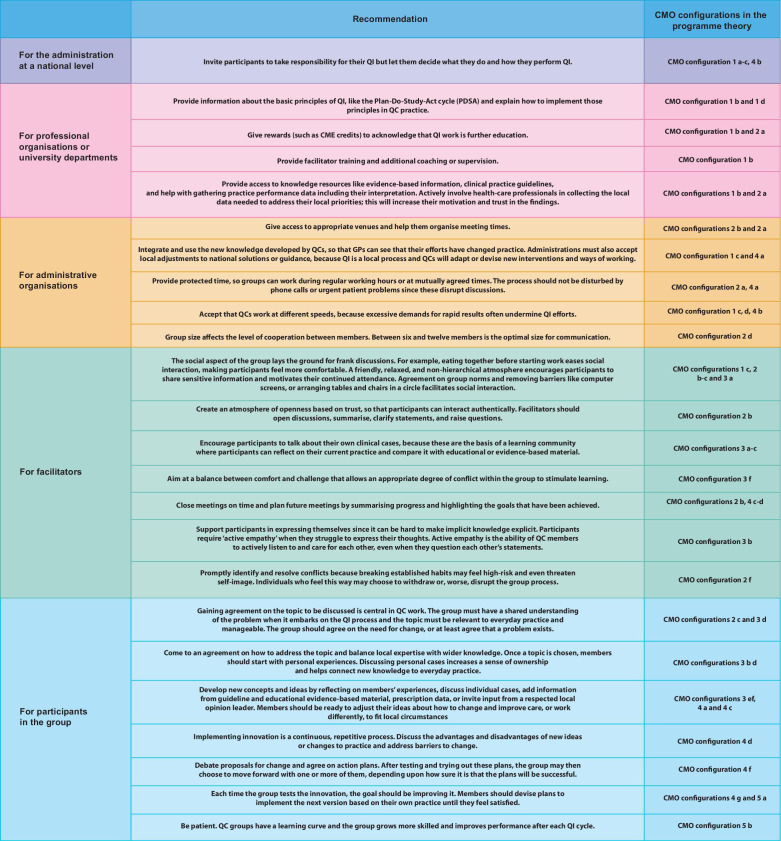
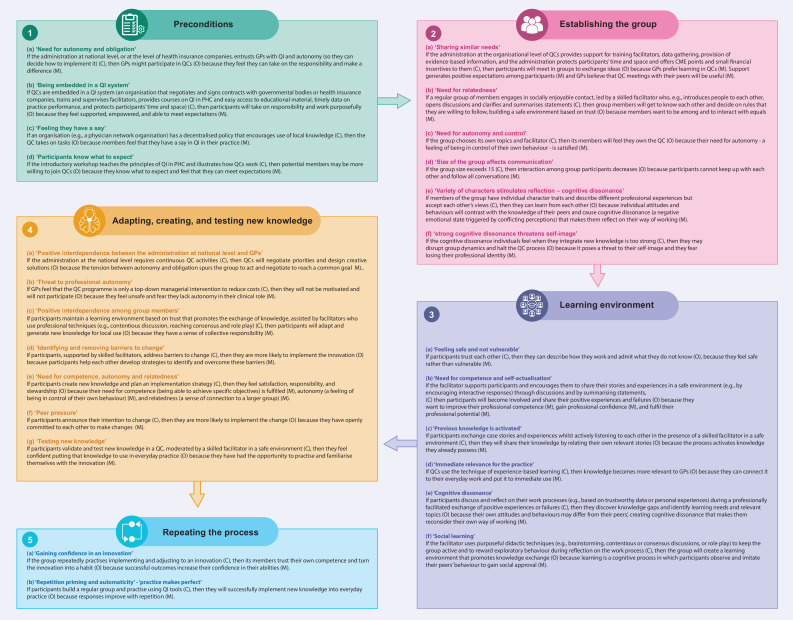
Requirements for successful QCs are governmental trust in GPs' abilities to deliver quality improvement, training, access to educational material and performance data, protected time and financial resources. Group dynamics strongly influence success; facilitators should ensure participants exchange knowledge and generate new concepts in a safe environment. Peer interaction promotes professional development and psychological well-being. With repetition, participants gain confidence to put their new concepts into practice.
With expert facilitation, clinical review and practice opportunities, QCs can improve the quality of standard practice, enhance professional development and increase psychological well-being in the context of adequate professional and administrative support.
CRD42013004826.
了解参与质量圈(QCs)如何以及为何能提高全科医生的心理健康和临床实践质量。为在地方和政策层面维持 QCs 提供循证和实用的指导。
理论驱动的混合方法。
初级保健。
我们分四个阶段收集数据,以制定和完善 QCs 的方案理论:(1)与瑞士和欧洲专家利益相关者进行共同探究,以制定初步方案理论;(2)通过在 MEDLINE、Embase、PsycINFO 和 CINHAL(1980-2020)进行系统检索,为初步方案理论提供信息;(3)通过对 QCs 的参与者、促进者、导师和管理人员进行访谈,对方案进行细化;(4)通过对欧洲各地的 QC 专家进行访谈并检查现有理论,对理论进行整合。
共同探究包括与 50 名欧洲专家进行的 4 次访谈和 3 次焦点小组。从文献检索中,我们纳入了 108 篇论文,以制定基于文献的方案理论。在第 3 阶段,我们使用了来自 6 次访谈和 2 次焦点小组的 40 名参与者的数据,对方案理论进行细化。在第 4 阶段,来自不同医疗保健系统的 5 名受访者对我们的方案理论进行了总结。
成功的 QCs 需要政府对全科医生提供质量改进、培训、获得教育材料和绩效数据、受保护的时间和财政资源的能力的信任。群体动态对成功有很大影响;促进者应确保参与者在安全的环境中交流知识并产生新的概念。同行互动促进专业发展和心理健康。随着重复,参与者获得信心将新概念付诸实践。
在专家促进、临床审查和实践机会的支持下,QCs 可以提高标准实践的质量,增强专业发展,并在充分的专业和行政支持下提高心理健康水平。
PROSPERO 注册号:CRD42013004826。