Laboratory of Pharmacology, Department of Drug Sciences, Faculty of Pharmacy, University of Porto,Rua de Jorge Viterbo Ferreira 228, 4050-313 Porto, Portugal.
Department of Molecular Pathology and Immunology, Institute of Biomedical Sciences Abel Salazar(ICBAS), University of Porto, Rua de Jorge Viterbo Ferreira 228, 4050-313 Porto, Portugal.
Biomolecules. 2018 Dec 14;8(4):175. doi: 10.3390/biom8040175.
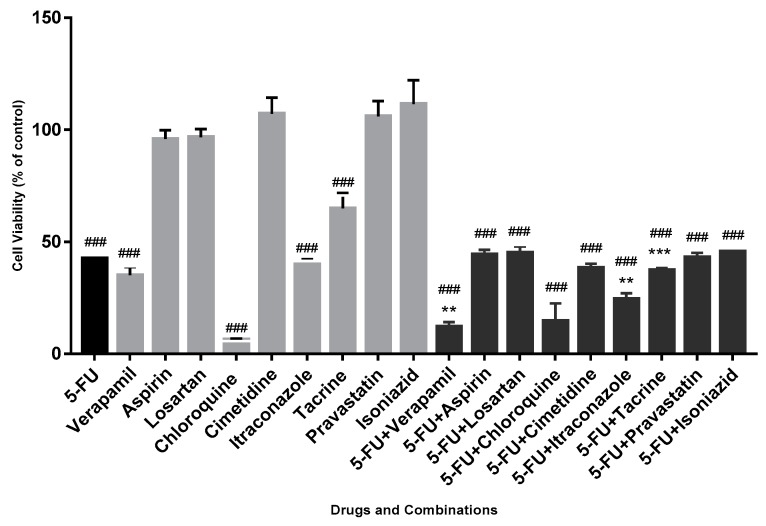
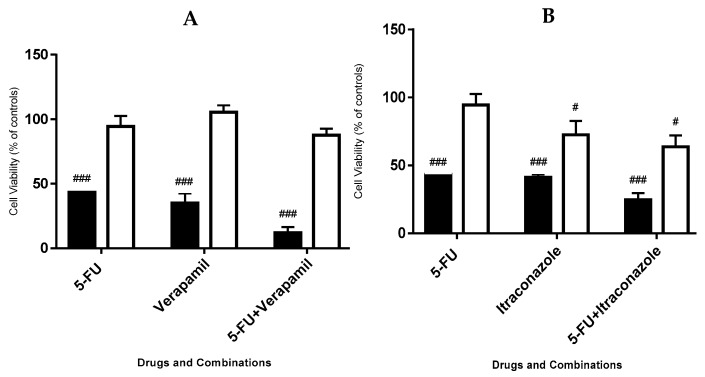
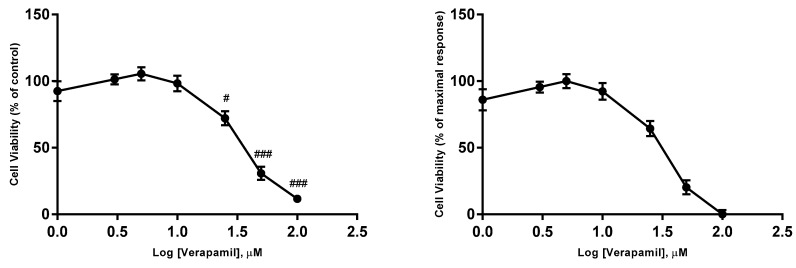
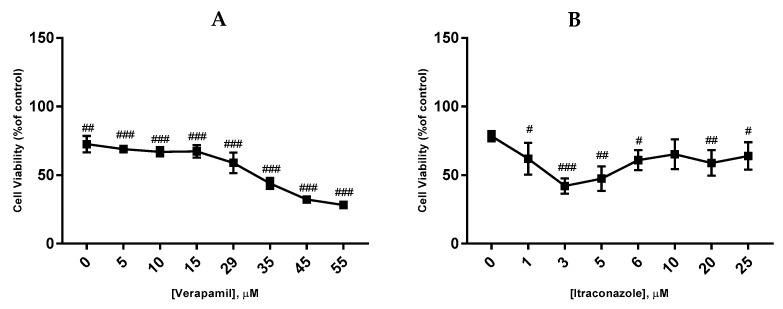
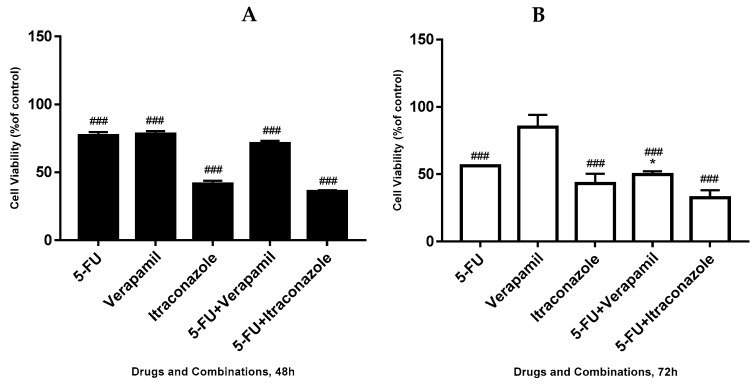
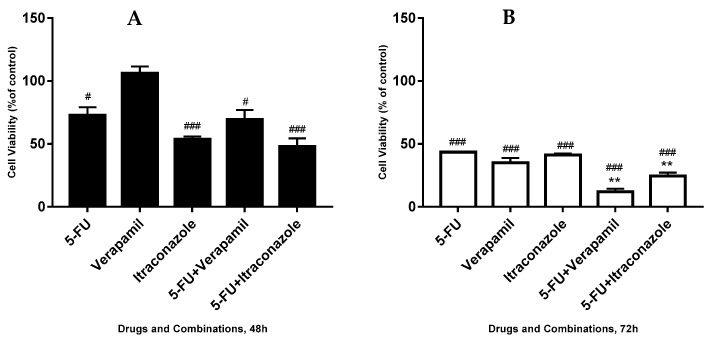
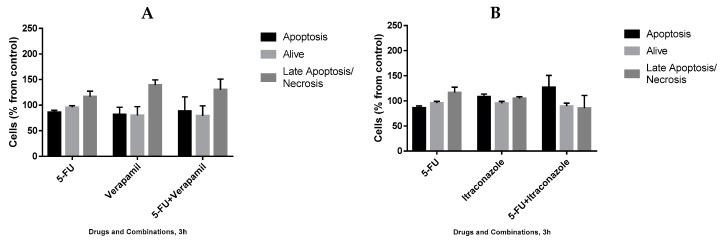
Cancer is a disease that affects and kills millions of people worldwide. Breast cancer, especially, has a high incidence and mortality, and is challenging to treat. Due to its high impact on the health sector, oncological therapy is the subject of an intense and very expensive research. To improve this therapy and reduce its costs, strategies such as drug repurposing and drug combinations have been extensively studied. Drug repurposing means giving new usefulness to drugs which are approved for the therapy of various diseases, but, in this case, are not approved for cancer therapy. On the other hand, the purpose of combining drugs is that the response that is obtained is more advantageous than the response obtained by the single drugs. Using drugs with potential to be repurposed, combined with 5-fluorouracil, the aim of this project was to investigate whether this combination led to therapeutic benefits, comparing with the isolated drugs. We started with a screening of the most promising drugs, with verapamil and itraconazole being chosen. Several cellular viability studies, cell death and proliferation studies, mainly in MCF-7 cells (Michigan Cancer Foundation-7, human breast adenocarcinoma cells) were performed. Studies were also carried out to understand the effect of the drugs at the level of possible therapeutic resistance, evaluating the epithelial-mesenchymal transition. Combining all the results, the conclusion is that the combination of verapamil and itraconazole with 5-fluorouracil had benefits, mainly by decreasing cell viability and proliferation. Furthermore, the combination of itraconazole and 5-fluorouracil seemed to be the most effective, being an interesting focus in future studies.
癌症是一种影响全球数百万人生命的疾病。特别是乳腺癌,发病率和死亡率较高,治疗难度大。由于对卫生部门的影响很大,肿瘤治疗是一项激烈且非常昂贵的研究课题。为了改善这种治疗方法并降低其成本,已经广泛研究了药物重新定位和药物联合等策略。药物重新定位是指将已批准用于治疗各种疾病但未批准用于癌症治疗的药物赋予新的用途。另一方面,联合用药的目的是获得的反应比单一药物的反应更有利。本项目使用有重新定位潜力的药物与 5-氟尿嘧啶联合,目的是研究这种组合是否比单独使用这些药物更能带来治疗益处。我们从筛选最有前途的药物开始,选择了维拉帕米和伊曲康唑。进行了几项细胞活力研究、细胞死亡和增殖研究,主要在 MCF-7 细胞(密歇根癌症基金会-7,人乳腺腺癌细胞)中进行。还进行了研究以了解药物在可能的治疗抵抗水平上的作用,评估上皮-间充质转化。综合所有结果,结论是维拉帕米和伊曲康唑与 5-氟尿嘧啶联合使用具有益处,主要通过降低细胞活力和增殖。此外,伊曲康唑和 5-氟尿嘧啶的联合似乎最有效,是未来研究的一个有趣焦点。