You Rong, Dai Jin, Zhang Ping, Barding Gregory A, Raftery Daniel
College of Life Sciences, South China Normal University, 55 Zhongshan Avenue West, Guangzhou 510631, China.
Mitochondria and Metabolism Center, Department of Anesthesiology and Pain Medicine, University of Washington, 850 Republican Street, Seattle, WA 98109, USA.
Metabolites. 2018 Dec 15;8(4):95. doi: 10.3390/metabo8040095.
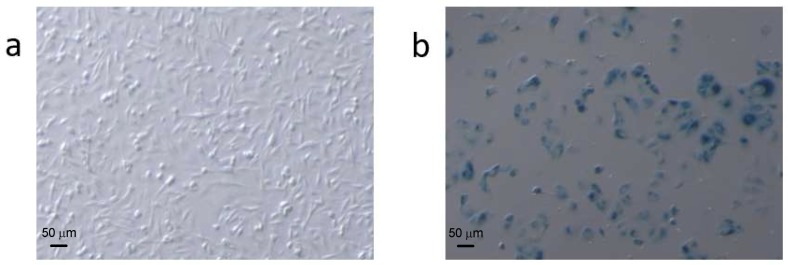
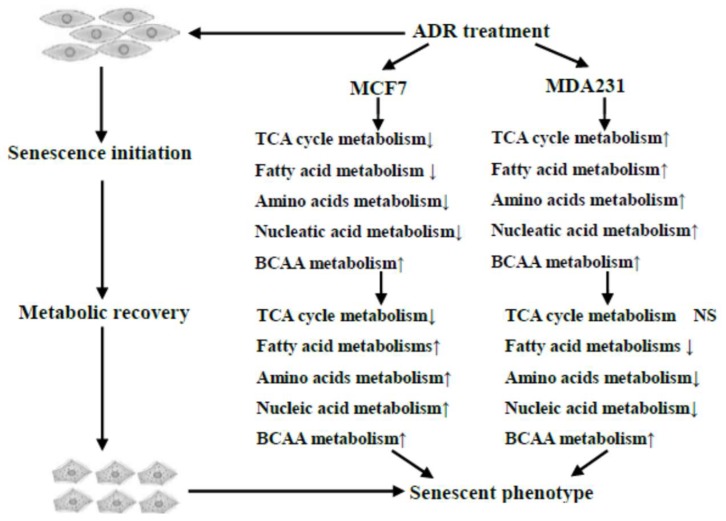
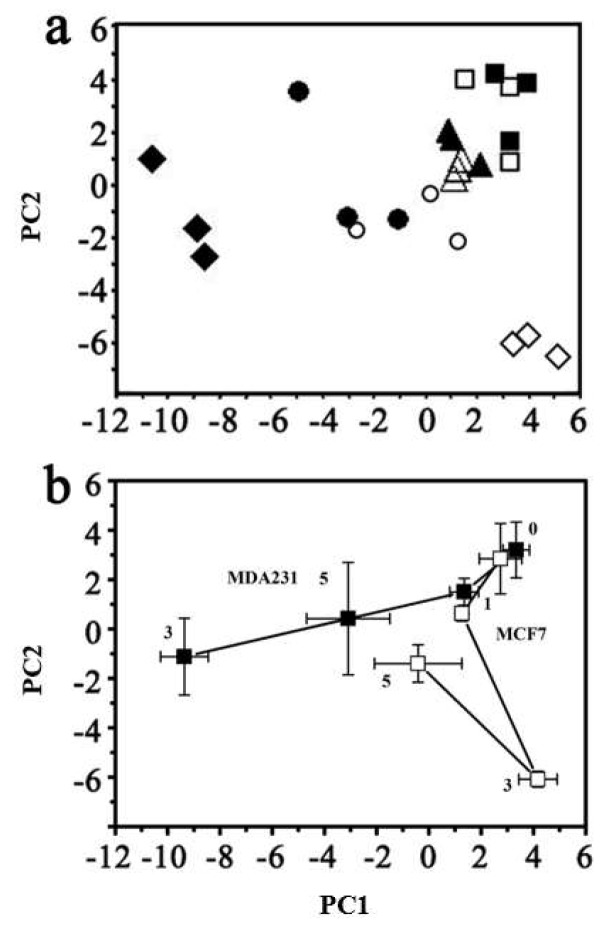
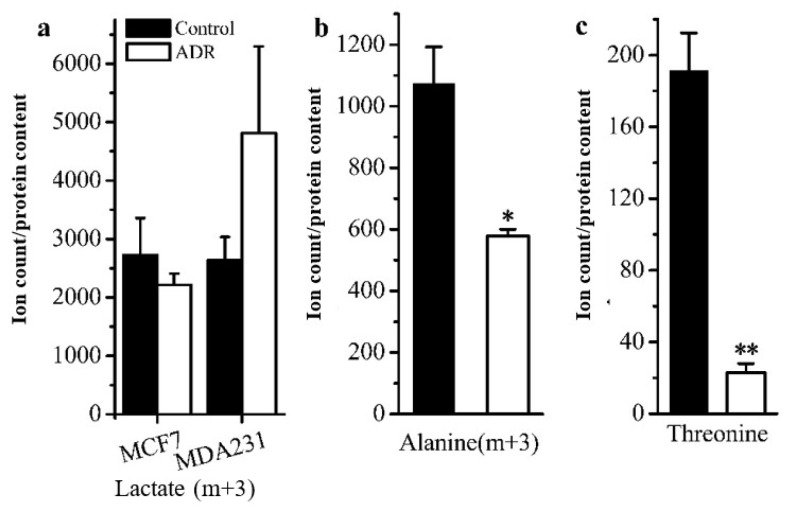
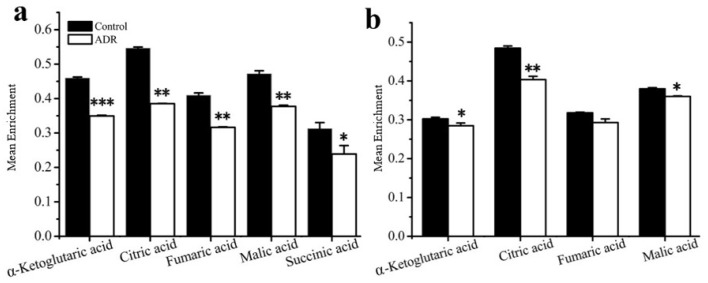
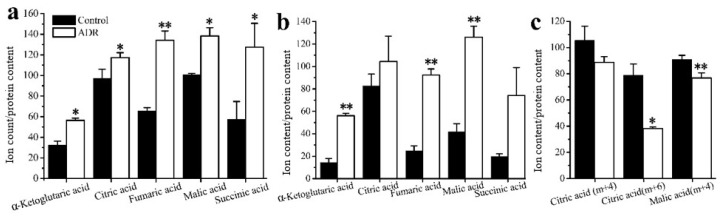
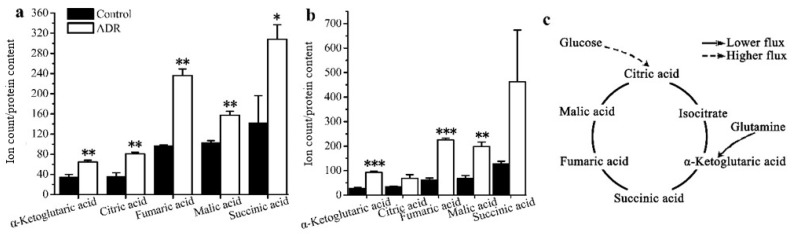
Cellular senescence displays a heterogeneous set of phenotypes linked to tumor suppression; however, after drug treatment, senescence may also be involved in stable or recurrent cancer. Metabolic changes during senescence can provide detailed information on cellular status and may also have implications for the development of effective treatment strategies. The metabolic response to Adriamycin (ADR) treatment, which causes senescence as well as cell death, was obtained with the aid of metabolic profiling and isotope tracing in two human breast cancer cell lines, MCF7 and MDA-MB-231. After 5 days of ADR treatment, more than 60% of remaining, intact cells entered into a senescent state, characterized by enlarged and flattened morphology and positive blue staining using SA-β-gal. Metabolic trajectory analysis showed that the two cell lines' responses were significantly different and were divided into two distinct stages. The metabolic shift from the first stage to the second was reflected by a partial recovery of the TCA cycle, as well as amino acid and lipid metabolisms. Isotope tracing analysis indicated that the higher level of glutamine metabolism helped maintain senescence. The results suggest that the dynamic changes during senescence indicate a multi-step process involving important metabolic pathways which might allow breast cancer cells to adapt to persistent ADR treatment, while the higher level of anapleurosis may be important for maintaining the senescent state. Ultimately, a better understanding of metabolic changes during senescence might provide targets for cancer therapy and tumor eradication.
细胞衰老表现出一系列与肿瘤抑制相关的异质性表型;然而,在药物治疗后,衰老也可能与癌症的稳定或复发有关。衰老过程中的代谢变化可以提供有关细胞状态的详细信息,也可能对有效治疗策略的制定具有重要意义。借助代谢谱分析和同位素示踪技术,在两种人乳腺癌细胞系MCF7和MDA-MB-231中获得了对阿霉素(ADR)治疗的代谢反应,ADR治疗可导致细胞衰老以及细胞死亡。ADR治疗5天后,超过60%的存活完整细胞进入衰老状态,其特征为细胞形态增大变平,并用SA-β-gal染色呈阳性蓝色。代谢轨迹分析表明,两种细胞系的反应存在显著差异,并分为两个不同阶段。从第一阶段到第二阶段的代谢转变表现为三羧酸循环以及氨基酸和脂质代谢的部分恢复。同位素示踪分析表明,较高水平的谷氨酰胺代谢有助于维持细胞衰老。结果表明,衰老过程中的动态变化表明这是一个涉及重要代谢途径的多步骤过程,这可能使乳腺癌细胞能够适应持续的ADR治疗,而较高水平的回补反应可能对维持衰老状态很重要。最终,更好地了解衰老过程中的代谢变化可能为癌症治疗和肿瘤根除提供靶点。