Burnett School of Biomedical Sciences, University of Central Florida, Orlando, Florida, USA.
Department of Surgery, Washington University in St Louis, St Louis, MO, USA.
BMC Cancer. 2018 Dec 17;18(1):1257. doi: 10.1186/s12885-018-5096-9.
FGD4 (Frabin) is an F-actin binding protein with GTP/GDP exchange activity specific for CDC42. It is involved in reorganization of the actin cytoskeleton, which requires both actin binding and CDC42 activating function of FGD4. Expression of FGD4 is altered in patients with heterogeneous hereditary motor and sensory neuropathies as a result of demyelination of peripheral nerves.
In this study, we examined the expression of FGD4 in prostate cancer specimens using immunohistochemistry and studied the function of FGD4 in maintaining cell phenotype, behavior and drug sensitivity using overexpression and siRNA-based silencing approaches. We used Mann-Whitney test for comparative analysis of FGD4 expression.
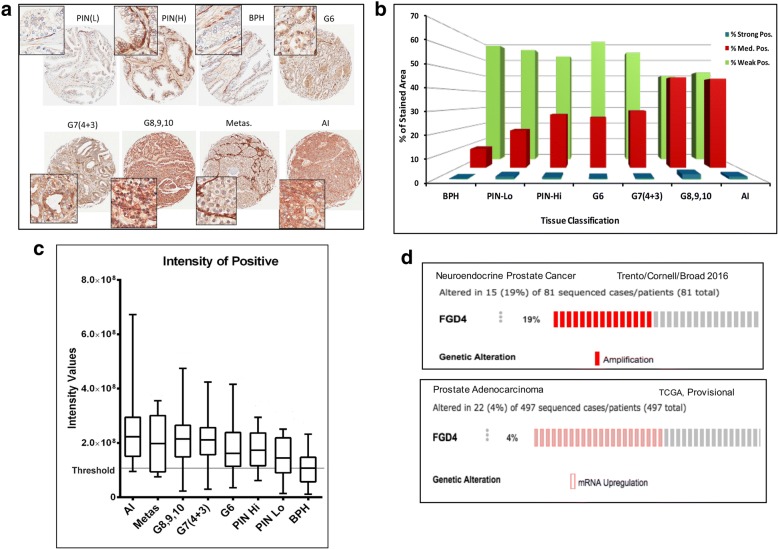
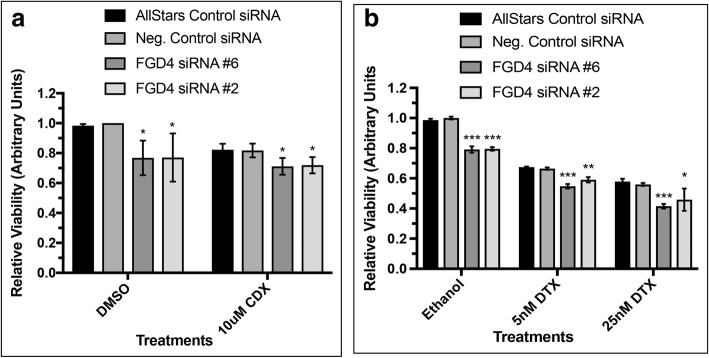
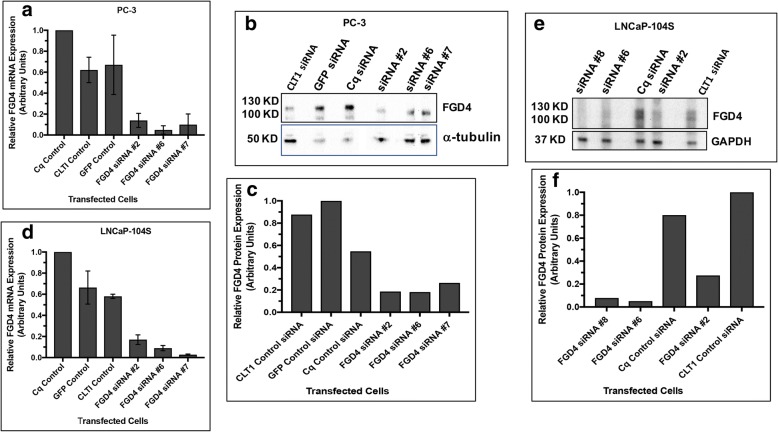
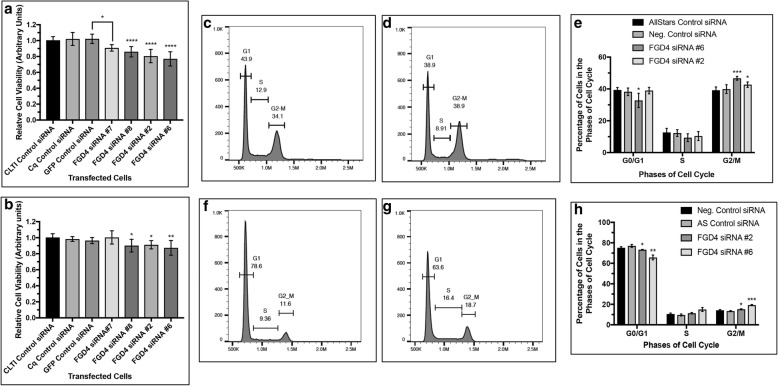
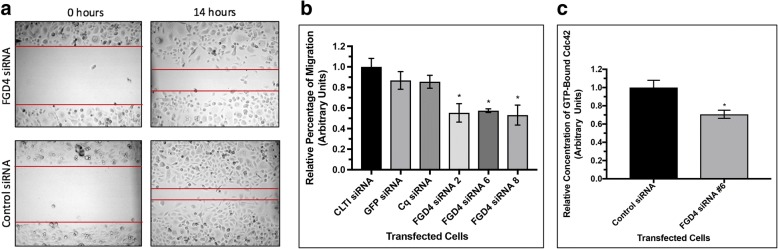
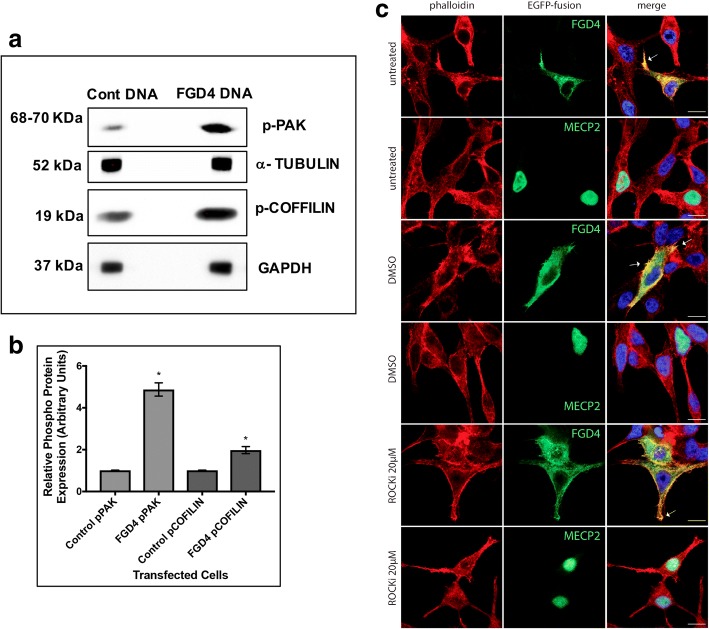
Our results show that the expression of FGD4 is upregulated in cancerous prostates compared to the luminal cells in benign prostatic hyperplasia, although the basal cells showed high staining intensities. We noted a gradual increase in the staining intensity of FGD4 with increasing aggressiveness of the disease. Inhibition of expression of FGD4 using siRNAs showed reduced proliferation and cell cycle arrest in G2/M phase of androgen dependent LNCaP-104S and androgen refractory PC-3 cells. Inhibition of FGD4 also resulted in reduced cell migration and CDC42 activities in PC-3 cells whereas, ectopic expression of FGD4 induced cell migration, altered expression of mesenchymal and epithelial markers and activation of CDC42/PAK signaling pathway. Reduced expression of FGD4 improved sensitivity of LNCaP-104S cells to the anti-androgen drug Casodex and PC-3 cells to the microtubule stabilizing drug docetaxel.
Our data demonstrate a tumor promoting and a cell migratory function of FGD4 in prostate cancer cells and that inhibition of FGD4 expression enhances the response for both androgen-dependent and independent prostate cancer cells towards currently used prostate cancer drugs.
FGD4(Frabin)是一种 F-肌动蛋白结合蛋白,具有特定于 CDC42 的 GTP/GDP 交换活性。它参与肌动蛋白细胞骨架的重排,这需要 FGD4 的肌动蛋白结合和 CDC42 激活功能。FGD4 的表达在外周神经脱髓鞘的不同遗传性运动和感觉神经病患者中发生改变。
在这项研究中,我们使用免疫组织化学检查了前列腺癌标本中 FGD4 的表达,并使用过表达和 siRNA 为基础的沉默方法研究了 FGD4 在维持细胞表型、行为和药物敏感性方面的功能。我们使用曼-惠特尼检验进行 FGD4 表达的比较分析。
我们的结果表明,与良性前列腺增生中的腔细胞相比,FGD4 在癌性前列腺中的表达上调,尽管基底细胞显示出高染色强度。我们注意到 FGD4 的染色强度随着疾病侵袭性的增加而逐渐增加。使用 siRNAs 抑制 FGD4 的表达显示,在雄激素依赖性 LNCaP-104S 和雄激素难治性 PC-3 细胞中,增殖减少和细胞周期停滞在 G2/M 期。FGD4 的抑制也导致 PC-3 细胞中的细胞迁移和 CDC42 活性减少,而 FGD4 的异位表达诱导细胞迁移,改变间充质和上皮标记物的表达,并激活 CDC42/PAK 信号通路。FGD4 表达的减少提高了 LNCaP-104S 细胞对雄激素拮抗剂 Casodex 和 PC-3 细胞对微管稳定药物 docetaxel 的敏感性。
我们的数据表明 FGD4 在前列腺癌细胞中具有促进肿瘤和细胞迁移的功能,并且抑制 FGD4 的表达增强了对目前用于前列腺癌治疗的药物的雄激素依赖性和非依赖性前列腺癌细胞的反应。