Guyonnet Julien P, Guillemet Martin, Dubost Audrey, Simon Laurent, Ortet Philippe, Barakat Mohamed, Heulin Thierry, Achouak Wafa, Haichar Feth El Zahar
Laboratoire d'Ecologie Microbienne, UMR CNRS 5557, Univ Lyon, Université Claude Bernard Lyon 1, UMR INRA 1418, Villeurbanne, France.
Master de Biologie, École Normale Supérieure de Lyon, Université Claude Bernard Lyon 1, Université de Lyon, Lyon, France.
Front Plant Sci. 2018 Nov 23;9:1662. doi: 10.3389/fpls.2018.01662. eCollection 2018.
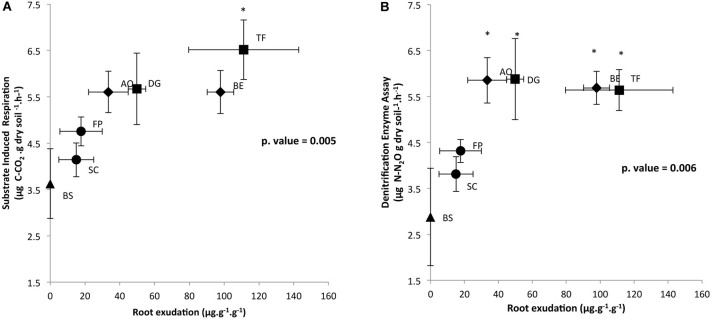
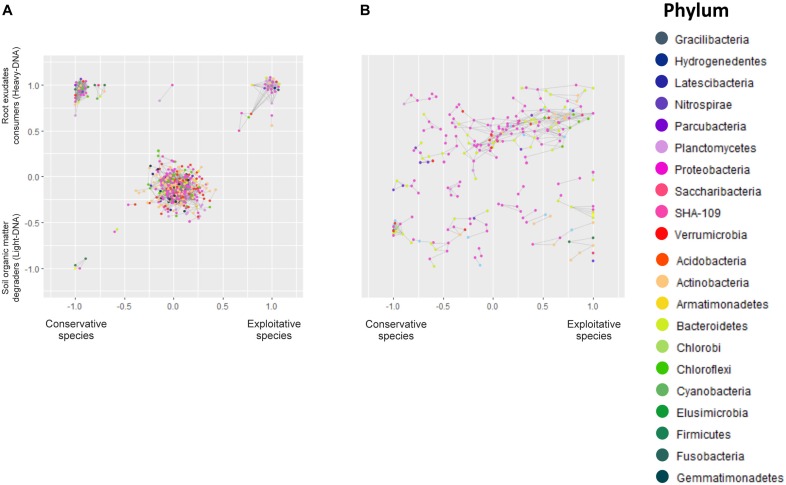
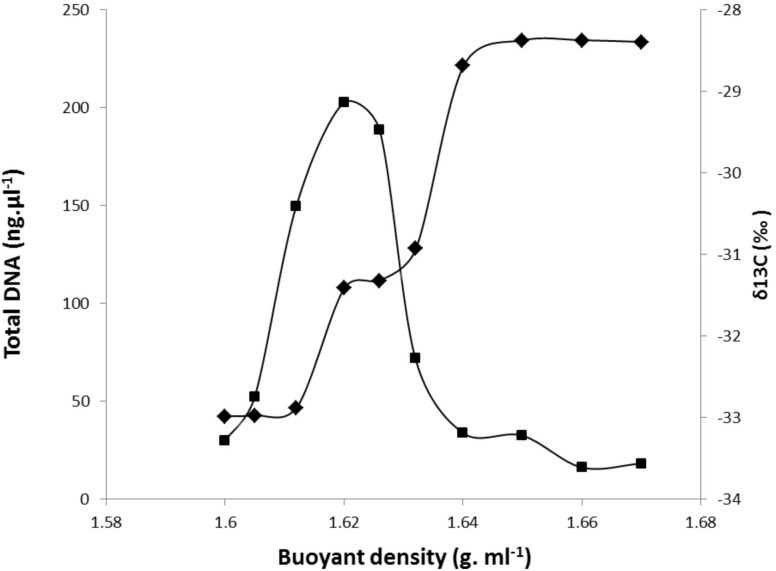
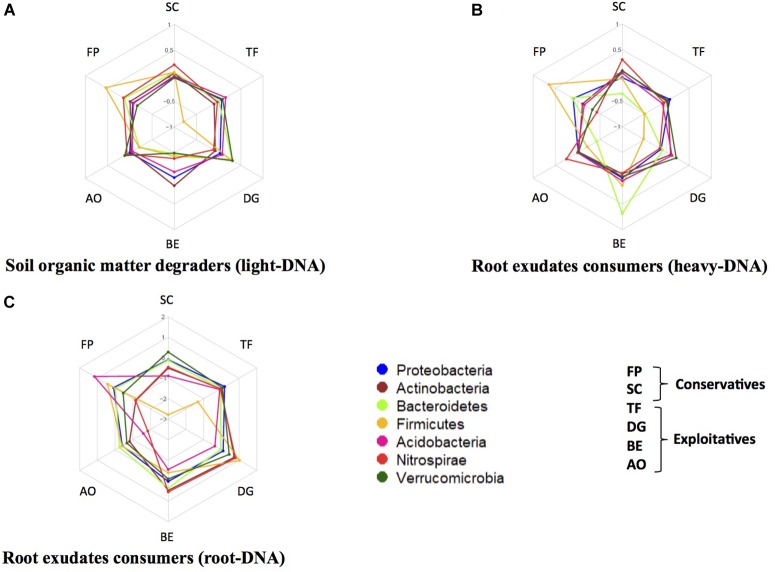
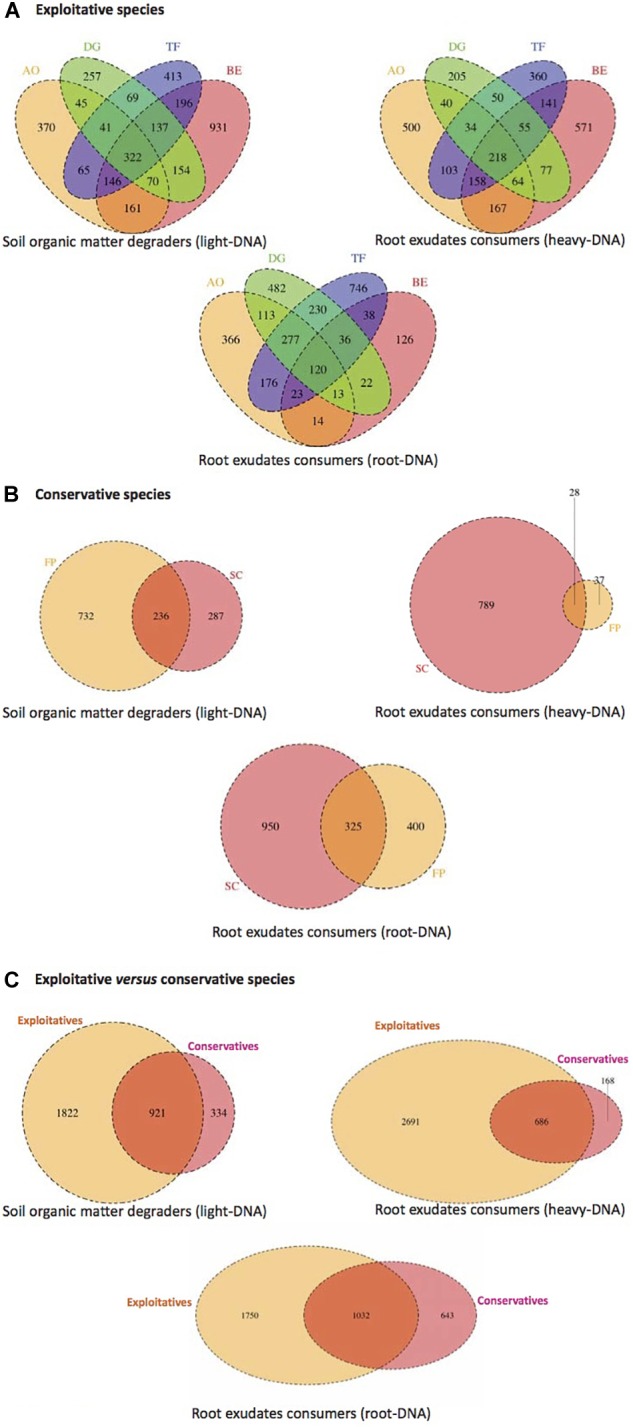
Plant strategies for soil nutrient uptake have the potential to strongly influence plant-microbiota interactions, due to the competition between plants and microorganisms for soil nutrient acquisition and/or conservation. In the present study, we investigate whether these plant strategies could influence rhizosphere microbial activities root exudation, and contribute to the microbiota diversification of active bacterial communities colonizing the root-adhering soil (RAS) and inhabiting the root tissues. We applied a DNA-based stable isotope probing (DNA-SIP) approach to six grass species distributed along a gradient of plant nutrient resource strategies, from conservative species, characterized by low nitrogen (N) uptake, a long lifespans and low root exudation level, to exploitative species, characterized by high rates of photosynthesis, rapid rates of N uptake and high root exudation level. We analyzed their (i) associated microbiota composition involved in root exudate assimilation and soil organic matter (SOM) degradation by 16S-rRNA-based metabarcoding. (ii) We determine the impact of root exudation level on microbial activities (denitrification and respiration) by gas chromatography. Measurement of microbial activities revealed an increase in denitrification and respiration activities for microbial communities colonizing the RAS of exploitative species. This increase of microbial activities results probably from a higher exudation rate and more diverse metabolites by exploitative plant species. Furthermore, our results demonstrate that plant nutrient resource strategies have a role in shaping active microbiota. We present evidence demonstrating that plant nutrient use strategies shape active microbiota involved in root exudate assimilation and SOM degradation root exudation.
由于植物和微生物在获取和/或保存土壤养分方面存在竞争,植物吸收土壤养分的策略有可能强烈影响植物与微生物群的相互作用。在本研究中,我们调查了这些植物策略是否会影响根际微生物活性、根系分泌物,并促进定殖于根际附着土壤(RAS)和根组织中的活跃细菌群落的微生物群多样化。我们将基于DNA的稳定同位素探测(DNA-SIP)方法应用于六种沿植物养分资源策略梯度分布的草种,从保守型物种(其特征为低氮吸收、长寿命和低根系分泌物水平)到开拓型物种(其特征为高光合速率、高氮吸收速率和高根系分泌物水平)。我们通过基于16S rRNA的宏条形码分析了它们(i)参与根系分泌物同化和土壤有机质(SOM)降解的相关微生物群组成。(ii)我们通过气相色谱法测定根系分泌物水平对微生物活性(反硝化作用和呼吸作用)的影响。微生物活性测量结果显示,开拓型物种根际附着土壤定殖的微生物群落的反硝化作用和呼吸作用活性增加。微生物活性的这种增加可能是由于开拓型植物物种较高的分泌物速率和更多样化的代谢产物所致。此外,我们的结果表明,植物养分资源策略在塑造活跃微生物群方面发挥作用。我们提供的证据表明,植物养分利用策略塑造了参与根系分泌物同化和SOM降解的活跃微生物群以及根系分泌物。