1 Division of General Internal Medicine Department of Medicine Mayo Clinic College of Medicine and Science Rochester MN.
2 Department of Cardiovascular Diseases Mayo Clinic College of Medicine and Science Rochester MN.
J Am Heart Assoc. 2018 Dec 18;7(24):e010140. doi: 10.1161/JAHA.118.010140.
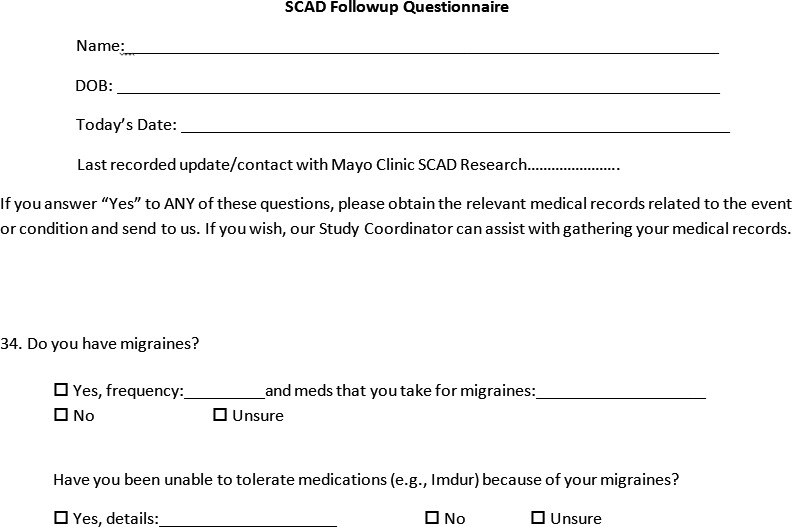
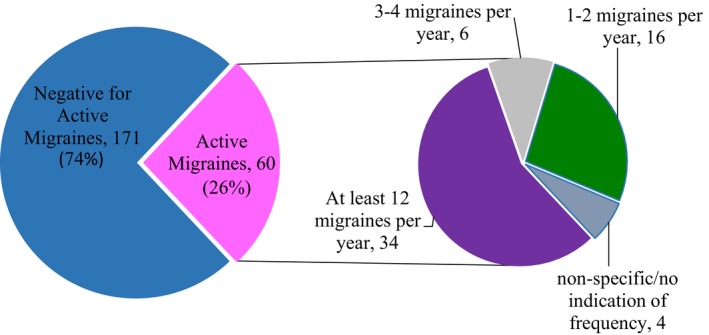
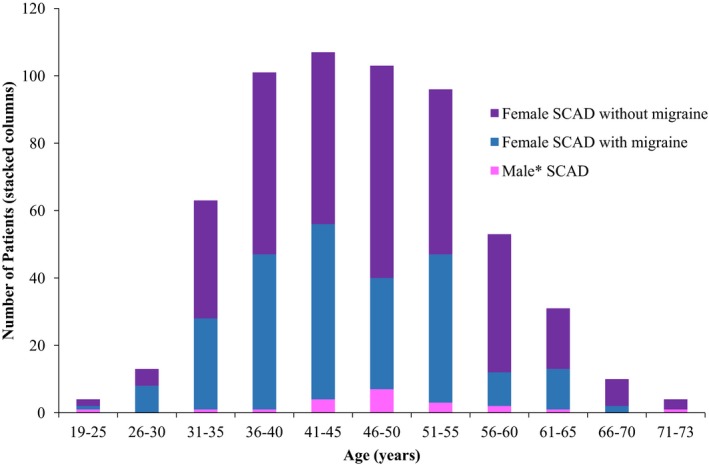
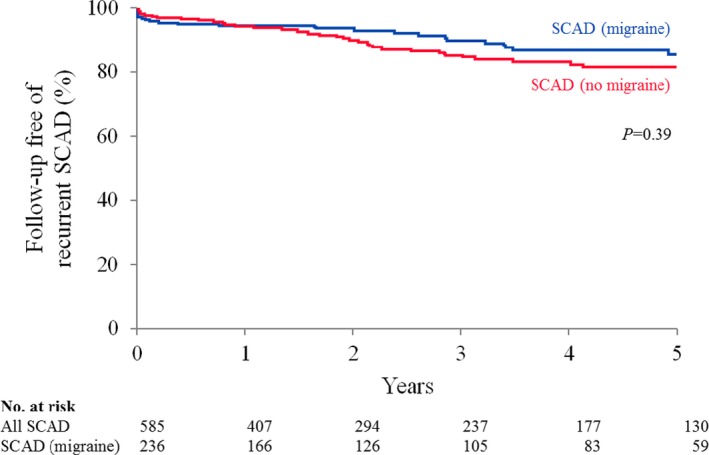
Background Spontaneous coronary artery dissection (SCAD) is a cause of acute coronary syndrome predominantly in women without usual cardiovascular risk factors. Many have a history of migraine headaches, but this association is poorly understood. This study aimed to determine migraine prevalence among SCAD patients and assess differences in clinical factors based on migraine history. Methods and Results A cohort study was conducted using the Mayo Clinic SCAD "Virtual" Multi-Center Registry composed of patients with SCAD as confirmed on coronary angiography. Participant-provided data and records were reviewed for migraine history, risk factors, SCAD details, therapies, and outcomes. Among 585 patients (96% women), 236 had migraine history; the lifetime and 1-year prevalence of migraine were 40% and 26%, respectively. Migraine was more common in SCAD women than comparable literature-reported female populations (42% versus 24%, P<0.0001; 42% versus 33%, P<0.0001). Among all SCAD patients, those with migraine history were more likely to be female (99.6% versus 94%; P=0.0002); have SCAD at a younger age (45.2±9.0 years versus 47.6±9.9 years; P=0.0027); have depression (27% versus 17%; P=0.025); have recurrent post-SCAD chest pain at 1 month (50% versus 39%; P=0.035); and, among those assessed, have aneurysms, pseudoaneurysms, or dissections (28% versus 18%; P=0.018). There was no difference in recurrent SCAD at 5 years for those with versus without migraine (15% versus 19%; P=0.39). Conclusions Many SCAD patients have a history of migraine. SCAD patients with migraine are younger at the time of SCAD; have more aneurysms, pseudoaneurysms, and dissections among those imaged; and more often report a history of depression and post-SCAD chest pain. Clinical Trial Registration URL: https://www.clinicaltrials.gov . Unique identifiers: NCT01429727, NCT01427179.
背景 自发性冠状动脉夹层 (SCAD) 是一种主要发生在无常见心血管危险因素的女性中的急性冠状动脉综合征的病因。许多患者有偏头痛病史,但这种关联尚未得到充分理解。本研究旨在确定 SCAD 患者中的偏头痛患病率,并根据偏头痛病史评估临床因素的差异。
方法和结果 本研究采用 Mayo 诊所 SCAD“虚拟”多中心注册中心的队列研究,该注册中心由经冠状动脉造影证实的 SCAD 患者组成。对参与者提供的数据和记录进行了偏头痛病史、危险因素、SCAD 详情、治疗方法和结局的回顾。在 585 名患者(96%为女性)中,236 名有偏头痛病史;偏头痛的终生和 1 年患病率分别为 40%和 26%。与可比文献报道的女性人群相比,SCAD 女性中偏头痛更为常见(42%比 24%,P<0.0001;42%比 33%,P<0.0001)。在所有 SCAD 患者中,有偏头痛病史的患者更可能为女性(99.6%比 94%;P=0.0002);年龄更小(45.2±9.0 岁比 47.6±9.9 岁;P=0.0027);患有抑郁症(27%比 17%;P=0.025);1 个月时有反复发作的胸痛(50%比 39%;P=0.035);在接受评估的患者中,有动脉瘤、假性动脉瘤或夹层(28%比 18%;P=0.018)。有偏头痛和无偏头痛的患者在 5 年内再次发生 SCAD 的比例无差异(15%比 19%;P=0.39)。
结论 许多 SCAD 患者有偏头痛病史。发生 SCAD 时偏头痛患者更年轻;在接受影像学检查的患者中,动脉瘤、假性动脉瘤和夹层更为常见;且更常报告有抑郁和胸痛病史。
https://www.clinicaltrials.gov。
NCT01429727,NCT01427179。