Watkins Darryl S, True Jason D, Mosley Amber L, Baucum Anthony J
Stark Neurosciences Research Institute, Indiana University School of Medicine Medical Neuroscience Graduate Program, Indianapolis, IN 46278, USA.
Department of Biochemistry and Molecular Biology, Indiana University School of Medicine, Indianapolis, IN 46278, USA.
Proteomes. 2018 Dec 17;6(4):53. doi: 10.3390/proteomes6040053.
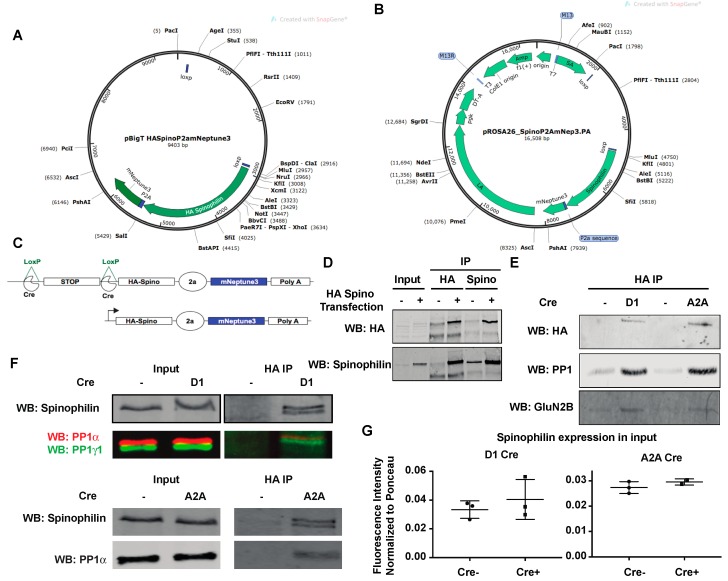
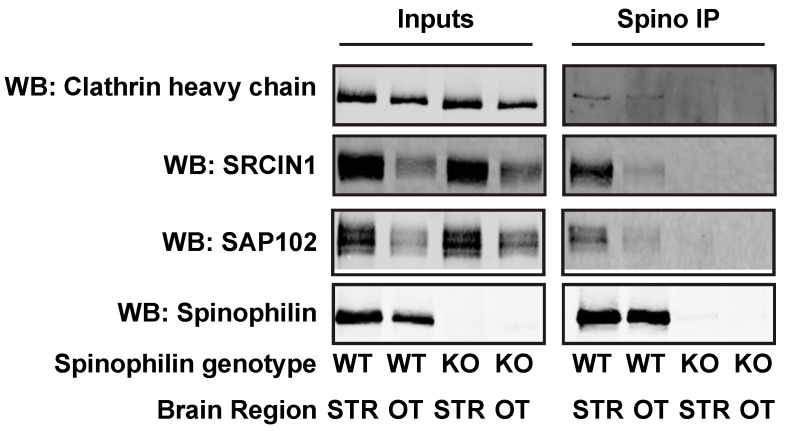
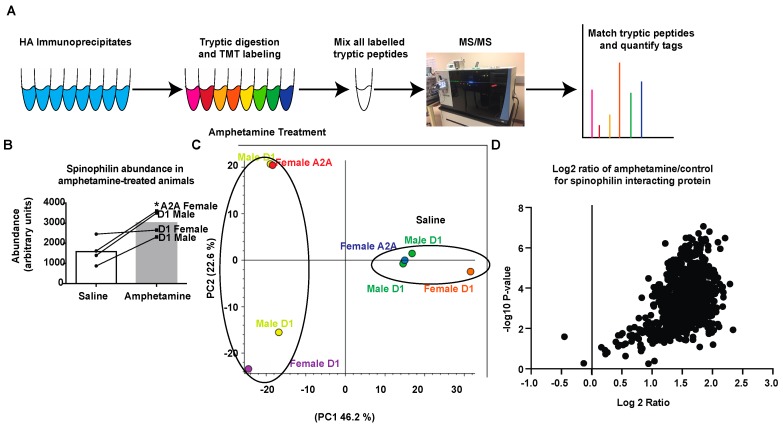
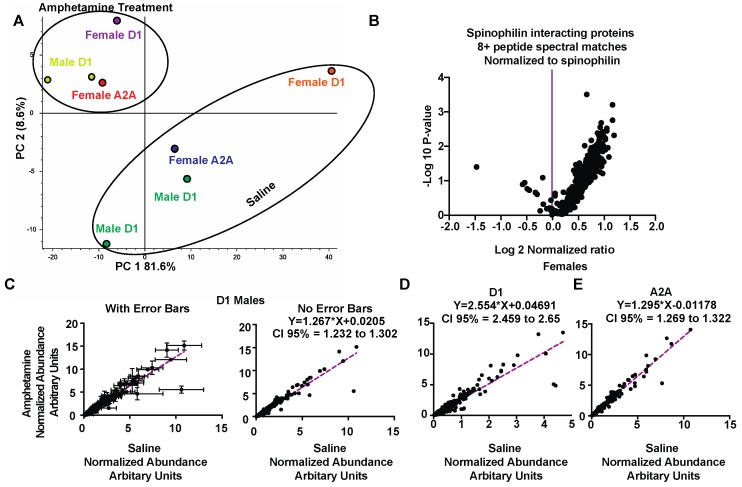
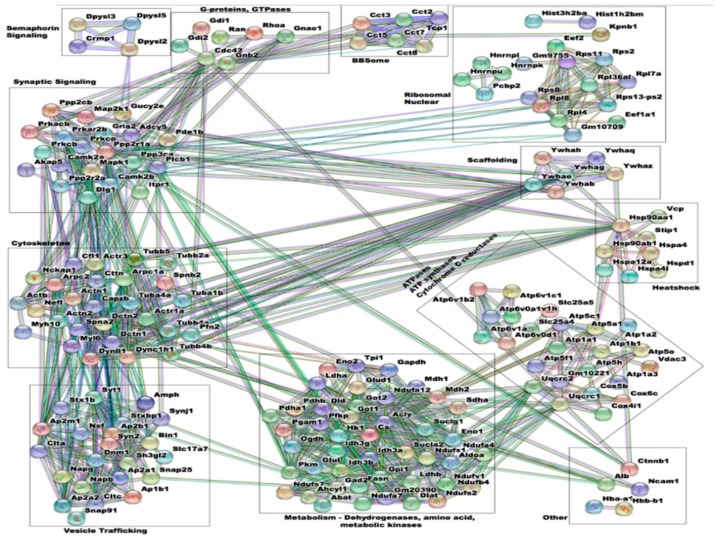
Glutamatergic projections from the cortex and dopaminergic projections from the substantia nigra or ventral tegmental area synapse on dendritic spines of specific GABAergic medium spiny neurons (MSNs) in the striatum. Direct pathway MSNs (dMSNs) are positively coupled to protein kinase A (PKA) signaling and activation of these neurons enhance specific motor programs whereas indirect pathway MSNs (iMSNs) are negatively coupled to PKA and inhibit competing motor programs. An imbalance in the activity of these two programs is observed following increased dopamine signaling associated with exposure to psychostimulant drugs of abuse. Alterations in MSN signaling are mediated by changes in MSN protein post-translational modifications, including phosphorylation. Whereas direct changes in specific kinases, such as PKA, regulate different effects observed in the two MSN populations, alterations in the specific activity of serine/threonine phosphatases, such as protein phosphatase 1 (PP1) are less well known. This lack of knowledge is due, in part, to unknown, cell-specific changes in PP1 targeting proteins. Spinophilin is the major PP1-targeting protein in striatal postsynaptic densities. Using proteomics and immunoblotting approaches along with a novel transgenic mouse expressing hemagglutainin (HA)-tagged spinophilin in dMSNs and iMSNs, we have uncovered cell-specific regulation of the spinophilin interactome following a sensitizing regimen of amphetamine. These data suggest regulation of spinophilin interactions in specific MSN cell types and may give novel insight into putative cell-specific, phosphatase-dependent signaling pathways associated with psychostimulants.
来自皮质的谷氨酸能投射以及来自黑质或腹侧被盖区的多巴胺能投射,与纹状体中特定的γ-氨基丁酸能中等棘状神经元(MSN)的树突棘形成突触。直接通路MSN(dMSN)与蛋白激酶A(PKA)信号呈正相关,这些神经元的激活增强特定的运动程序,而间接通路MSN(iMSN)与PKA呈负相关,并抑制相互竞争的运动程序。在与滥用精神兴奋药物相关的多巴胺信号增加后,观察到这两种程序的活动失衡。MSN信号的改变是由MSN蛋白质翻译后修饰的变化介导的,包括磷酸化。虽然特定激酶(如PKA)的直接变化调节在两个MSN群体中观察到的不同效应,但丝氨酸/苏氨酸磷酸酶(如蛋白磷酸酶1,PP1)的特定活性变化却鲜为人知。这种知识的缺乏部分归因于PP1靶向蛋白中未知的细胞特异性变化。亲嗜素是纹状体突触后致密物中主要的PP1靶向蛋白。利用蛋白质组学和免疫印迹方法,以及一种在dMSN和iMSN中表达血凝素(HA)标记亲嗜素的新型转基因小鼠,我们发现了在苯丙胺致敏方案后亲嗜素相互作用组的细胞特异性调节。这些数据表明在特定的MSN细胞类型中亲嗜素相互作用受到调节,并且可能为与精神兴奋剂相关的假定细胞特异性、磷酸酶依赖性信号通路提供新的见解。