Department of Biological Sciences, Western Michigan University, Kalamazoo, MI 49008, USA.
Int J Mol Sci. 2018 Dec 5;19(12):3900. doi: 10.3390/ijms19123900.
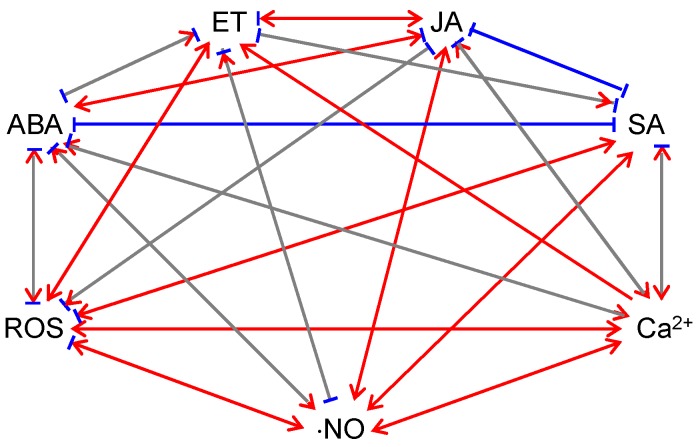
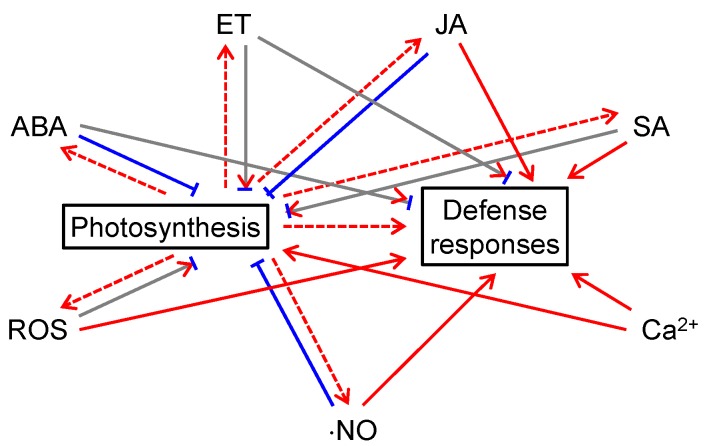
Photosynthesis, pathogen infection, and plant defense are three important biological processes that have been investigated separately for decades. Photosynthesis generates ATP, NADPH, and carbohydrates. These resources are utilized for the synthesis of many important compounds, such as primary metabolites, defense-related hormones abscisic acid, ethylene, jasmonic acid, and salicylic acid, and antimicrobial compounds. In plants and algae, photosynthesis and key steps in the synthesis of defense-related hormones occur in chloroplasts. In addition, chloroplasts are major generators of reactive oxygen species and nitric oxide, and a site for calcium signaling. These signaling molecules are essential to plant defense as well. All plants grown naturally are attacked by pathogens. Bacterial pathogens enter host tissues through natural openings or wounds. Upon invasion, bacterial pathogens utilize a combination of different virulence factors to suppress host defense and promote pathogenicity. On the other hand, plants have developed elaborate defense mechanisms to protect themselves from pathogen infections. This review summarizes recent discoveries on defensive roles of signaling molecules made by plants (primarily in their chloroplasts), counteracting roles of chloroplast-targeted effectors and phytotoxins elicited by bacterial pathogens, and how all these molecules crosstalk and regulate photosynthesis, pathogen infection, and plant defense, using chloroplasts as a major battlefield.
光合作用、病原体感染和植物防御是三个重要的生物学过程,它们已经被分别研究了几十年。光合作用产生 ATP、NADPH 和碳水化合物。这些资源被用于合成许多重要的化合物,如初级代谢物、防御相关的激素脱落酸、乙烯、茉莉酸和水杨酸,以及抗菌化合物。在植物和藻类中,光合作用和防御相关激素合成的关键步骤发生在叶绿体中。此外,叶绿体是活性氧和一氧化氮的主要产生者,也是钙信号的场所。这些信号分子对植物防御也至关重要。所有自然生长的植物都会受到病原体的攻击。细菌病原体通过自然开口或伤口进入宿主组织。入侵后,细菌病原体利用多种不同的毒力因子来抑制宿主防御并促进致病性。另一方面,植物已经发展出精细的防御机制来保护自己免受病原体感染。本综述总结了近年来关于植物(主要在其叶绿体中)产生的信号分子的防御作用、叶绿体靶向效应物和细菌病原体引发的植物毒素的拮抗作用,以及这些分子如何通过叶绿体这个主要战场相互作用和调节光合作用、病原体感染和植物防御的研究发现。