Almurad Zainy M H, Roume Clément, Blain Hubert, Delignières Didier
Euromov, University of Montpellier, Montpellier, France.
College of Physical Education, University of Mosul, Mosul, Iraq.
Front Physiol. 2018 Dec 4;9:1766. doi: 10.3389/fphys.2018.01766. eCollection 2018.
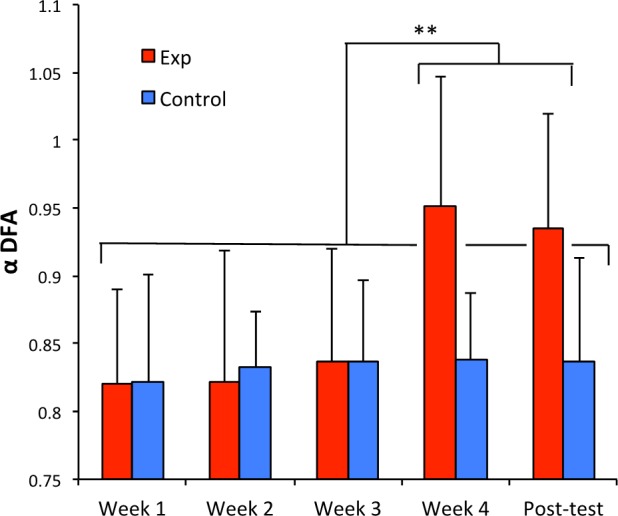
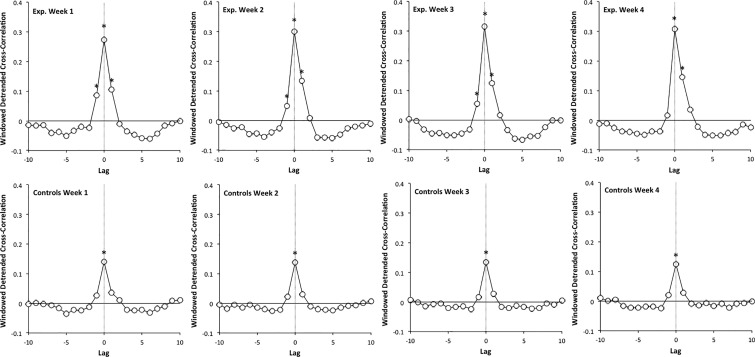
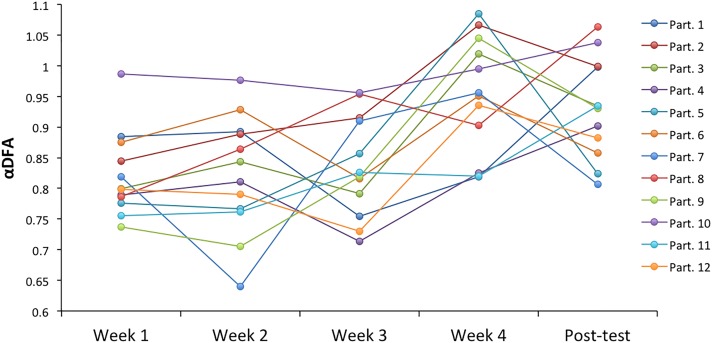
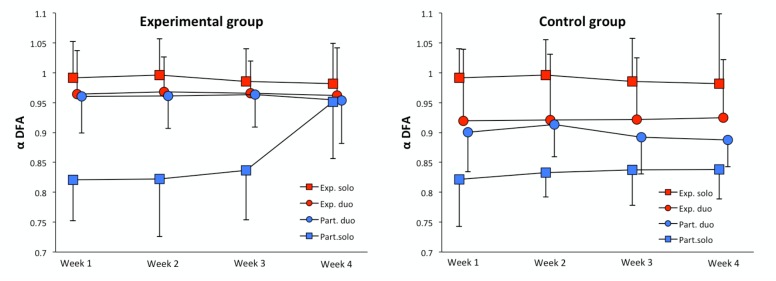
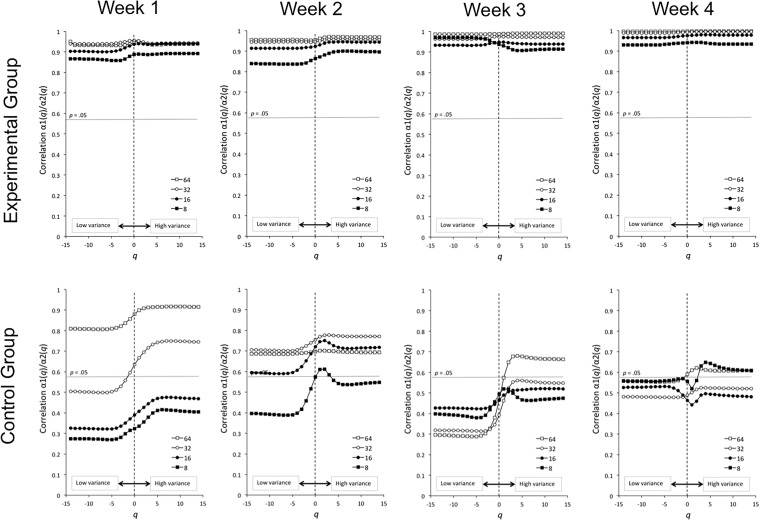
The complexity matching effect refers to a maximization of information exchange, when interacting systems share similar complexities. Additionally, interacting systems tend to attune their complexities in order to enhance their coordination. This effect has been observed in a number of synchronization experiments, and interpreted as a transfer of multifractality between systems. Finally, it has been shown that when two systems of different complexity levels interact, this transfer of multifractality operates from the most complex system to the less complex, yielding an increase of complexity in the latter. This theoretical framework inspired the present experiment that tested the possible restoration of complexity in older people. In young and healthy participants, walking is known to present 1/ fluctuations, reflecting the complexity of the locomotion system, providing walkers with both stability and adaptability. In contrast walking tends to present a more disordered dynamics in older people, and this whitening was shown to correlate with fall propensity. We hypothesized that if an aged participant walked in close synchrony with a young companion, the complexity matching effect should result in the restoration of complexity in the former. Older participants were involved in a prolonged training program of synchronized walking, with a young experimenter. Synchronization within the dyads was dominated by complexity matching. We observed a restoration of complexity in participants after 3 weeks, and this effect was persistent 2 weeks after the end of the training session. This work presents the first demonstration of a restoration of complexity in deficient systems.
复杂性匹配效应是指当相互作用的系统具有相似的复杂性时,信息交换达到最大化。此外,相互作用的系统倾向于调整它们的复杂性以增强协调性。这种效应已在许多同步实验中观察到,并被解释为系统间多重分形的转移。最后,研究表明,当两个不同复杂程度的系统相互作用时,这种多重分形的转移是从最复杂的系统到较不复杂的系统,从而使后者的复杂性增加。这一理论框架启发了本实验,该实验测试了老年人复杂性恢复的可能性。在年轻健康的参与者中,行走呈现出1/f波动,反映了运动系统的复杂性,为行走者提供了稳定性和适应性。相比之下,老年人的行走往往呈现出更无序的动态,并且这种白化现象与跌倒倾向相关。我们假设,如果老年参与者与年轻同伴紧密同步行走,复杂性匹配效应应该会使前者的复杂性得到恢复。老年参与者与一名年轻实验者一起参与了一项长期的同步行走训练计划。二元组内的同步主要由复杂性匹配主导。我们观察到参与者在3周后复杂性得到恢复,并且这种效应在训练结束后2周仍然持续。这项工作首次证明了在有缺陷的系统中复杂性可以恢复。