Department of Developmental Neurobiology, New York State Institute for Basic Research in Developmental Disabilities, 1050 Forest Hill Road, Staten Island, NY, 10314, USA.
Research Design and Analysis Services, New York State Institute for Basic Research in Developmental Disabilities, Staten Island, NY, 10314, USA.
Acta Neuropathol Commun. 2018 Dec 19;6(1):143. doi: 10.1186/s40478-018-0645-7.
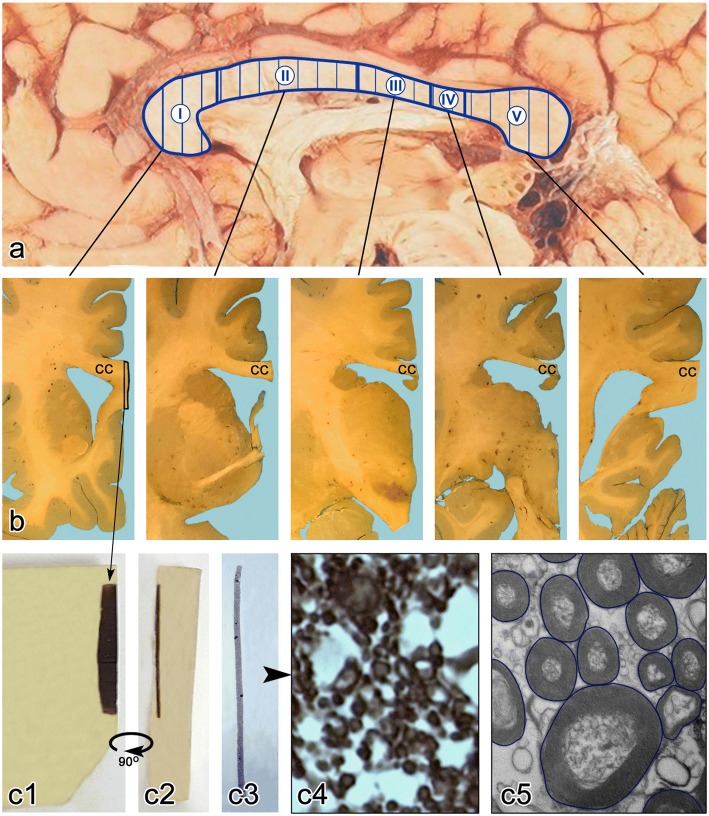
In autism spectrum disorder, lack of coherence and of complex information processing, and narrowly focused interests and repetitive behaviors are considered a sign of long-range underconnectivity and short-range overconnectivity. The goal of this morphometric study of five anatomically and functionally different segments of the corpus callosum (CC) was to establish patterns of differences between long-range interhemispheric connections in nine neurotypical and nine autistic subjects.
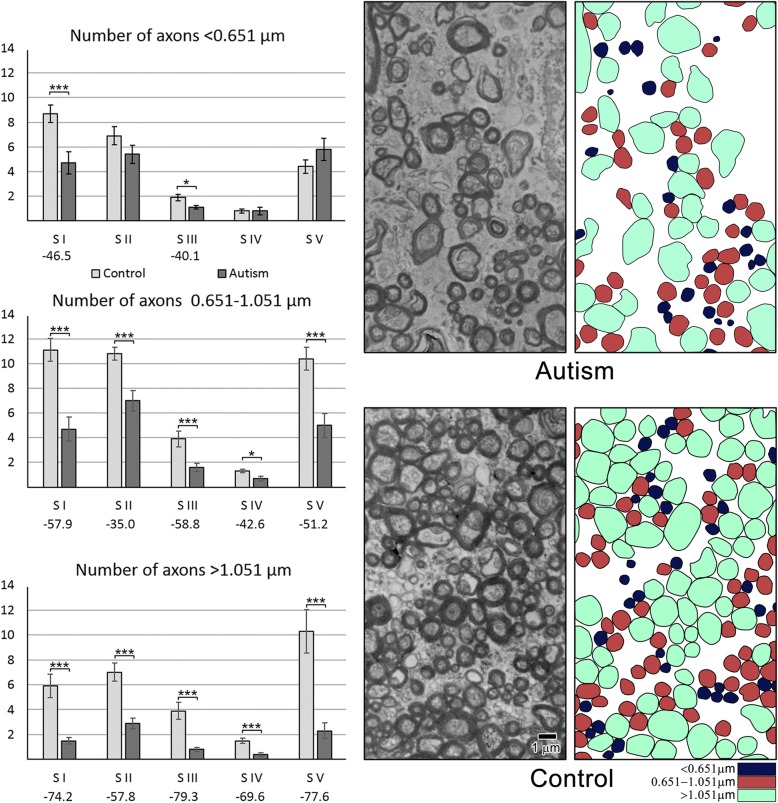
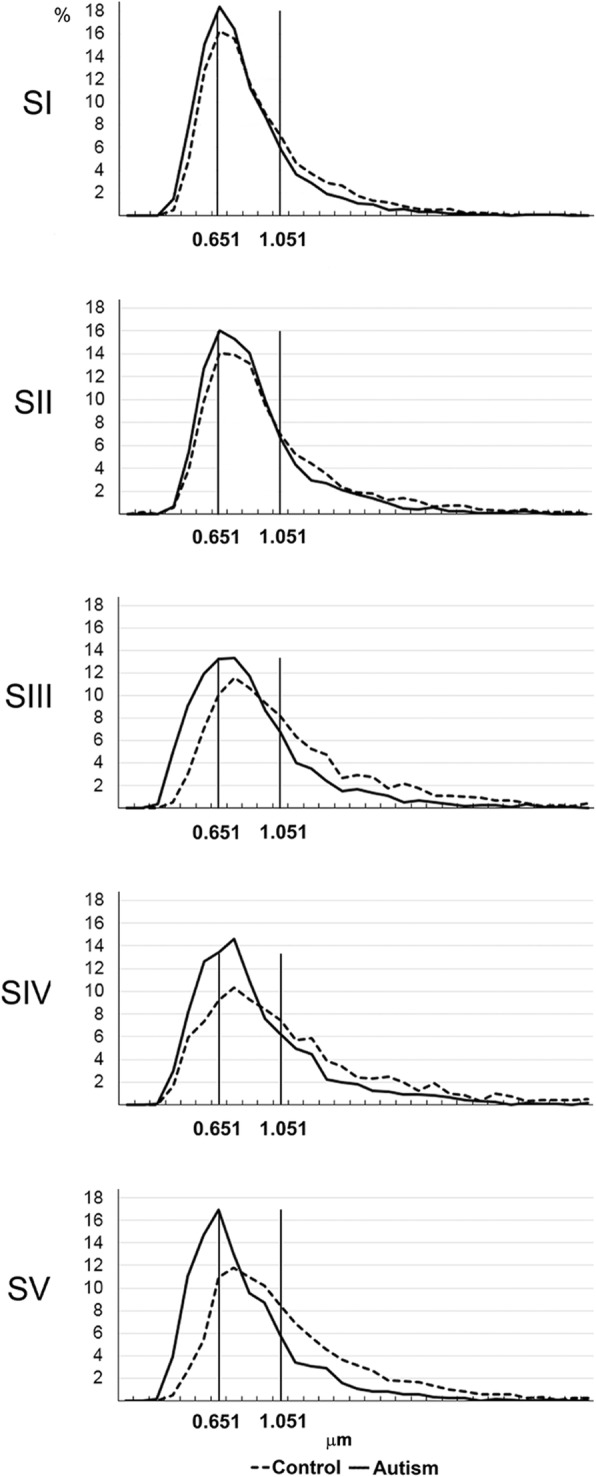
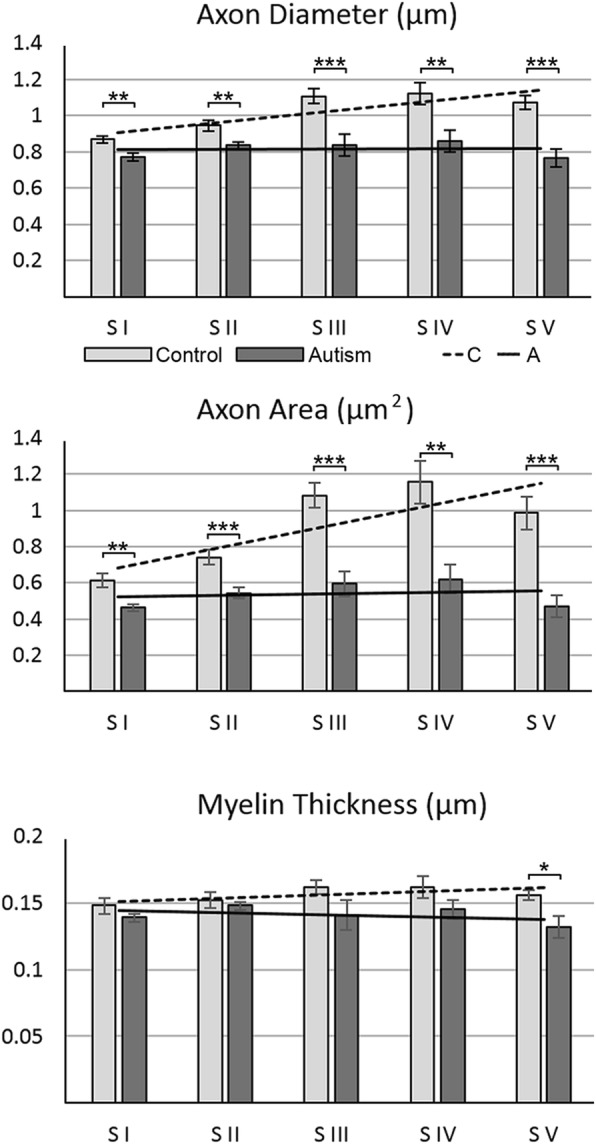
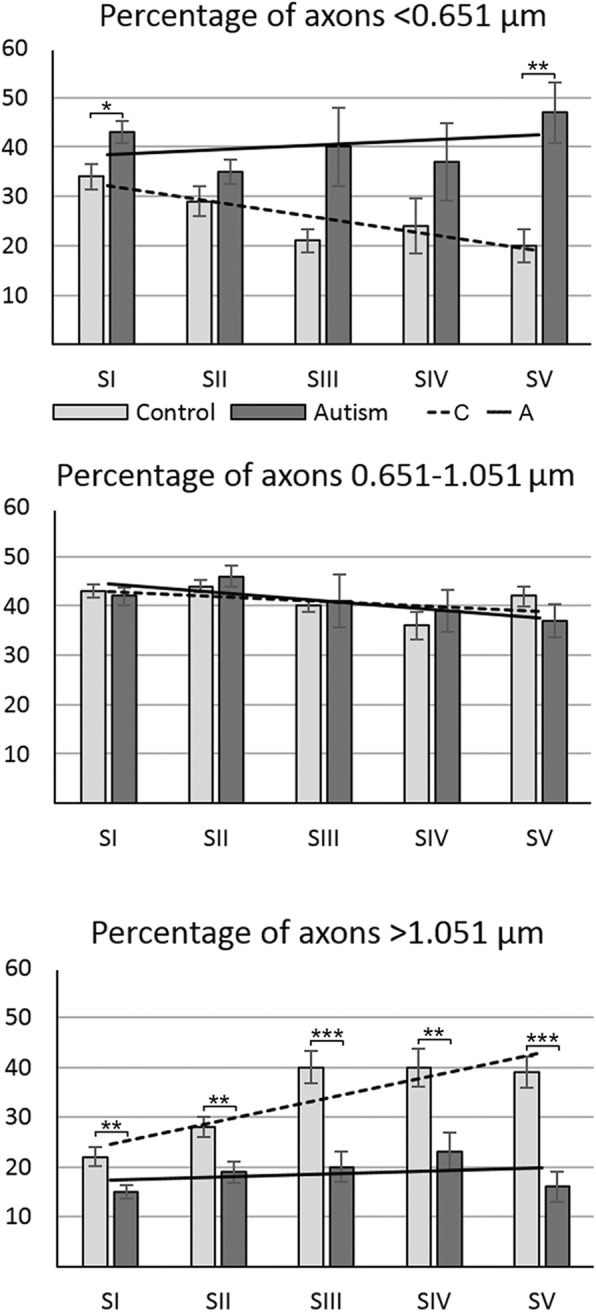
Electron microscopy revealed a significant reduction in average axon diameter and axon cross-sectional area in autistic subjects, and reduction in CC segment-specific diversification of connections of functionally different cortical regions. The study shows an increase in the percentage of small diameter axons (< 0.651 μm) and a decrease in the percentage of axons with large diameter (> 1.051 μm). The total number of small-diameter axons is reduced in segment I and III by 43% on average. The number of medium- and large-diameter axons is reduced in all five CC segments by an average of 49 and 72%, respectively.
The detected pattern of pathology suggests a failure of mechanisms controlling guidance of axons during development leading to axonal deficit, and failure of mechanisms controlling axon structure. A reduction in axon diameter may affect the velocity and volume of signal transmission, and distort functional specialization of CC segments. Significant deficits in axon number and reduction in axon size in all five CC segments appear to be substantial components of brain connectome integrity distortion which may contribute to the autism phenotype.
在自闭症谱系障碍中,缺乏连贯性和复杂信息处理能力,以及狭隘的兴趣和重复行为被认为是长程连接不足和短程连接过度的标志。本研究对胼胝体(CC)的五个解剖和功能不同的节段进行了形态计量学研究,旨在确定 9 名神经典型和 9 名自闭症患者的长程半球间连接差异模式。
电子显微镜显示,自闭症患者的平均轴突直径和轴突横截面积显著减小,功能不同的皮质区域之间的 CC 节段特异性连接多样化减少。研究表明,小直径轴突(<0.651μm)的百分比增加,大直径轴突(>1.051μm)的百分比减少。平均而言,I 段和 III 段的小直径轴突数量减少了 43%。所有五个 CC 节段的中、大直径轴突数量分别减少了 49%和 72%。
检测到的病理模式表明,在发育过程中控制轴突导向的机制失败,导致轴突缺陷,以及控制轴突结构的机制失败。轴突直径的减小可能会影响信号传输的速度和体积,并扭曲 CC 节段的功能特化。所有五个 CC 节段的轴突数量显著减少和轴突大小减小似乎是脑连接组完整性扭曲的重要组成部分,这可能有助于自闭症表型。