Chen Lijun, Jiang Xiaoliu, Fan Huiyong, Yang Ying, Ren Zhihong
School of Humanities and Social Sciences, Fuzhou University, Fuzhou, China.
Institute of Psychological and Cognitive Sciences, Fuzhou University, Fuzhou, China.
Front Psychol. 2018 Dec 5;9:2431. doi: 10.3389/fpsyg.2018.02431. eCollection 2018.
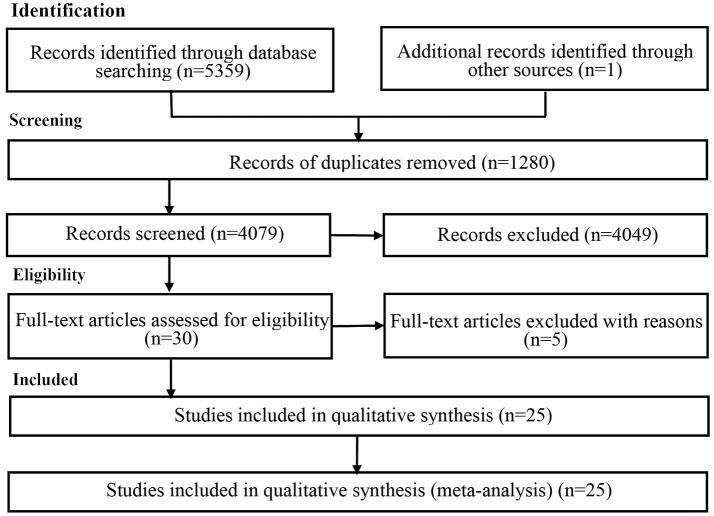
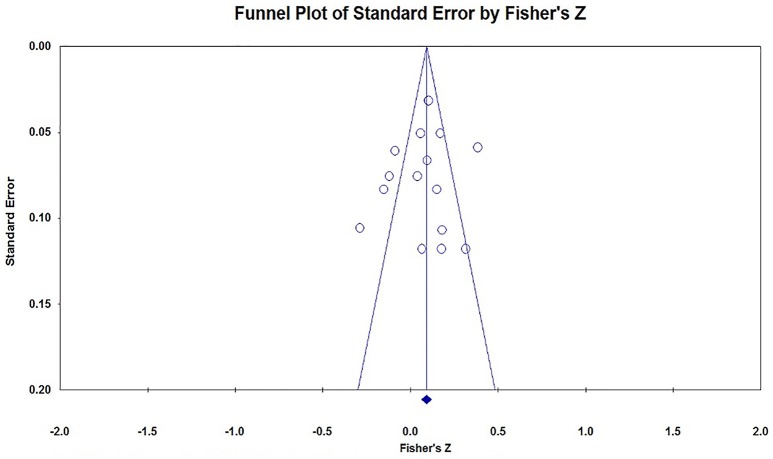
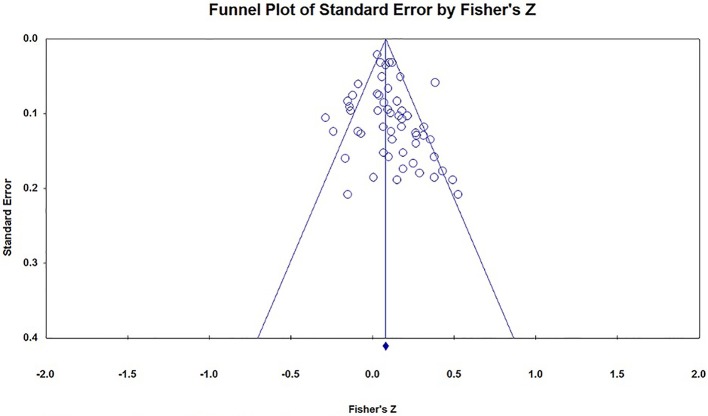
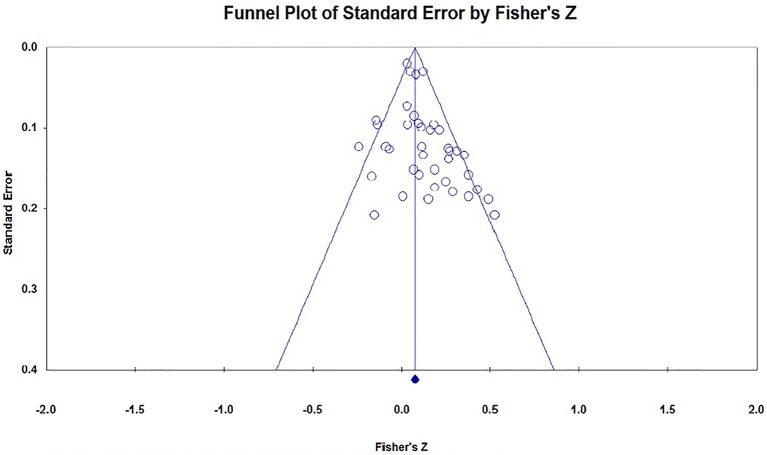
Many studies have reported an association between observers' self-attractiveness and their preference for sexual dimorphism across different physical domains, including the face, voice, and body. However, the results of these studies are inconsistent. Here, a meta-analysis was conducted to estimate the association between observers' own attractiveness and their dimorphic preference. Major electronic databases including PsycINFO, Web of Science, PubMed, ProQuest, and Google Scholar were searched during April 2017 (the first time) and April 2018 (the second time). The effect size computation and moderating effect analyses were conducted separately for masculine and feminine preferences. We identified 5,359 references, of which we included 25 studies ( = 55, = number of the effect size) with 6,853 participants in the meta-analysis. Across these studies, the correlation between observers' own attractiveness and their sexual dimorphic preference was 0.095 ( = 55) and that for preference for masculinity ( = 39) and femininity ( = 16) were 0.102 and 0.076, respectively. The results of the funnel plot, Egger's regression method, and fail-safe number suggested that there was no obvious publication bias. The relationship depended on the relationship context (short or long-term), opposite or same sex (the gender of the observer and host), measures of observers' self-attractiveness (subject or objective), and preference task (e.g., attractiveness rating, forced-choice, and face sequence test). Furthermore, for female participants, using a hormonal contraceptive also influenced their masculinity preference. The effect size for the preference for a masculine body and voice was larger than that for facial masculinity. We found a small but significant correlation between self-attractiveness and physical dimorphic preference, the relationship was moderated by the relationship context, same/opposite-sex, and contraceptive using. These three moderating effects represented the observer's trade-off on good genes, good provider and good father (3Gs) consistent with the life history strategies. Besides, measurement of observers' attractiveness, type of preference task and stimuli may also involve the relationship.
许多研究报告了观察者的自身吸引力与他们在不同身体领域(包括面部、声音和身体)对两性异形的偏好之间的关联。然而,这些研究的结果并不一致。在此,进行了一项荟萃分析,以估计观察者自身吸引力与其两性异形偏好之间的关联。在2017年4月(首次)和2018年4月(第二次)期间,对包括PsycINFO、科学网、PubMed、ProQuest和谷歌学术在内的主要电子数据库进行了检索。对男性化偏好和女性化偏好分别进行了效应量计算和调节效应分析。我们识别出5359篇参考文献,其中在荟萃分析中纳入了25项研究(=55,=效应量数量),涉及6853名参与者。在这些研究中,观察者自身吸引力与其两性异形偏好之间的相关性为0.095(=55),对男性化(=39)和女性化(=16)偏好的相关性分别为0.102和0.076。漏斗图、埃格回归方法和失效安全数的结果表明没有明显的发表偏倚。这种关系取决于关系背景(短期或长期)、异性或同性(观察者和主体的性别)、观察者自身吸引力的测量方式(主观或客观)以及偏好任务(如吸引力评分法、强制选择法和面部序列测试)。此外,对于女性参与者,使用激素避孕药也会影响她们对男性化的偏好。对男性化身体和声音的偏好的效应量大于对面部男性化的偏好的效应量。我们发现自身吸引力与身体两性异形偏好之间存在小但显著的相关性,这种关系受到关系背景、同性/异性以及避孕药使用情况的调节。这三种调节效应代表了观察者在与良好基因、好的供养者和好父亲(3G)相关的生活史策略上的权衡。此外,观察者吸引力的测量、偏好任务的类型和刺激因素可能也涉及这种关系。