Department of Biochemistry, Biosafety Research Institute, College of Veterinary Medicine, Chonbuk National University, Iksan, Jeonbuk 54596, Republic of Korea.
Mol Med Rep. 2019 Feb;19(2):984-993. doi: 10.3892/mmr.2018.9757. Epub 2018 Dec 12.
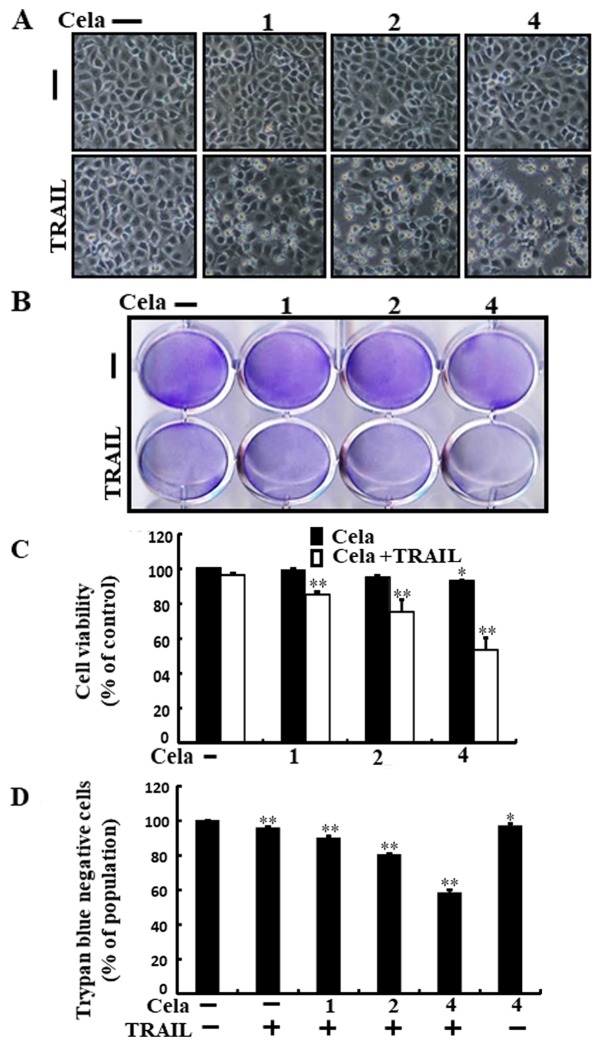
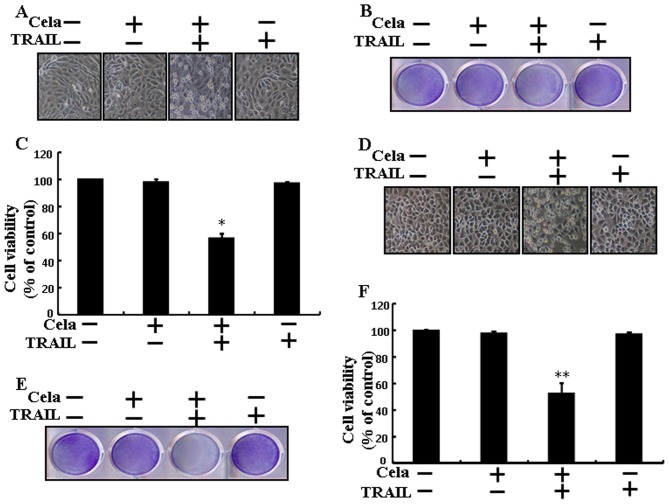
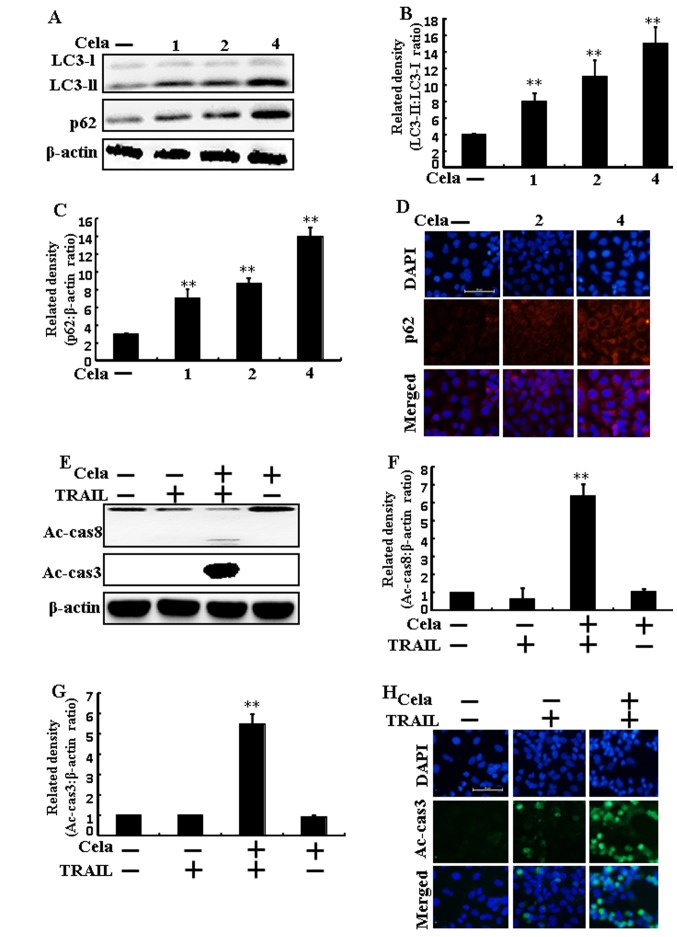
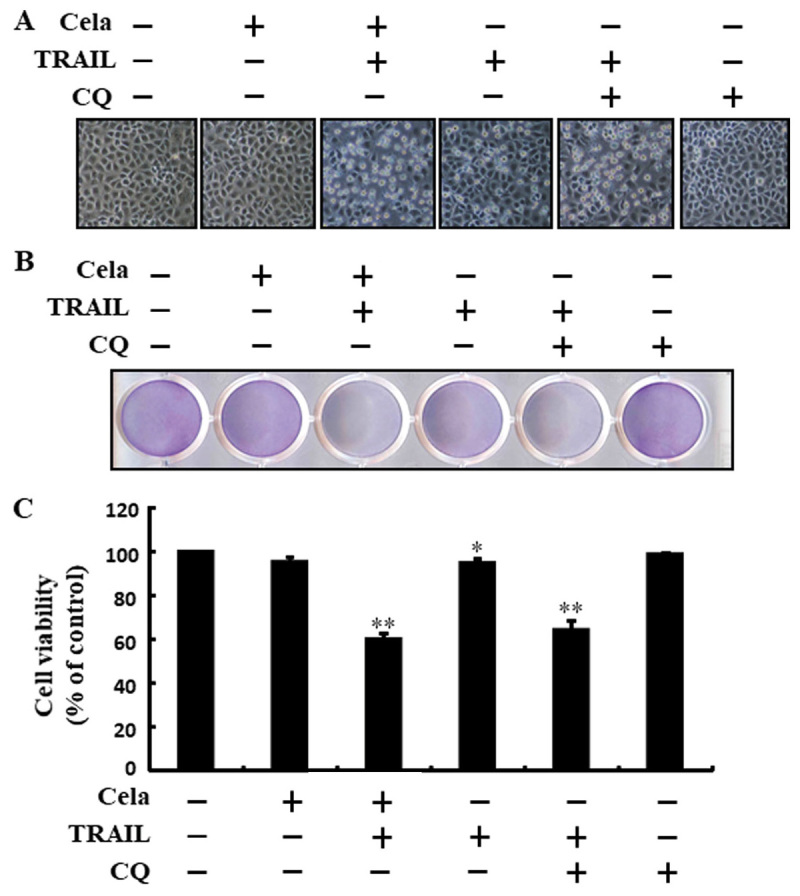
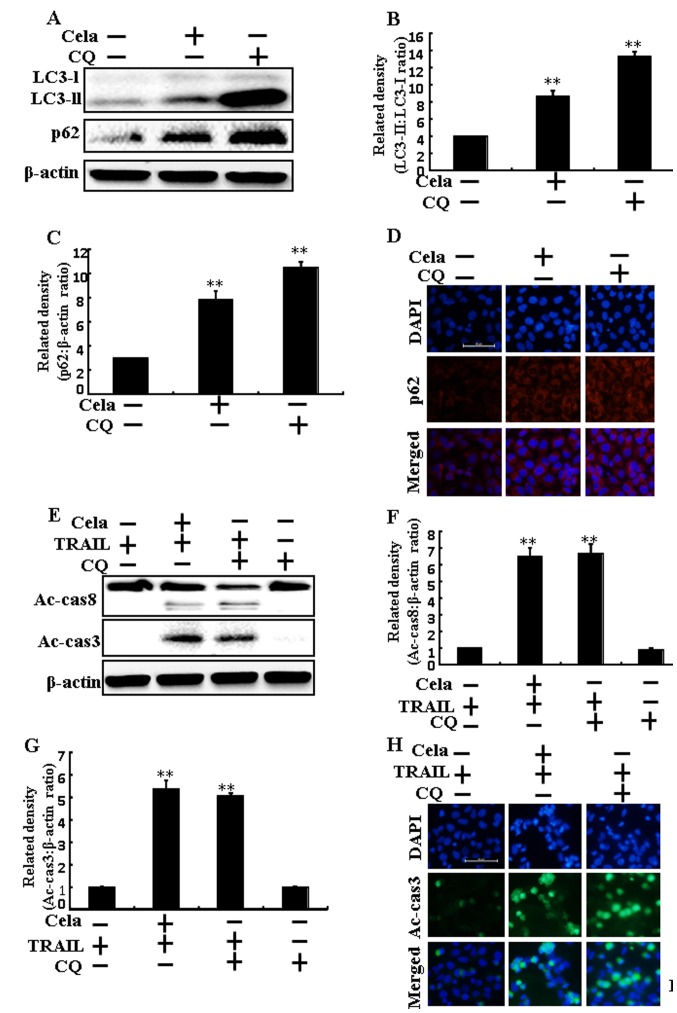
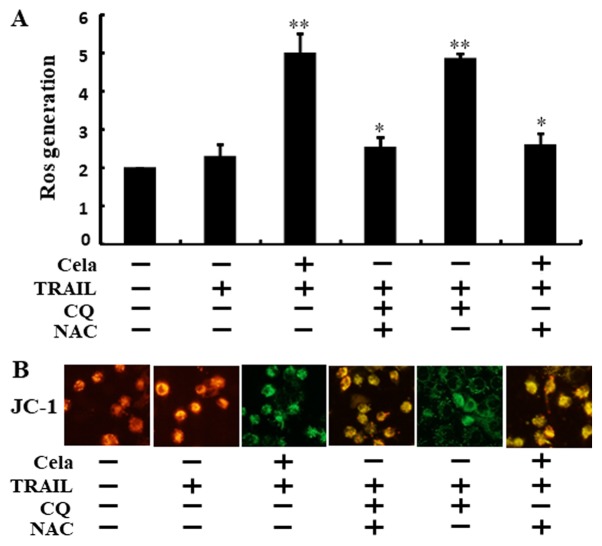
Tumor necrosis factor‑related apoptosis-inducing ligand (TRAIL) is well known as a transmembrane cytokine and has been proposed as one of the most effective anti‑cancer therapeutic agents, owing to its efficiency to selectively induce cell death in a variety of tumor cells. Suppression of autophagy flux has been increasingly acknowledged as an effective and novel therapeutic intervention for cancer. The present study demonstrated that the anti‑cancer and anti‑inflammatory drug celastrol, through its anti‑metastatic properties, may initiate TRAIL‑mediated apoptotic cell death in lung cancer cells. This sensitization was negatively affected by N‑acetyl‑l‑cysteine, which restored the mitochondrial membrane potential (ΔΨm) and inhibited reactive oxygen species (ROS) generation. Notably, treatment with celastrol caused an increase in microtubule‑associated proteins 1A/1B light chain 3B‑II and p62 levels, whereas co‑treatment of celastrol and TRAIL increased active caspase 3 and 8 levels compared with the control, confirming inhibited autophagy flux. The combined use of TRAIL with celastrol may serve as a safe and adequate therapeutic technique for the treatment of TRAIL‑resistant lung cancer, suggesting that celastrol‑mediated autophagy flux inhibition sensitized TRAIL‑initiated apoptosis via regulation of ROS and ΔΨm.
肿瘤坏死因子相关凋亡诱导配体(TRAIL)是一种众所周知的跨膜细胞因子,由于其能够有效选择性地诱导多种肿瘤细胞死亡,因此被认为是最有效的抗癌治疗药物之一。抑制自噬通量已被越来越多地认为是癌症的一种有效和新颖的治疗干预手段。本研究表明,抗癌和抗炎药物雷公藤红素通过其抗转移特性,可能引发肺癌细胞中 TRAIL 介导的凋亡细胞死亡。这种敏化作用受到 N-乙酰-L-半胱氨酸的负面影响,N-乙酰-L-半胱氨酸恢复了线粒体膜电位(ΔΨm)并抑制了活性氧(ROS)的产生。值得注意的是,雷公藤红素处理导致微管相关蛋白 1A/1B 轻链 3B-II 和 p62 水平增加,而与 TRAIL 联合处理雷公藤红素增加了活性 caspase 3 和 8 水平,与对照组相比,证实了自噬通量受到抑制。TRAIL 与雷公藤红素联合使用可能成为治疗 TRAIL 耐药性肺癌的一种安全有效的治疗技术,表明雷公藤红素介导的自噬通量抑制通过调节 ROS 和 ΔΨm 敏化 TRAIL 引发的凋亡。