Wang Xiaomei, Qi Qin, Wang Yuanyuan, Wu Huangan, Jin Xiaoming, Yao Huan, Jin Duiyin, Liu Yanan, Wang Cun
1Shanghai Research Institute of Acupuncture and Meridian, Shanghai University of Traditional Chinese Medicine, 650 South Wanping Road, Xuhui District, Shanghai, 200030 China.
2Key Laboratory of Acupuncture and Immunological Effects, Shanghai University of Traditional Chinese Medicine, Shanghai, 200030 China.
Chin Med. 2018 Dec 18;13:63. doi: 10.1186/s13020-018-0220-y. eCollection 2018.
The pathogenesis of irritable bowel syndrome (IBS) is closely related to intestinal dysbacteriosis and can be controlled by moxibustion treatment. However, the mechanism underlying the therapeutic value of moxibustion in IBS treatment remains unknown.
An IBS rat model was established by colorectal distention (CRD) stimulus and mustard oil clyster. Sixty-five male rats were randomly divided into six groups: normal, IBS model, moxibustion, electroacupuncture (EA), Bifid-triple Viable Capsule (BTVC) and Pinaverium Bromide (PB) groups. The moxibustion group was treated with mild moxibustion at the bilateral Tianshu (ST25) and Shangjuxu (ST37) for 10 min/day for 7 days, the EA group was given EA at ST25 and ST37 once daily for 7 days, while the BTVC group and PB groups received Bifid-triple Viable Capsule and Pinaverium Bromide solution (at the proportion of 1:0.018) respectively by gavage once daily for 7 days. After the treatment, abdominal withdrawal reflex (AWR) scores were determined based on CRD stimulus, gut microbiota profiling was conducted by 16S rRNA high-throughput sequencing.
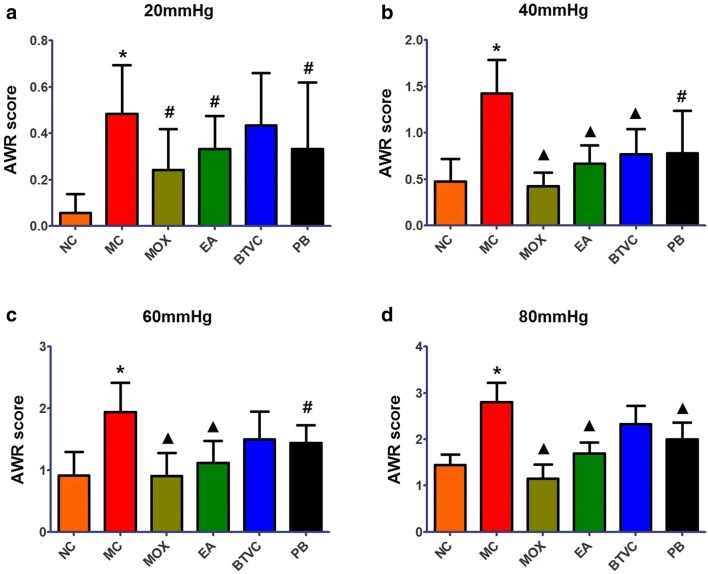
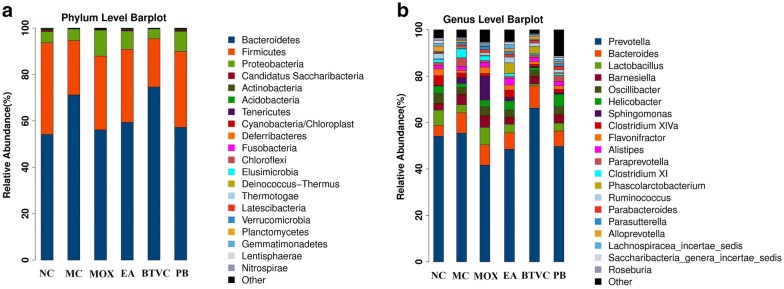
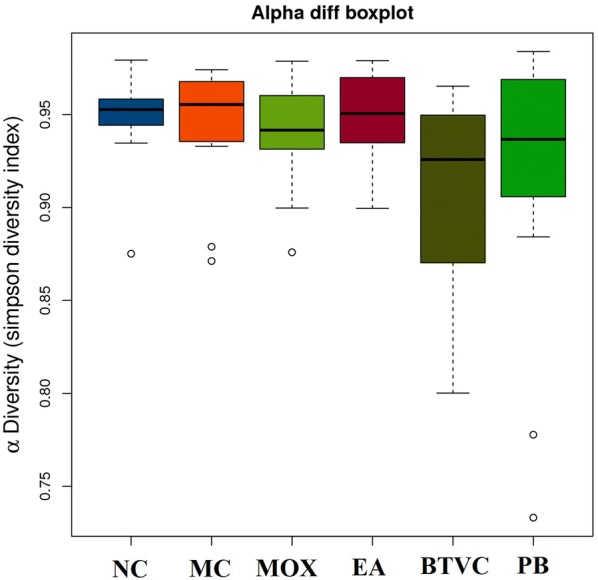
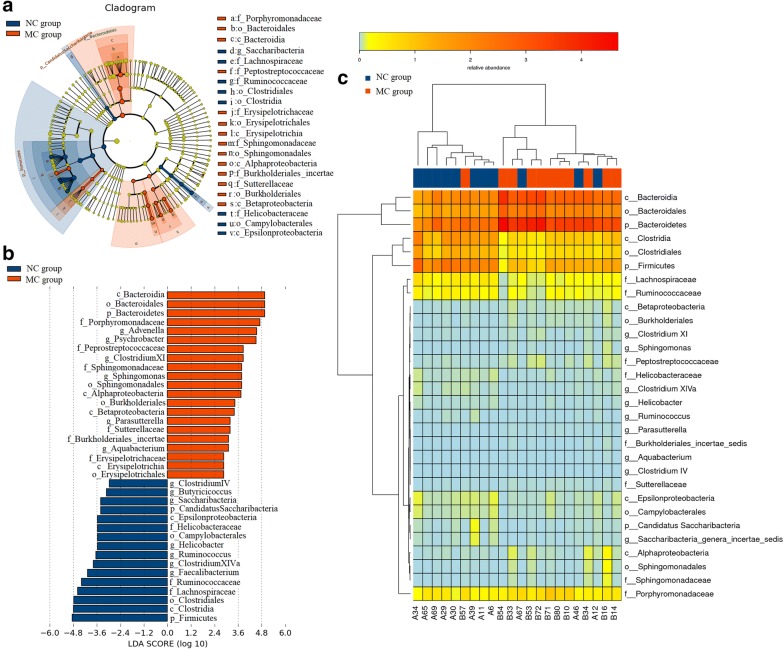
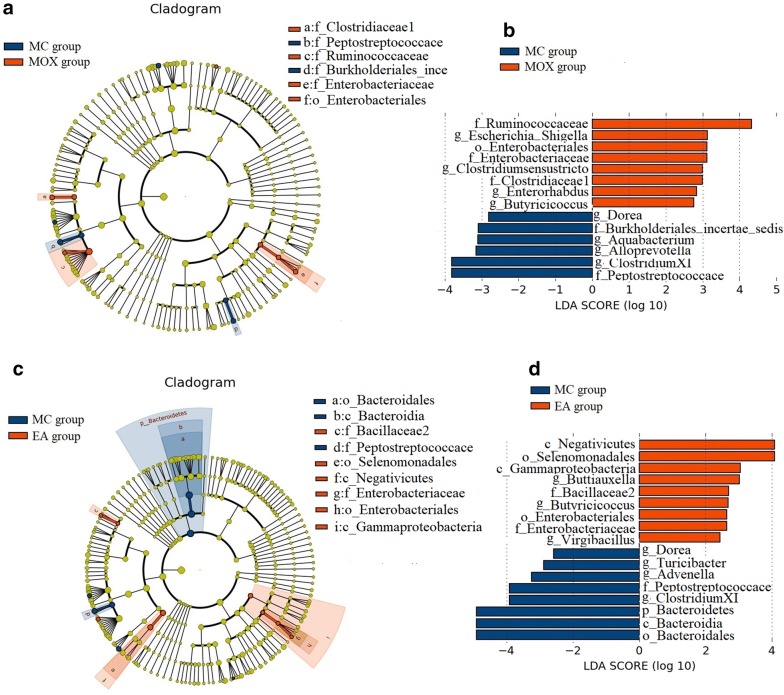
Irritable bowel syndrome model rats had significantly increased AWR scores at all intensities (20, 40, 60 and 80 mmHg) compared with the normal group. Moxibustion treatment significantly reduced AWR scores compared with the IBS model group at all intensities. Across all groups the most abundant phyla were and followed by and At genus level IBS model rats had a higher abundance of , and and a lower abundance of and compared with normal rats. These changes in microbiota profiles could however be reversed by moxibustion treatment. Alpha diversity was decreased in IBS model rats compared with normal rats, yet significantly increased in moxibustion- and PB-treated rats compared with IBS rats.
Our findings suggest that moxibustion treats IBS by modulating the gut microbiota.
肠易激综合征(IBS)的发病机制与肠道菌群失调密切相关,艾灸治疗可对其进行调控。然而,艾灸在IBS治疗中的作用机制尚不清楚。
通过结直肠扩张(CRD)刺激和芥子油灌肠建立IBS大鼠模型。将65只雄性大鼠随机分为6组:正常组、IBS模型组、艾灸组、电针组、双歧三联活菌胶囊组(BTVC)和匹维溴铵组(PB)。艾灸组在双侧天枢(ST25)和上巨虚(ST37)进行温和灸,每天10分钟,共7天;电针组在ST25和ST37进行电针治疗,每天1次,共7天;而BTVC组和PB组分别通过灌胃给予双歧三联活菌胶囊和匹维溴铵溶液(比例为1:0.018),每天1次,共7天。治疗后,基于CRD刺激测定腹部退缩反射(AWR)评分,通过16S rRNA高通量测序进行肠道微生物群分析。
与正常组相比,肠易激综合征模型大鼠在所有强度(20、40、60和80 mmHg)下的AWR评分均显著升高。与IBS模型组相比,艾灸治疗在所有强度下均显著降低了AWR评分。在所有组中,最丰富的门是 和 ,其次是 和 。在属水平上,与正常大鼠相比,IBS模型大鼠的 、 和 丰度较高,而 和 的丰度较低。然而,艾灸治疗可以逆转这些微生物群谱的变化。与正常大鼠相比,IBS模型大鼠的α多样性降低,但与IBS大鼠相比,艾灸和PB治疗的大鼠的α多样性显著增加。
我们的研究结果表明,艾灸通过调节肠道微生物群来治疗IBS。