Sint Alena, Baumbach Sebastian Felix, Böcker Wolfgang, Kammerlander Christian, Kanz Karl-Georg, Braunstein Mareen, Polzer Hans
Department of General-, Visceral-, Vascular- and Transplant- Surgery, Munich University Hospital, Ludwig-Maximilians-University (LMU), Munich, Germany.
Department of General, Trauma and Reconstructive Surgery, Munich University Hospital, Ludwig-Maximilians-University (LMU), Nussbaumstr 20, 80336, Munich, Germany.
BMC Musculoskelet Disord. 2018 Dec 22;19(1):453. doi: 10.1186/s12891-018-2366-2.
Walker orthosis are frequently prescribed as they are removable to allow wound control, body care and physiotherapy and are adaptable to the soft tissue conditions. The prerequisite for successful treatment with any walker orthosis is a correct use by the patient. Therefore, the aim of this study was to investigate patients' handling of a commonly used walker.
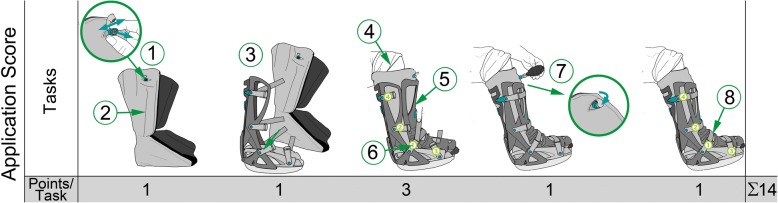
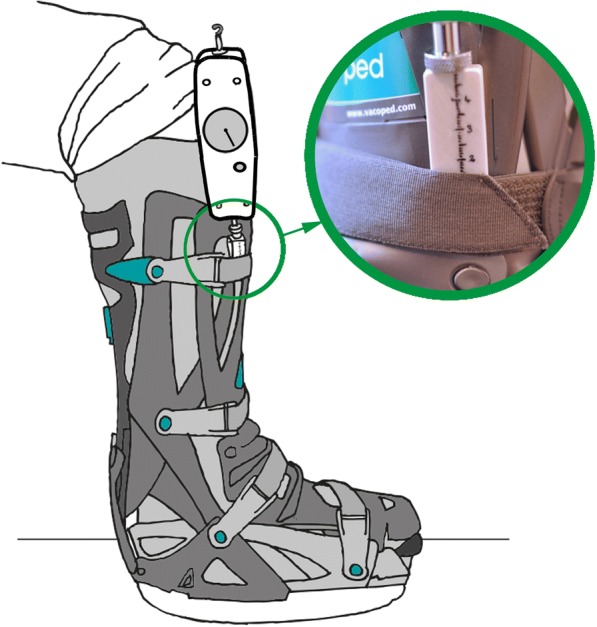
Prospective observational study analyzing the applicability of a walker orthosis in different cohorts with varying age and level of activity. Volunteers were recruited from a mountain-biking-team (Sport), a cardiovascular-health-sports-group (Cardio) and a retirement home (Senior). The correct application was assessed following initial training (t0) and one week later (t1). Outcome parameters were an Application Score, strap tightness, vertical heel lift-off and subjective judgement of correct application.
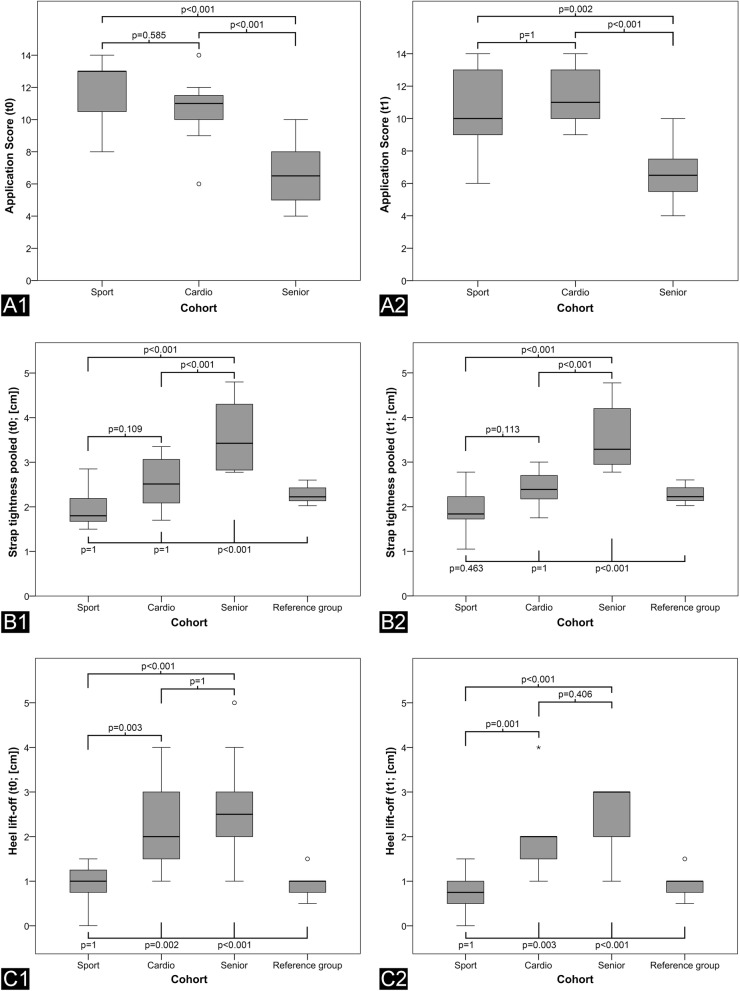
Thirty-three volunteers, 11 Sports group (31 ± 7a), 12 Cardio group (59 ± 11a), 10 Senior group, (82 ± 5a) were enrolled. No differences for any parameter could be observed between t0 and t1. Age showed a moderate correlation for all outcome parameters and the cohort influenced all variables. The Senior group presented significant inferior results to the Sport- and Cardio group for the Application Score (p = 0.002-p < 0.001) and strap tightness (p < 0.001). Heel lift-off was significantly inferior in the Cardio- and Senior- compared to the Sport group (p = 0.003-p < 0.001). 14% in the Sport-, 4% in the Cardio- and 83% in the Senior group achieved less than 9 points in the Application Score - which was considered insufficient. However, out of these 90% believed the application to be correct.
The elderly cohort living in a retirement home demonstrated an impaired handling of the walker orthosis. Further, participants were incapable to self-assess the correct handling. These aspects should be respected when initiating treatment with a walker orthosis.
Retrospectively registered on the 16th of February 2018: # DRKS00013728 on DRKS.
沃克矫形器经常被开具处方,因为它们是可移除的,便于伤口处理、身体护理和物理治疗,并且能适应软组织状况。患者正确使用是任何沃克矫形器成功治疗的前提条件。因此,本研究的目的是调查患者对一种常用沃克矫形器的使用情况。
前瞻性观察研究,分析沃克矫形器在不同年龄和活动水平队列中的适用性。志愿者从山地自行车队(运动组)、心血管健康运动组(心血管组)和养老院(老年组)招募。在初始训练后(t0)和一周后(t1)评估正确使用情况。结果参数包括使用评分、绑带松紧度、足跟垂直抬起以及对正确使用的主观判断。
共招募了33名志愿者,11名运动组(31±7岁),12名心血管组(59±11岁),10名老年组(82±5岁)。在t0和t1之间,任何参数均未观察到差异。年龄与所有结果参数呈中度相关,队列影响所有变量。老年组在使用评分(p = 0.002 - p < 0.001)和绑带松紧度(p < 0.001)方面的结果明显低于运动组和心血管组。与运动组相比,心血管组和老年组的足跟抬起明显较差(p = 0.003 - p < 0.001)。运动组中有14%、心血管组中有4%、老年组中有83%的使用评分低于9分,这被认为是不足的。然而,在这些人中,90%认为使用是正确的。
居住在养老院的老年人群体对沃克矫形器的使用存在障碍。此外,参与者无法自我评估正确的使用情况。在开始使用沃克矫形器治疗时,应考虑这些方面。
于2018年2月16日进行回顾性注册:DRKS上的#DRKS00013728 。