EKFZ - Else Kröner-Fresenius Zentrum for Nutritional Medicine, Technical University of Munich, Gregor-Mendel-Str. 2, 85354 Freising, Germany; Chair for Molecular Nutritional Medicine, Technical University of Munich, Gregor-Mendel-Str. 2, 85354 Freising, Germany.
Chair for Biological Imaging, Technical University of Munich, Troger Str. 9, 81675 München, Germany.
Mol Metab. 2019 Feb;20:14-27. doi: 10.1016/j.molmet.2018.11.009. Epub 2018 Nov 28.
Brown adipose tissue (BAT) dissipates nutritional energy as heat through uncoupling protein 1 (UCP1). The discovery of functional BAT in healthy adult humans has promoted the search for pharmacological interventions to recruit and activate brown fat as a treatment of obesity and diabetes type II. These efforts require in vivo models to compare the efficacy of novel compounds in a relevant physiological context.
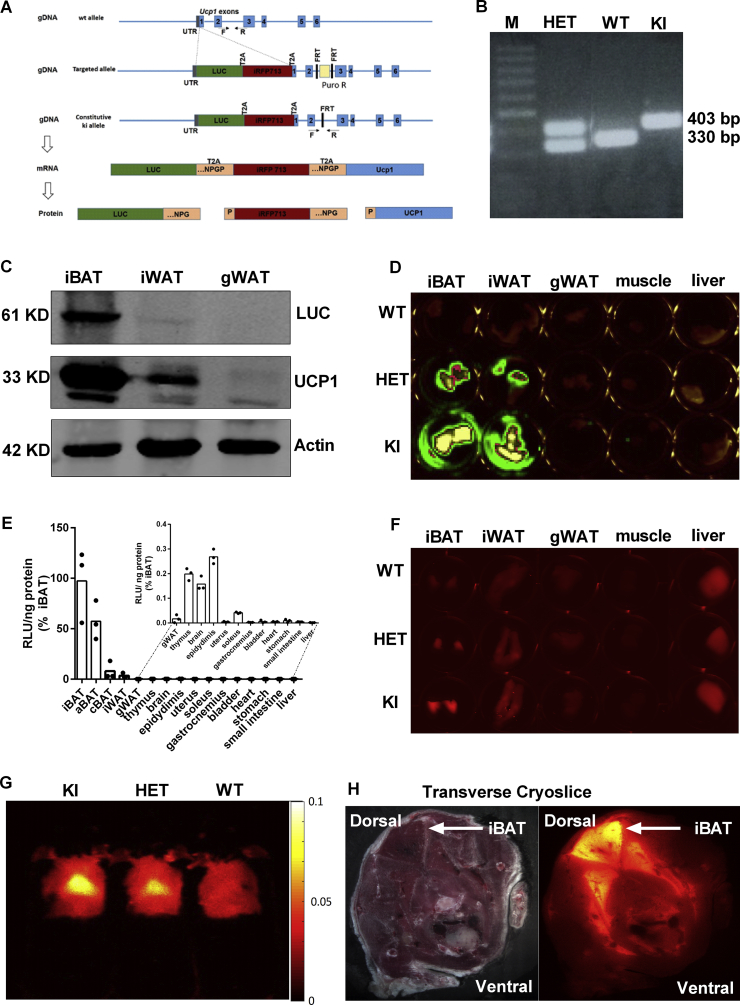
We generated a knock-in mouse line expressing firefly luciferase and near-infrared red florescent protein (iRFP713) driven by the regulatory elements of the endogenous Ucp1 gene.
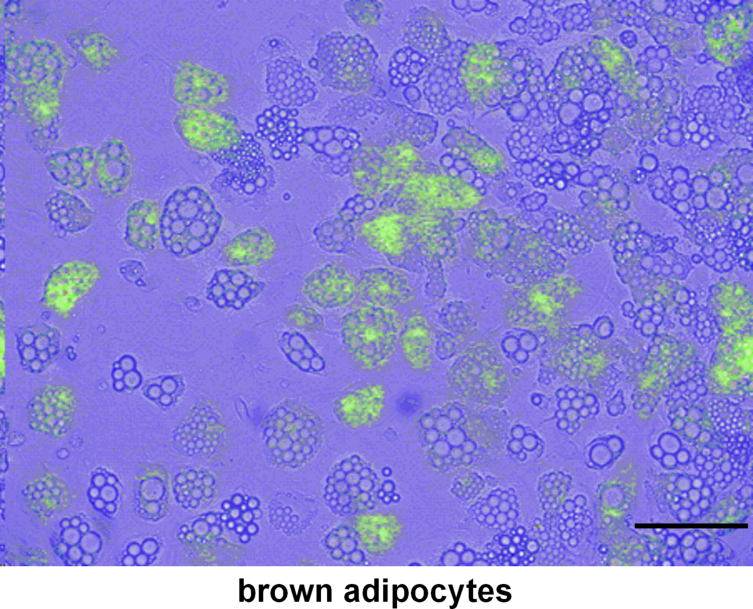
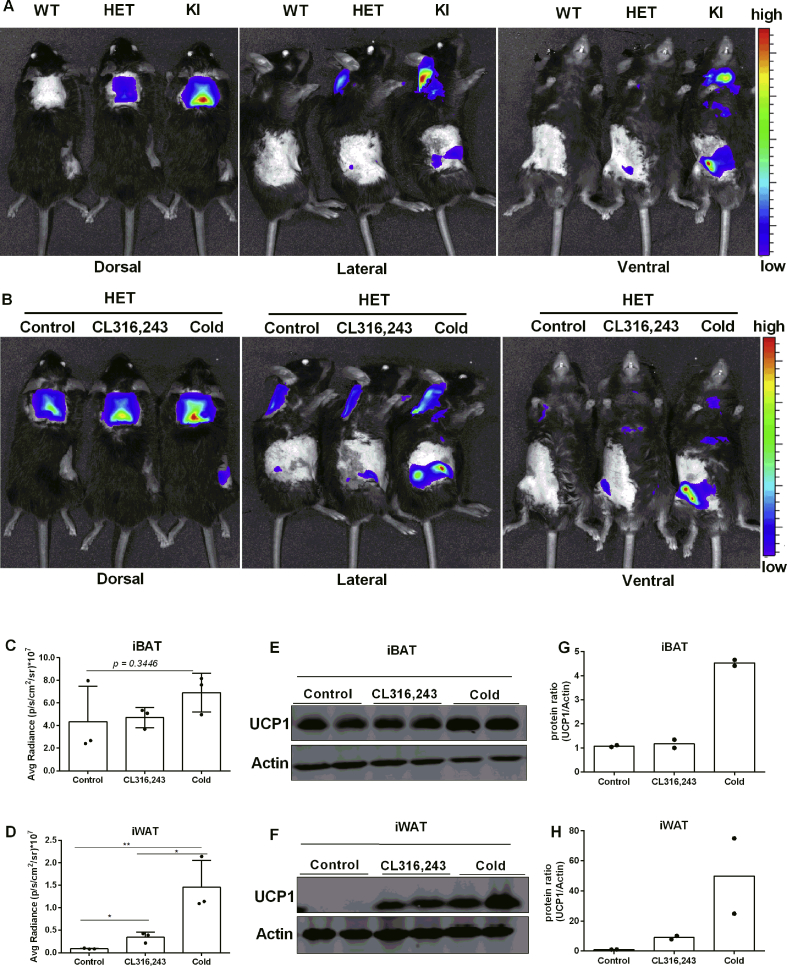
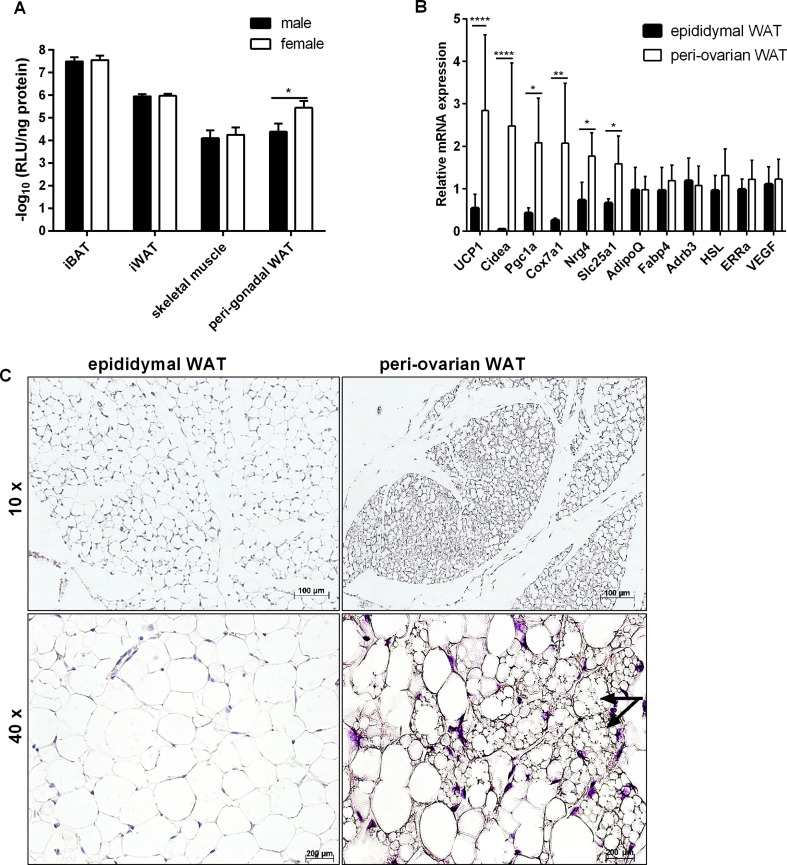
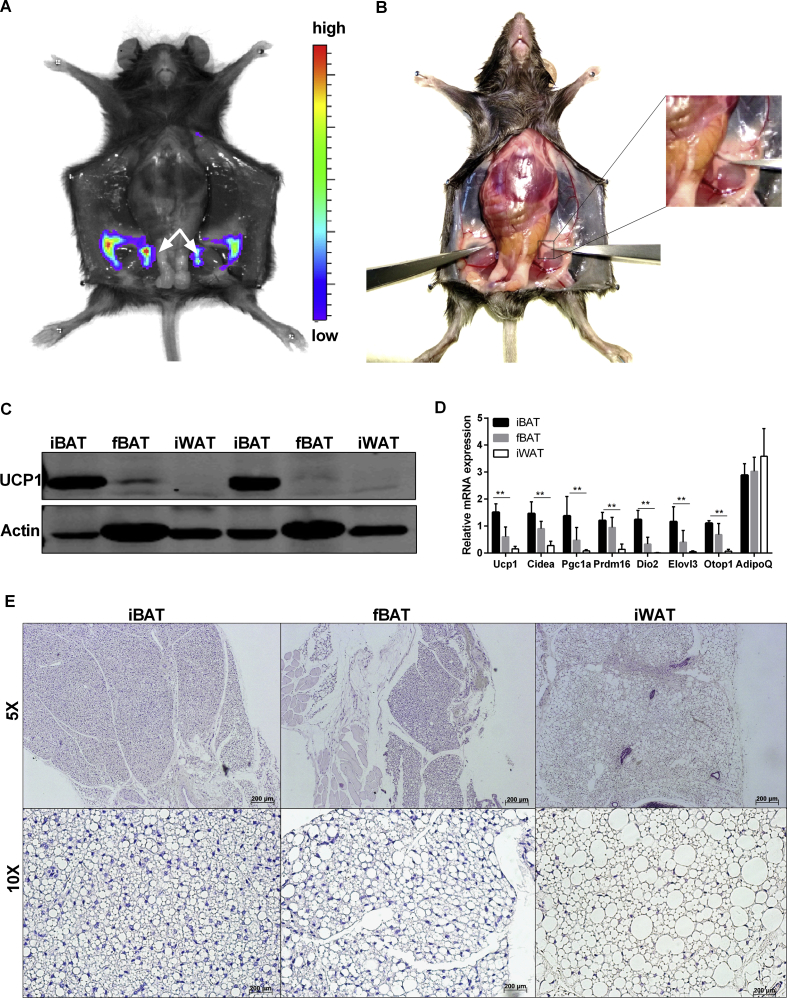
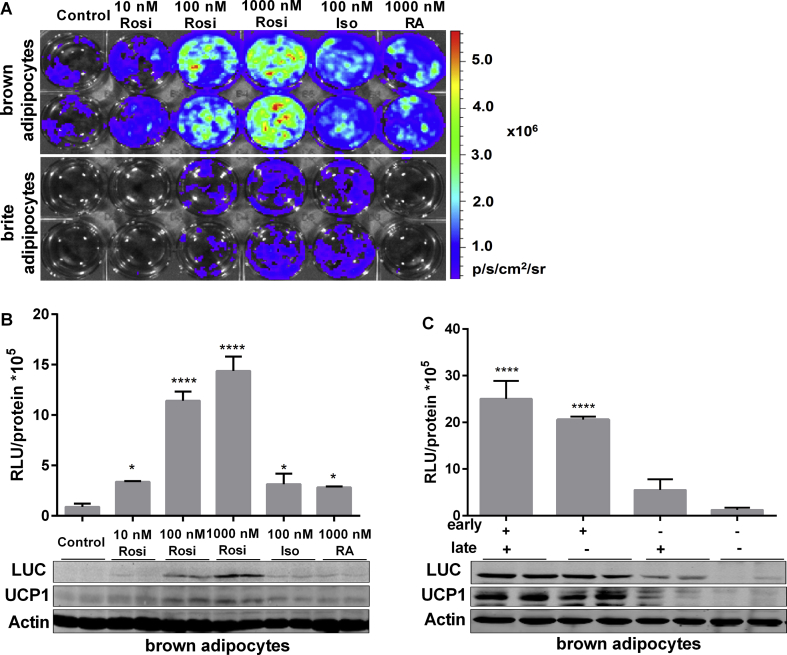
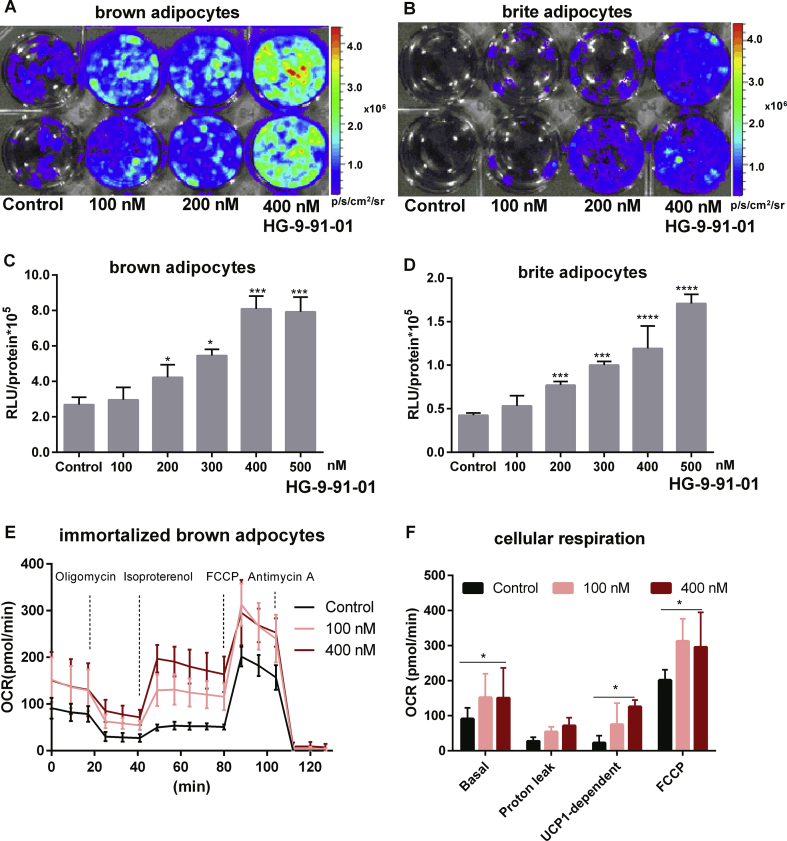
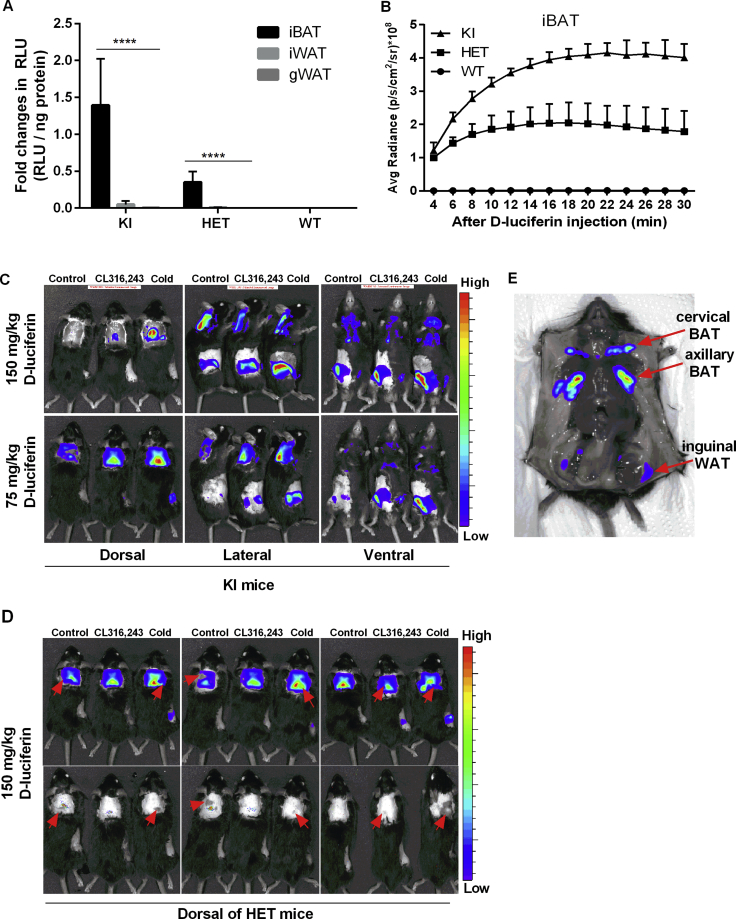
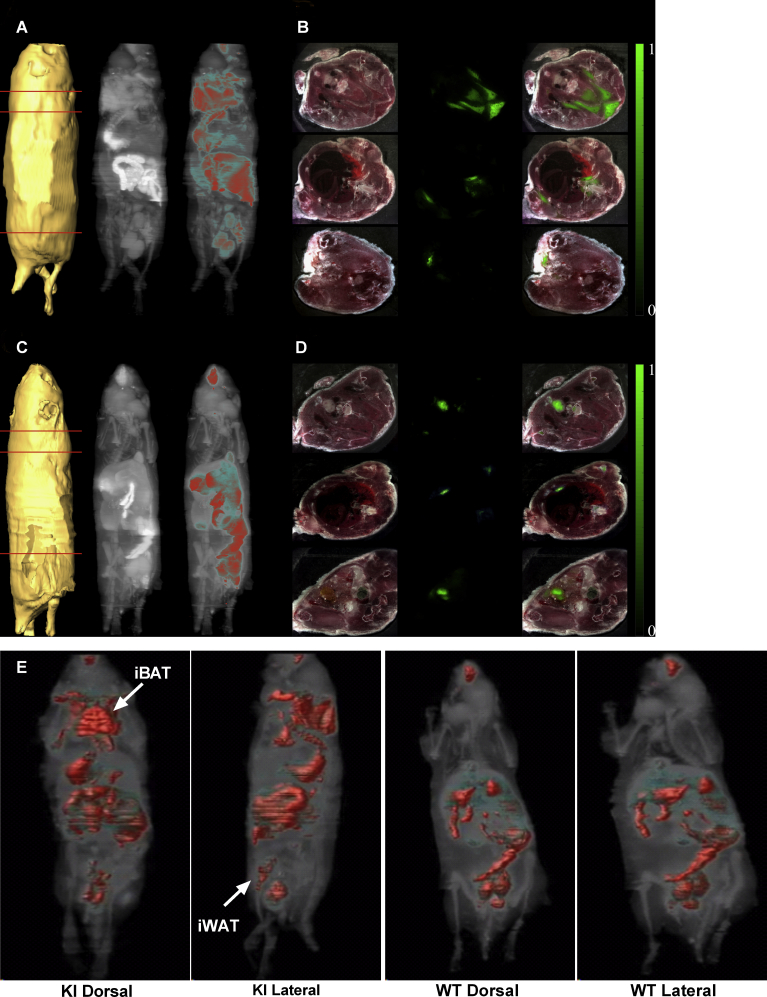
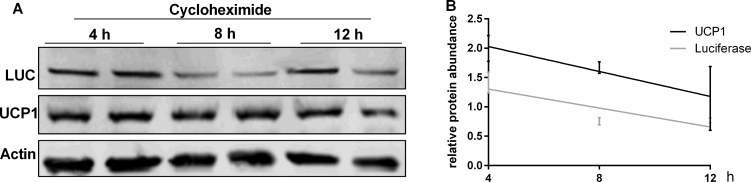
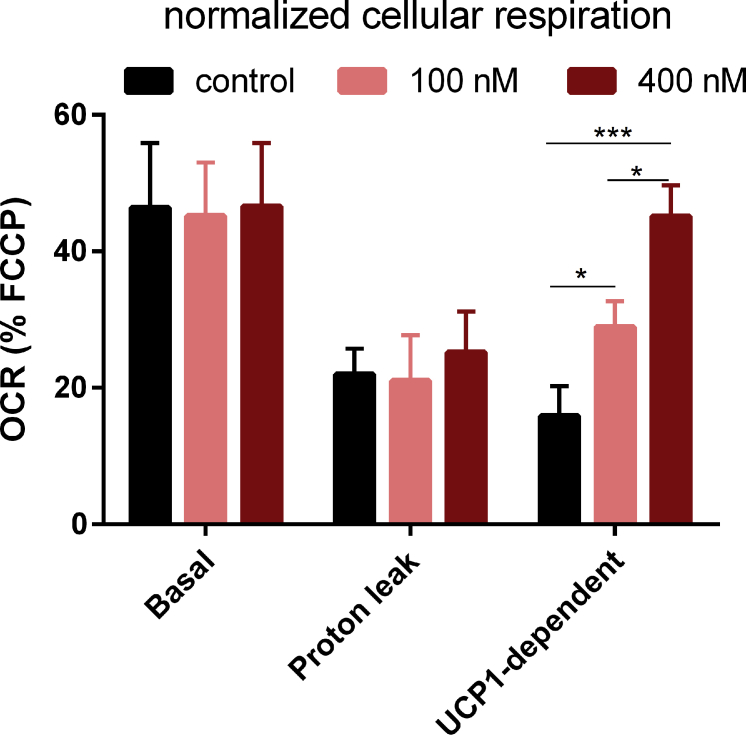
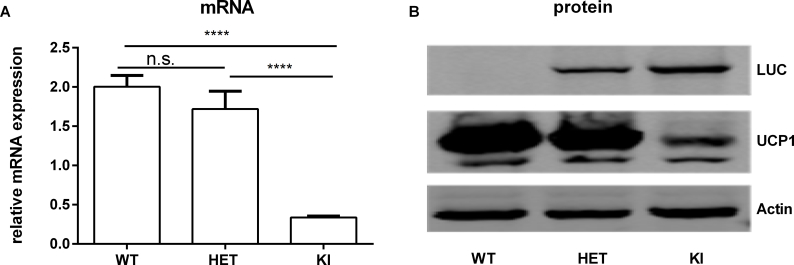
Our detailed characterization revealed that firefly luciferase activity faithfully reports endogenous Ucp1 gene expression in response to physiological and pharmacological stimuli. The iRFP713 fluorescence signal was detected in the interscapular BAT region of cold-exposed reporter mice in an allele-dosage dependent manner. Using this reporter mouse model, we detected a higher browning capacity in female peri-ovarian white adipose tissue compared to male epididymal WAT, which we further corroborated by molecular and morphological features. In situ imaging detected a strong luciferase activity signal in a previously unappreciated adipose tissue depot adjunct to the femoral muscle, now adopted as femoral brown adipose tissue. In addition, screening cultured adipocytes by bioluminescence imaging identified the selective Salt-Inducible Kinase inhibitor, HG-9-91-01, to increase Ucp1 gene expression and mitochondrial respiration in brown and brite adipocytes.
In our mouse model, firefly luciferase activity serves as a bona fide reporter for dynamic regulation of Ucp1. In addition, by means of iRFP713 we are able to monitor Ucp1 expression in a non-invasive fashion.
棕色脂肪组织(BAT)通过解偶联蛋白 1(UCP1)将营养能量以热量的形式消耗掉。在健康成年人体内发现功能性 BAT 后,人们开始寻找招募和激活棕色脂肪的药物干预方法,将其作为治疗肥胖症和 II 型糖尿病的手段。这些努力需要体内模型来比较新型化合物在相关生理环境中的疗效。
我们生成了一种表达荧光素酶和近红外红色荧光蛋白(iRFP713)的敲入鼠系,该蛋白由内源性 Ucp1 基因的调控元件驱动。
我们的详细特征分析表明,荧光素酶活性忠实地报告了内源性 Ucp1 基因表达,可响应生理和药理刺激。iRFP713 荧光信号以等位基因剂量依赖的方式在冷暴露报告小鼠的肩胛间 BAT 区域中被检测到。使用这种报告小鼠模型,我们检测到雌性卵巢周围白色脂肪组织的褐色化能力高于雄性附睾 WAT,这一结果进一步通过分子和形态特征得到证实。原位成像检测到股骨肌肉附近一个以前未被认识到的脂肪组织库中存在强烈的荧光素酶活性信号,现在将其归为股部棕色脂肪组织。此外,通过生物发光成像对培养的脂肪细胞进行筛选,发现选择性盐诱导激酶抑制剂 HG-9-91-01 可增加棕色和米色脂肪细胞中 Ucp1 基因的表达和线粒体呼吸。
在我们的小鼠模型中,荧光素酶活性可作为 Ucp1 动态调节的可靠报告。此外,通过 iRFP713,我们能够以非侵入性的方式监测 Ucp1 的表达。