Song Zhenhui, Yang Yang, Wang Li, Wang Kai, Ran Ling, Xie Yilu, Huang LeiShi, Yang Zhou, Yuan Peng, Yu Qiuhan
Department of Veterinary Medicine, College of Animal Science, Southwest University Chongqing People's Republic of China, Chongqing 402460, China.
Department of Veterinary Medicine, College of Animal Science, Southwest University Chongqing People's Republic of China, Chongqing 402460, China.
Res Vet Sci. 2019 Apr;123:39-46. doi: 10.1016/j.rvsc.2018.12.005. Epub 2018 Dec 17.
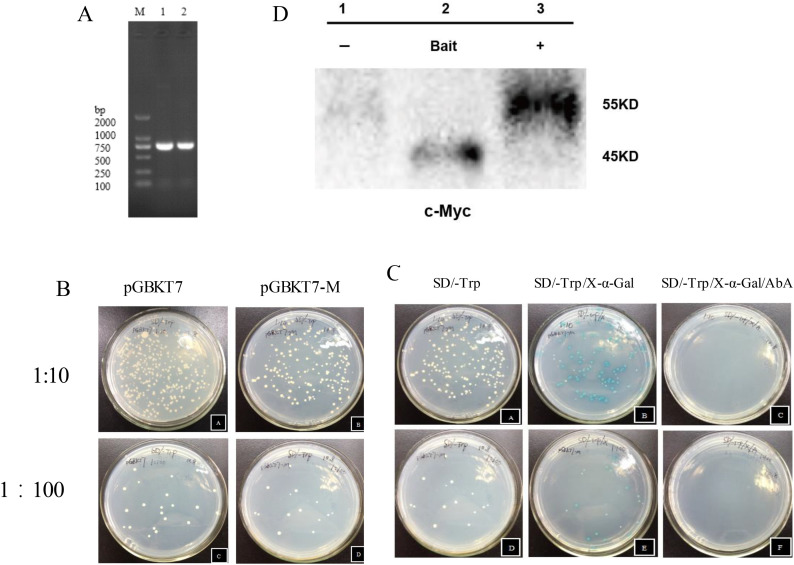
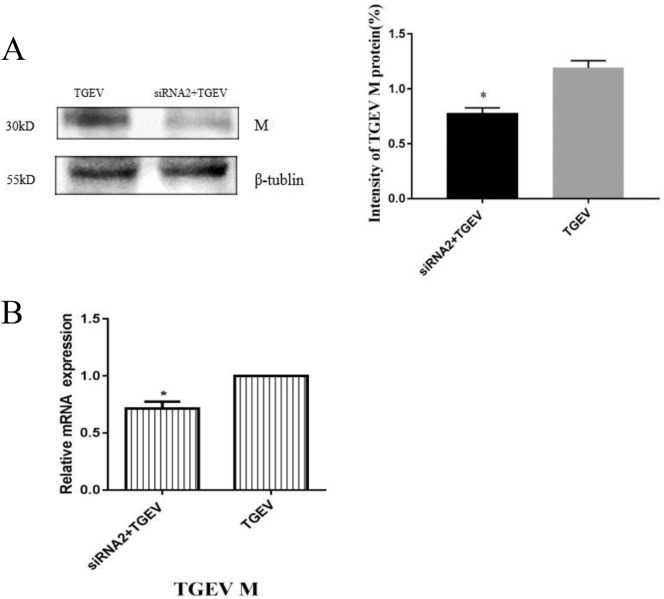
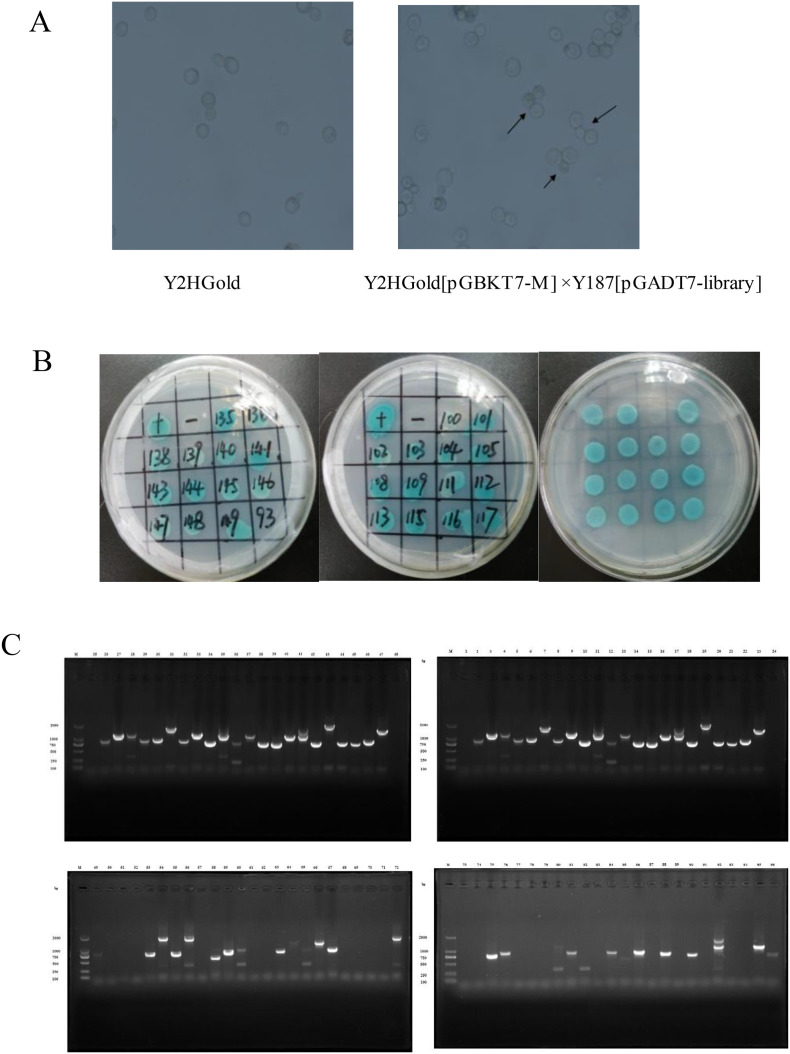
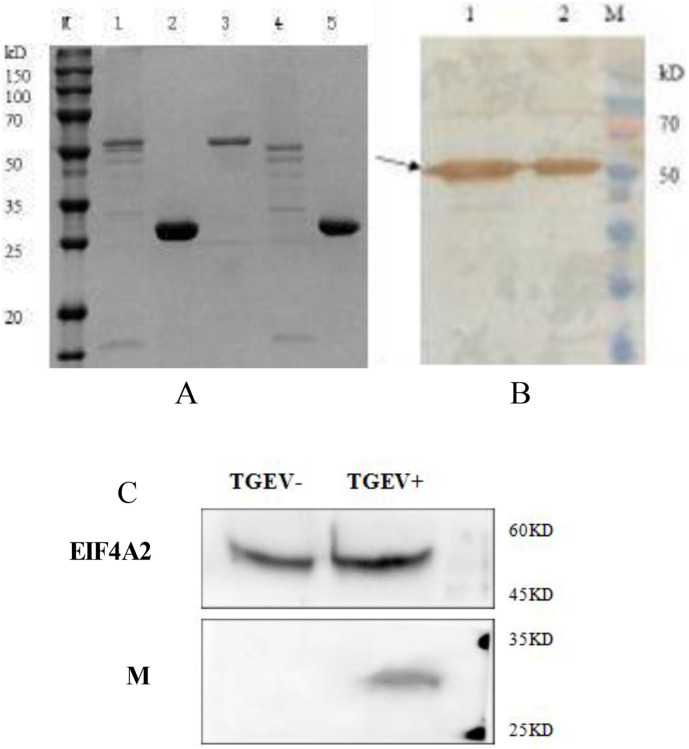
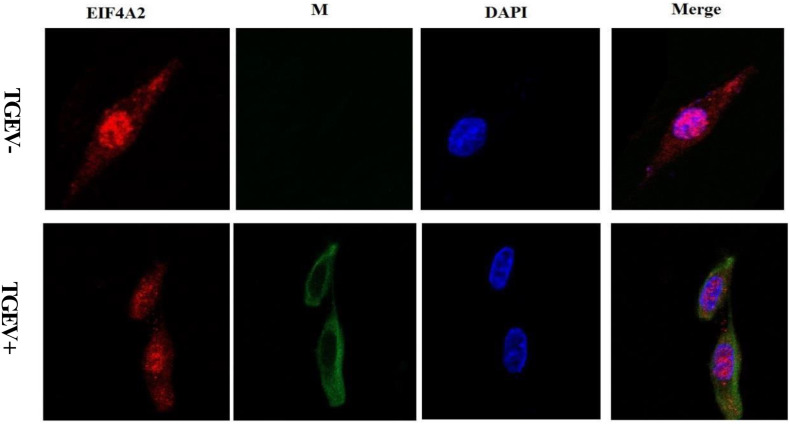
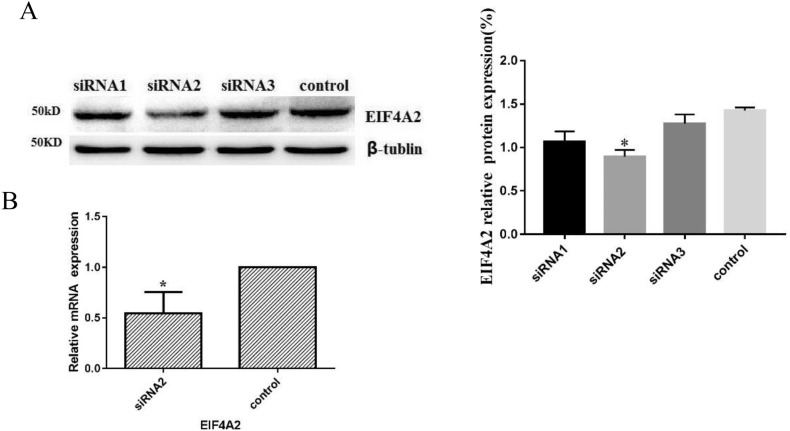
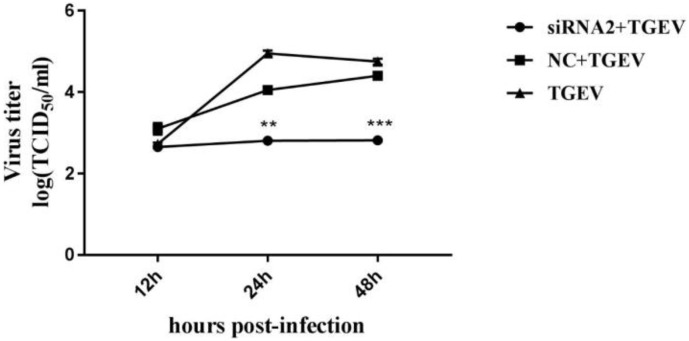
Transmissible gastroenteritis coronavirus (TGEV) is enteropathogenic coronavirus that causes diarrhea in pigs, and is associated with high morbidity and mortality in sucking piglets. The TGEV membrane (M) protein is a decisive protein for the proliferation of viral proteins, and is associated with virus assembly and budding. To identify the cellular proteins that interact with the TGEV M protein, yeast two-hybrid screening was employed, and seven cellular proteins were identified M-binding partners. Using the GST pull-down approach and a CO-IP assay, the M protein was found to interact with porcine intestinal cells via eukaryotic translation initiation factor 4-alpha (EIF4A2), an essential component of the cellular translational machinery. Additionally, confocal microscopy revealed that EIF4A2 and M were colocalized in the cytoplasm. Furthermore, the function of EIF4A2 in intestinal cells during TGEV infection was examined. A knockdown of EIF4A2 by siRNA markedly decreased M protein proliferation and TGEV replication in target cells. Thus demonstrating that EIF4A2 plays a significant role in TGEV replication. The present study provides mechanistic insight into the interaction between the TGEV M protein and intestinal cells which contributes to the understanding of coronavirus replication and may be useful for the development of novel therapeutic strategies for TGEV infection.
传染性胃肠炎冠状病毒(TGEV)是一种肠道致病性冠状病毒,可导致猪腹泻,与哺乳仔猪的高发病率和死亡率相关。TGEV膜(M)蛋白是病毒蛋白增殖的决定性蛋白,与病毒组装和出芽有关。为了鉴定与TGEV M蛋白相互作用的细胞蛋白,采用酵母双杂交筛选,鉴定出7种细胞蛋白为M结合伴侣。使用谷胱甘肽S-转移酶(GST)下拉法和免疫共沉淀(CO-IP)分析,发现M蛋白通过真核翻译起始因子4α(EIF4A2)与猪肠道细胞相互作用,EIF4A2是细胞翻译机制的重要组成部分。此外,共聚焦显微镜显示EIF4A2和M在细胞质中共定位。此外,还研究了EIF4A2在TGEV感染期间在肠道细胞中的功能。通过小干扰RNA(siRNA)敲低EIF4A2显著降低了靶细胞中M蛋白的增殖和TGEV的复制。因此表明EIF4A2在TGEV复制中起重要作用。本研究为TGEV M蛋白与肠道细胞之间的相互作用提供了机制性见解,有助于理解冠状病毒的复制,并可能有助于开发针对TGEV感染的新型治疗策略。