Sari Dini P, Basyuni Mohammad, Hasibuan Poppy AZ, Sumardi Sumardi, Nuryawan Arif, Wati Ridha
Department of Pharmacology, Faculty of Pharmacy, Universitas Sumatera Utara, Medan 20155, Indonesia. Email:
Asian Pac J Cancer Prev. 2018 Dec 25;19(12):3393-3400. doi: 10.31557/APJCP.2018.19.12.3393.
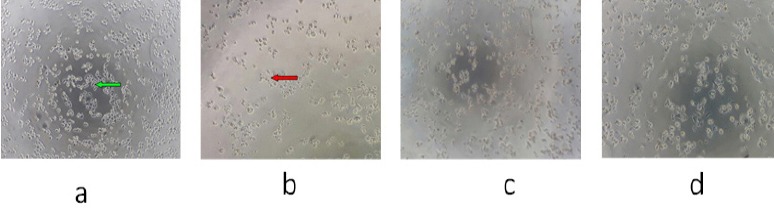
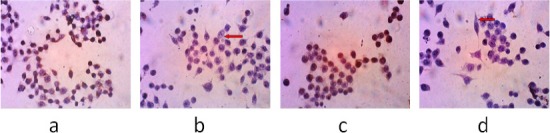
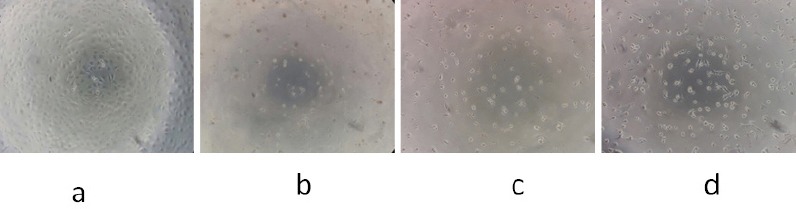
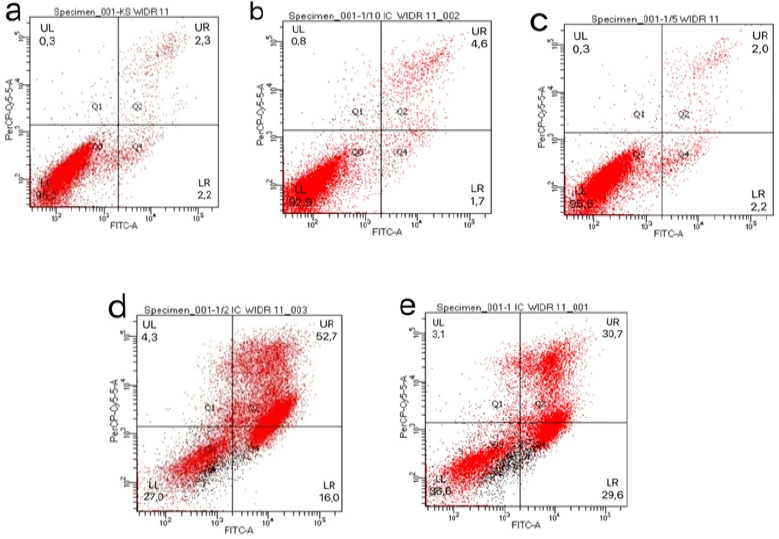
Background: Secondary metabolites from the group of isoprenoid compounds are widely distributed in mangrove plants. Polyisoprenoids (dolichol and polyprenol) are known to have benefits as anticancer agents. The present study was conducted to determine the cytotoxic potential of polyisoprenoids in leaves from seventeen selected mangrove species against colon cancer (WiDr) cells. Methods: Cytotoxic activity was evaluated by MTT assay in vitro using WiDr human colon cancer cells and 3T3 fibroblasts from Swiss albino mouse embryo tissue as controls. Mechanisms of action were approached by assessing apoptosis and the cell cycle using flow cytometry and fluorescence microscopy with annexin V-FITC, as well as expression of Bcl-2 and cyclin D1 by immunocytochemistry. Results: Polyisoprenoids from N. fruticans leaves demonstrated the highest anticancer activity, with an IC50 of 180.2 μg/mL, as compared to 397.7 μg/mL against 3T3 normal cells. Significant decrease in the expression of Bcl-2 and cyclin D1 was also noted, facilitating apoptosis and arrest of the cell cycle in the G0-G1 phase in WiDr cells. The present study showed for the first time that polyisoprenoids from N. fruticans exhibit concrete anticancer activity in vitro, decreasing cell proliferation and inducing apoptosis in colon cancer cells. Conclusions: Polyisoprenoids isolated from N. fruticans leaves may have promise as a source of anticancer agents.
类异戊二烯化合物组中的次生代谢产物广泛分布于红树林植物中。已知多聚异戊二烯(多萜醇和聚戊烯醇)具有抗癌作用。本研究旨在确定17种选定红树林物种叶片中的多聚异戊二烯对结肠癌(WiDr)细胞的细胞毒性潜力。方法:采用MTT法在体外评估细胞毒性活性,以WiDr人结肠癌细胞和瑞士白化小鼠胚胎组织的3T3成纤维细胞作为对照。通过使用膜联蛋白V-FITC的流式细胞术和荧光显微镜评估细胞凋亡和细胞周期,以及通过免疫细胞化学评估Bcl-2和细胞周期蛋白D1的表达来探讨作用机制。结果:与对3T3正常细胞的IC50为397.7μg/mL相比,来自N. fruticans叶片的多聚异戊二烯表现出最高的抗癌活性,IC50为180.2μg/mL。还观察到Bcl-2和细胞周期蛋白D1的表达显著降低,促进了WiDr细胞的细胞凋亡并使细胞周期停滞在G0-G1期。本研究首次表明,来自N. fruticans的多聚异戊二烯在体外具有具体的抗癌活性,可降低结肠癌细胞的增殖并诱导其凋亡。结论:从N. fruticans叶片中分离出的多聚异戊二烯有望成为抗癌药物的来源。