Arzamani Kourosh, Vatandoost Hassan, Rassi Yavar, Akhavan Amir Ahmad, Abai Mohammad Reza, Alavinia Mohammad, Akbarzadeh Kamran, Mohebali Mehdi, Rafizadeh Sayena
Department of Medical Entomology and Vector Control, School of Public Health, Tehran University of Medical Sciences, Tehran, Iran.
Vector-Borne Diseases Research Center, North Khorasan University of Medical Sciences, Bojnurd, Iran.
J Arthropod Borne Dis. 2018 Sep 30;12(3):232-239. eCollection 2018 Sep.
We aimed to determine the species composition, richness and diversity indices of the Phlebotomine sand flies at different topographic condition in visceral (VL) and cutaneous leishmaniasis (CL) foci in the northeast of Iran.
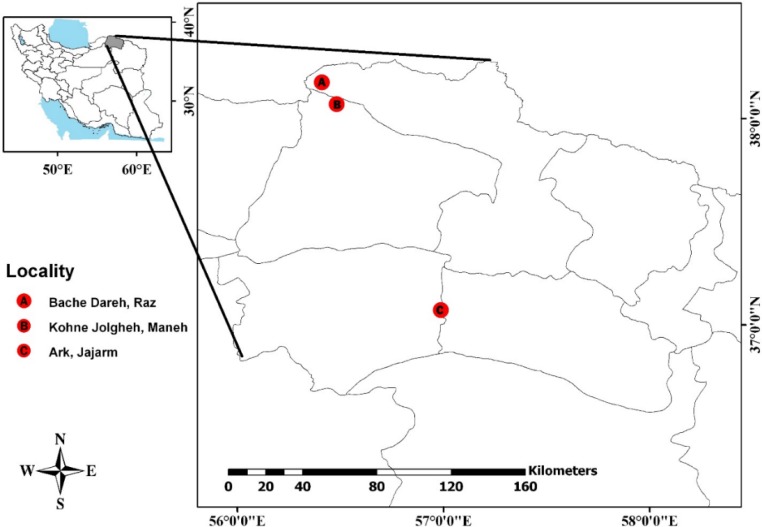
This cross-sectional study was conducted during 2016 in North Khorasan Province. The sampling was focused on rural regions, where human cases of VL and/or CL were diagnosed and reported during last 5 years. Sand flies were collected three times each twenty days during peak periods of seasonal activity. Seven collection methods were used. Some Alpha and Beta diversity indices were calculated.
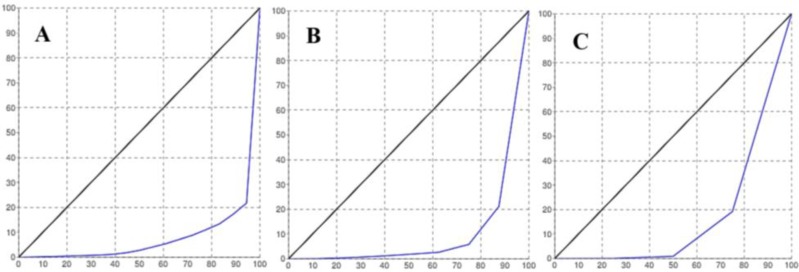
Overall, 7253 sand flies were collected and identified. They were from 19 species of Phlebotominae sand-flies. and were the most prevalent (84.9%) species in the study area. Species richness (S) was very different in three areas and were18, 8, and 4 respectively but Evenness (E) were 0.357, 0.345, and 0.380, so evenness was almost equal in the study areas. Shannon Index (H) and Margalef Richness Index were calculated 1.033, 0.718, 0.527 and 2.117, 0.8998, 0.4006 respectively.
The sand fly fauna in North Khorasan Province was very rich and often included some of the most important proven or suspected vectors of leishmaniasis. Species diversity indices (Shannon index, and Simpson's index) were not high due to decreasing in evenness. The Margalef richness index could accurately reflect the biodiversity of sand flies between three subtidal locations.
我们旨在确定伊朗东北部内脏利什曼病(VL)和皮肤利什曼病(CL)疫源地不同地形条件下白蛉的种类组成、丰富度和多样性指数。
本横断面研究于2016年在呼罗珊省北部进行。采样集中在农村地区,过去5年内在这些地区诊断并报告了VL和/或CL的人类病例。在季节性活动高峰期,每隔20天收集三次白蛉。使用了七种收集方法。计算了一些α和β多样性指数。
总体而言,共收集并鉴定了7253只白蛉。它们来自19种白蛉亚科。 和 是研究区域内最普遍的种类(84.9%)。三个区域的物种丰富度(S)差异很大,分别为18、8和4,但均匀度(E)分别为0.357、0.345和0.380,因此研究区域内的均匀度几乎相等。香农指数(H)和马加莱夫丰富度指数分别计算为1.033、0.718、0.527和2.117、0.8998、0.4006。
呼罗珊省北部的白蛉动物群非常丰富,通常包括一些最重要的已证实或疑似利什曼病传播媒介。由于均匀度降低,物种多样性指数(香农指数和辛普森指数)不高。马加莱夫丰富度指数可以准确反映三个潮下位置之间白蛉的生物多样性。