Experimental and Clinical Research Center, a Cooperation of Charité-Universitätsmedizin Berlin and Max Delbruck Center for Molecular Medicine, Germany (H.B., A.B., L.M., D.T., S.W., E.G.A., N.H., K.K., J.F., M.G., R.D., S.K.F., D.N.M., N.W.).
Charité-Universitätsmedizin Berlin, Corporate Member of Freie Universität Berlin, Humboldt-Universität zu Berlin, and Berlin Institute of Health, Germany (H.B., A.B., L.M., D.T., S.W., E.G.A., J.B., R.D., S.K.F., D.N.M., N.W.).
Circulation. 2019 Mar 12;139(11):1407-1421. doi: 10.1161/CIRCULATIONAHA.118.036652.
Arterial hypertension and its organ sequelae show characteristics of T cell-mediated inflammatory diseases. Experimental anti-inflammatory therapies have been shown to ameliorate hypertensive end-organ damage. Recently, the CANTOS study (Canakinumab Antiinflammatory Thrombosis Outcome Study) targeting interleukin-1β demonstrated that anti-inflammatory therapy reduces cardiovascular risk. The gut microbiome plays a pivotal role in immune homeostasis and cardiovascular health. Short-chain fatty acids (SCFAs) are produced from dietary fiber by gut bacteria and affect host immune homeostasis. Here, we investigated effects of the SCFA propionate in 2 different mouse models of hypertensive cardiovascular damage.
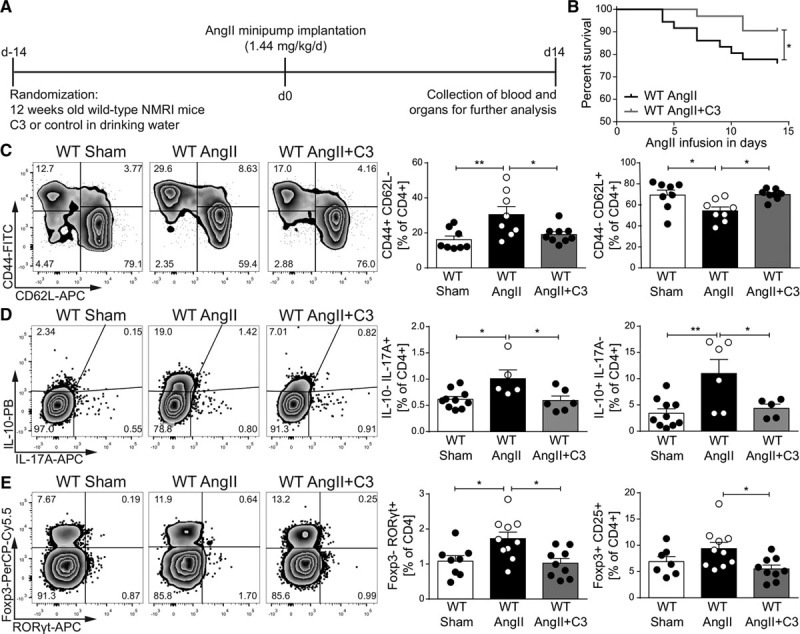
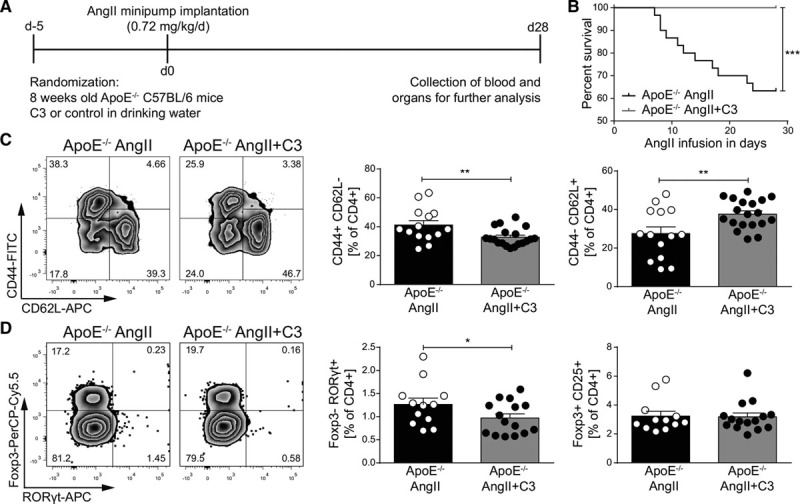
To investigate the effect of SCFAs on hypertensive cardiac damage and atherosclerosis, wild-type NMRI or apolipoprotein E knockout-deficient mice received propionate (200 mmol/L) or control in the drinking water. To induce hypertension, wild-type NMRI mice were infused with angiotensin II (1.44 mg·kg·d subcutaneous) for 14 days. To accelerate the development of atherosclerosis, apolipoprotein E knockout mice were infused with angiotensin II (0.72 mg·kg·d subcutaneous) for 28 days. Cardiac damage and atherosclerosis were assessed using histology, echocardiography, in vivo electrophysiology, immunofluorescence, and flow cytometry. Blood pressure was measured by radiotelemetry. Regulatory T cell depletion using PC61 antibody was used to examine the mode of action of propionate.
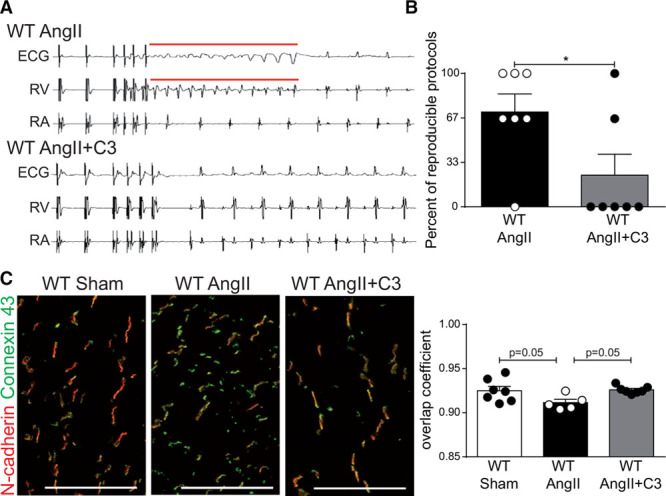
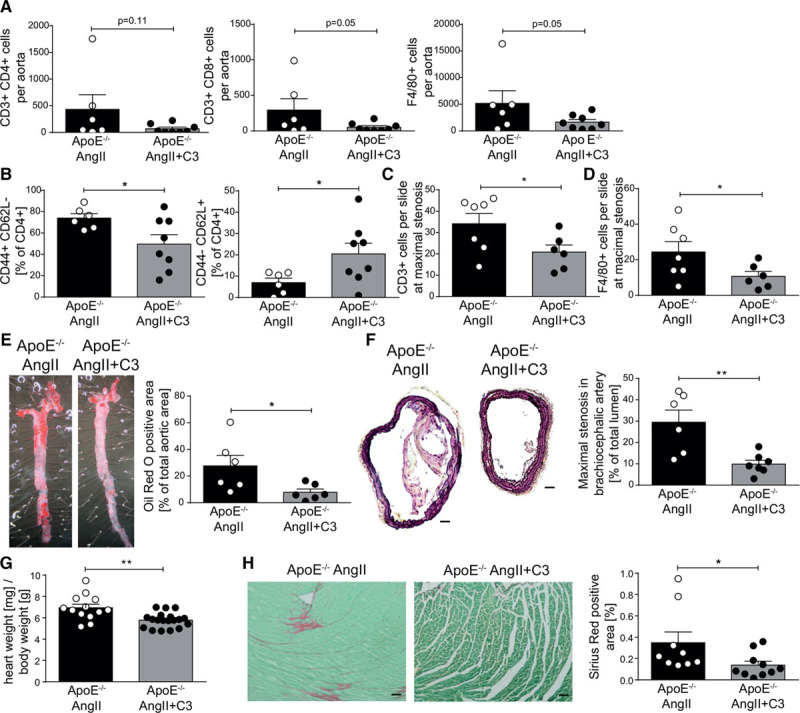
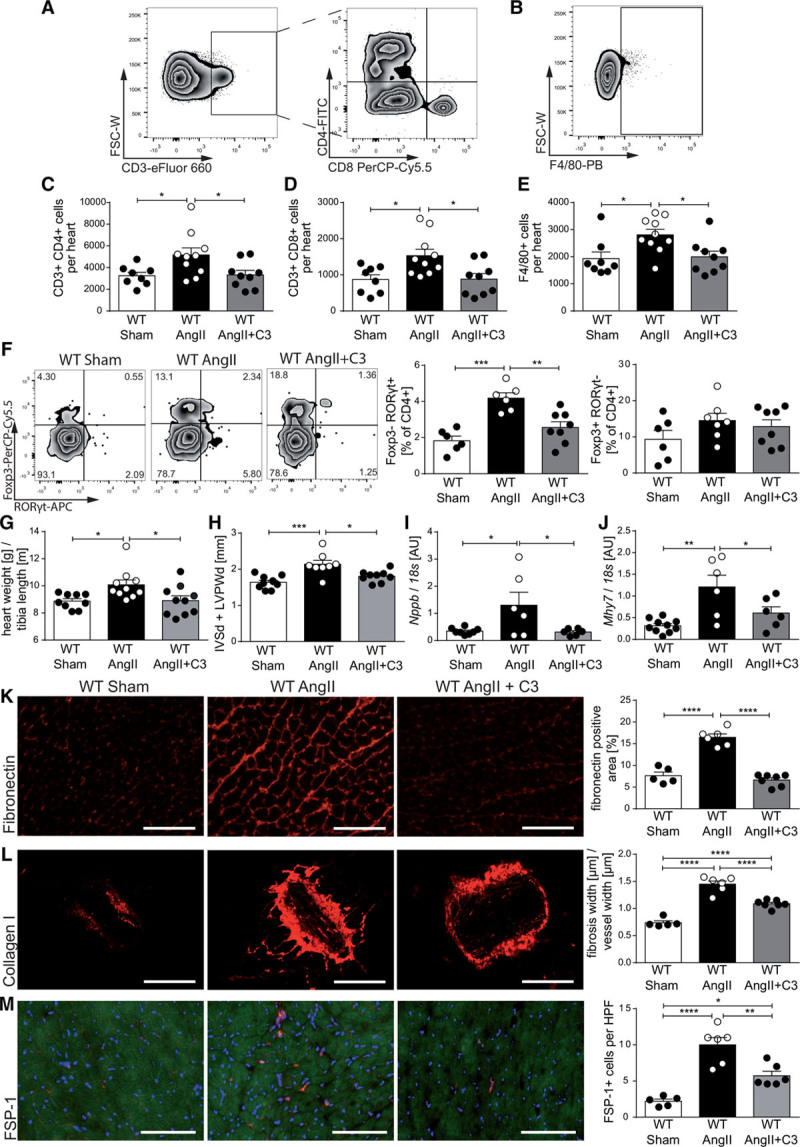
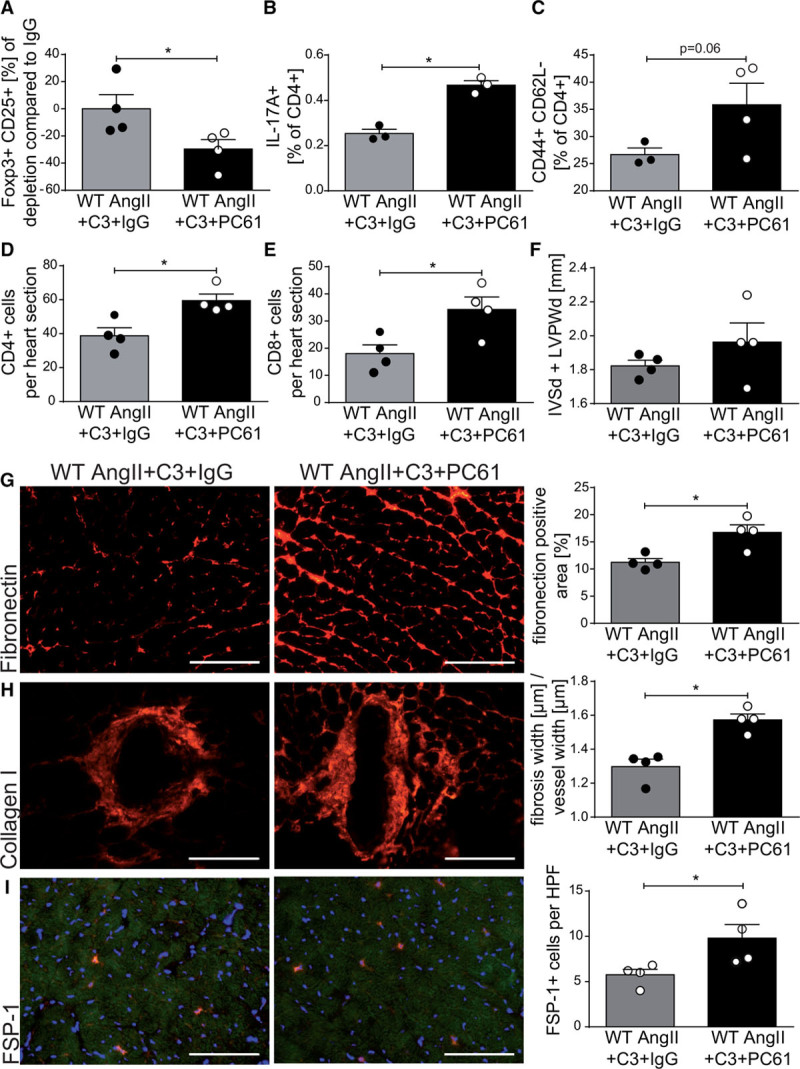
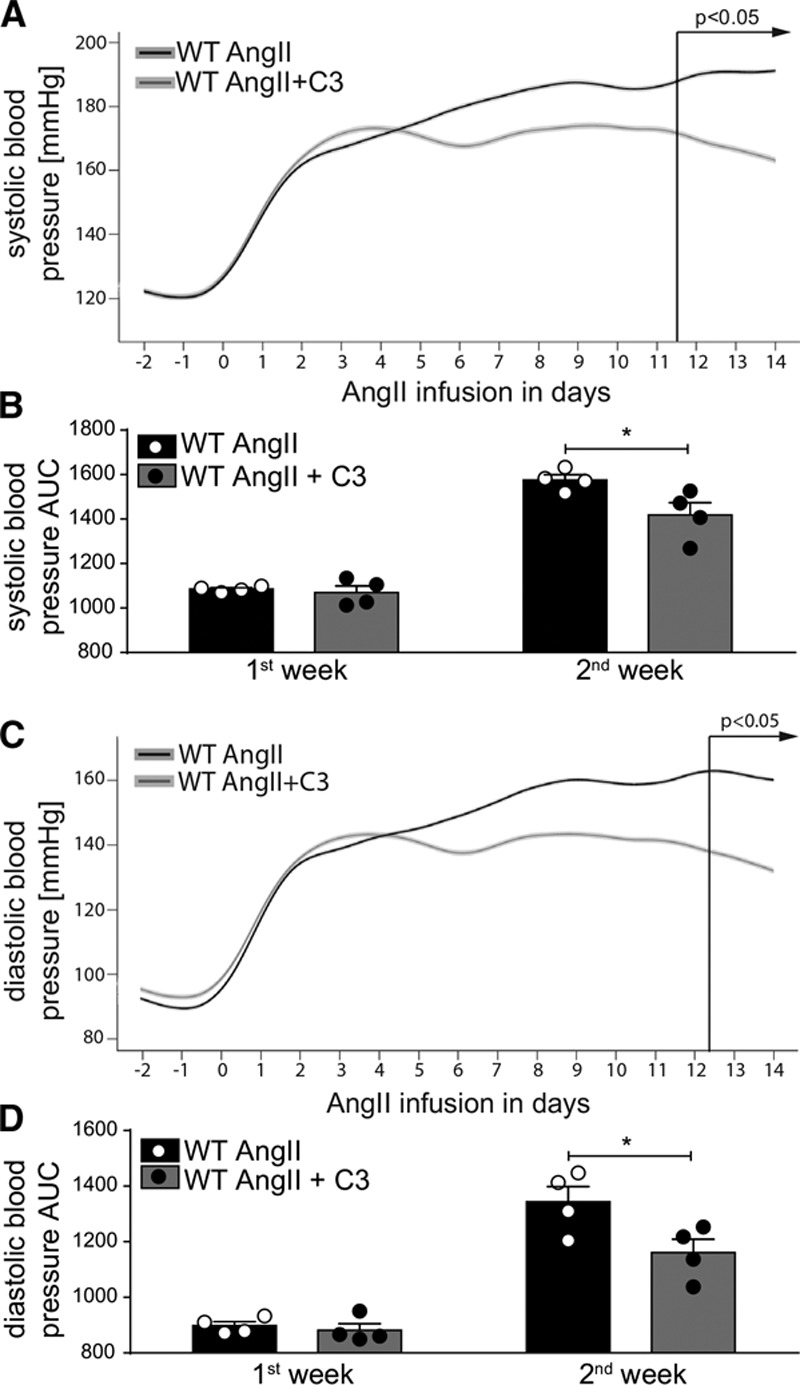
Propionate significantly attenuated cardiac hypertrophy, fibrosis, vascular dysfunction, and hypertension in both models. Susceptibility to cardiac ventricular arrhythmias was significantly reduced in propionate-treated angiotensin II-infused wild-type NMRI mice. Aortic atherosclerotic lesion area was significantly decreased in propionate-treated apolipoprotein E knockout-deficient mice. Systemic inflammation was mitigated by propionate treatment, quantified as a reduction in splenic effector memory T cell frequencies and splenic T helper 17 cells in both models, and a decrease in local cardiac immune cell infiltration in wild-type NMRI mice. Cardioprotective effects of propionate were abrogated in regulatory T cell-depleted angiotensin II-infused mice, suggesting the effect is regulatory T cell-dependent.
Our data emphasize an immune-modulatory role of SCFAs and their importance for cardiovascular health. The data suggest that lifestyle modifications leading to augmented SCFA production could be a beneficial nonpharmacological preventive strategy for patients with hypertensive cardiovascular disease.
动脉高血压及其器官并发症表现出 T 细胞介导的炎症性疾病的特征。实验性抗炎治疗已被证明可改善高血压的靶器官损伤。最近,CANTO 研究(Canakinumab Antiinflammatory Thrombosis Outcome Study,针对白细胞介素-1β的靶向治疗)表明抗炎治疗可降低心血管风险。肠道微生物组在免疫稳态和心血管健康中起着关键作用。短链脂肪酸(SCFAs)是肠道细菌从膳食纤维中产生的,并影响宿主的免疫稳态。在这里,我们研究了 SCFA 丙酸盐在 2 种不同的高血压心血管损伤小鼠模型中的作用。
为了研究 SCFAs 对高血压性心脏损伤和动脉粥样硬化的影响,野生型 NMRI 或载脂蛋白 E 敲除缺陷型小鼠接受丙酸盐(200mmol/L)或对照饮用水。为了诱导高血压,野生型 NMRI 小鼠接受血管紧张素 II(1.44mg·kg·d 皮下)输注 14 天。为了加速动脉粥样硬化的发展,载脂蛋白 E 敲除小鼠接受血管紧张素 II(0.72mg·kg·d 皮下)输注 28 天。使用组织学、超声心动图、体内电生理学、免疫荧光和流式细胞术评估心脏损伤和动脉粥样硬化。通过无线电遥测测量血压。使用 PC61 抗体耗尽调节性 T 细胞以研究丙酸盐的作用模式。
丙酸盐显著减轻了两种模型中的心脏肥大、纤维化、血管功能障碍和高血压。丙酸盐治疗可显著降低血管紧张素 II 输注野生型 NMRI 小鼠的心室性心律失常易感性。丙酸盐治疗可显著降低载脂蛋白 E 敲除缺陷型小鼠的主动脉粥样硬化病变面积。丙酸盐治疗减轻了系统性炎症,表现在两种模型中脾效应记忆 T 细胞频率和脾 Th17 细胞减少,以及野生型 NMRI 小鼠局部心脏免疫细胞浸润减少。在耗尽调节性 T 细胞的血管紧张素 II 输注小鼠中,丙酸盐的心脏保护作用被阻断,表明该作用依赖于调节性 T 细胞。
我们的数据强调了 SCFAs 的免疫调节作用及其对心血管健康的重要性。数据表明,导致 SCFA 产生增加的生活方式改变可能是高血压心血管疾病患者有益的非药物预防策略。