Taweechaipaisankul Anukul, Jin Jun-Xue, Lee Sanghoon, Kim Geon A, Suh Yoon Ho, Ahn Min Seok, Park Se Jun, Lee Byeong You, Lee Byeong Chun
Department of Theriogenology and Biotechnology, Research Institute for Veterinary Science, College of Veterinary Medicine, Seoul National University, Seoul 08826, Republic of Korea.
Key Laboratory of Animal Cellular and Genetic Engineering of Heilongjiang Province, College of Life Science, Northeast Agricultural University, Heilongjiang 150030, China.
J Reprod Dev. 2019 Apr 12;65(2):103-112. doi: 10.1262/jrd.2018-098. Epub 2018 Dec 27.
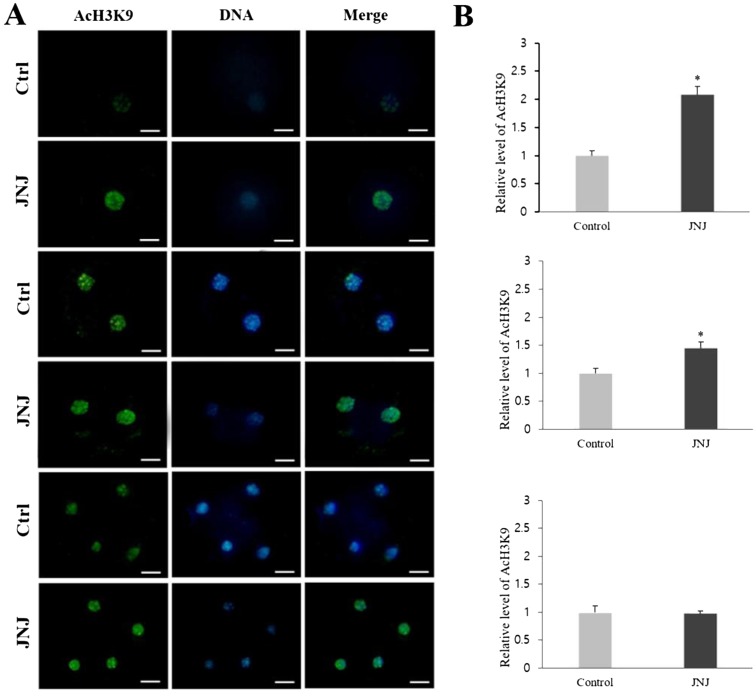
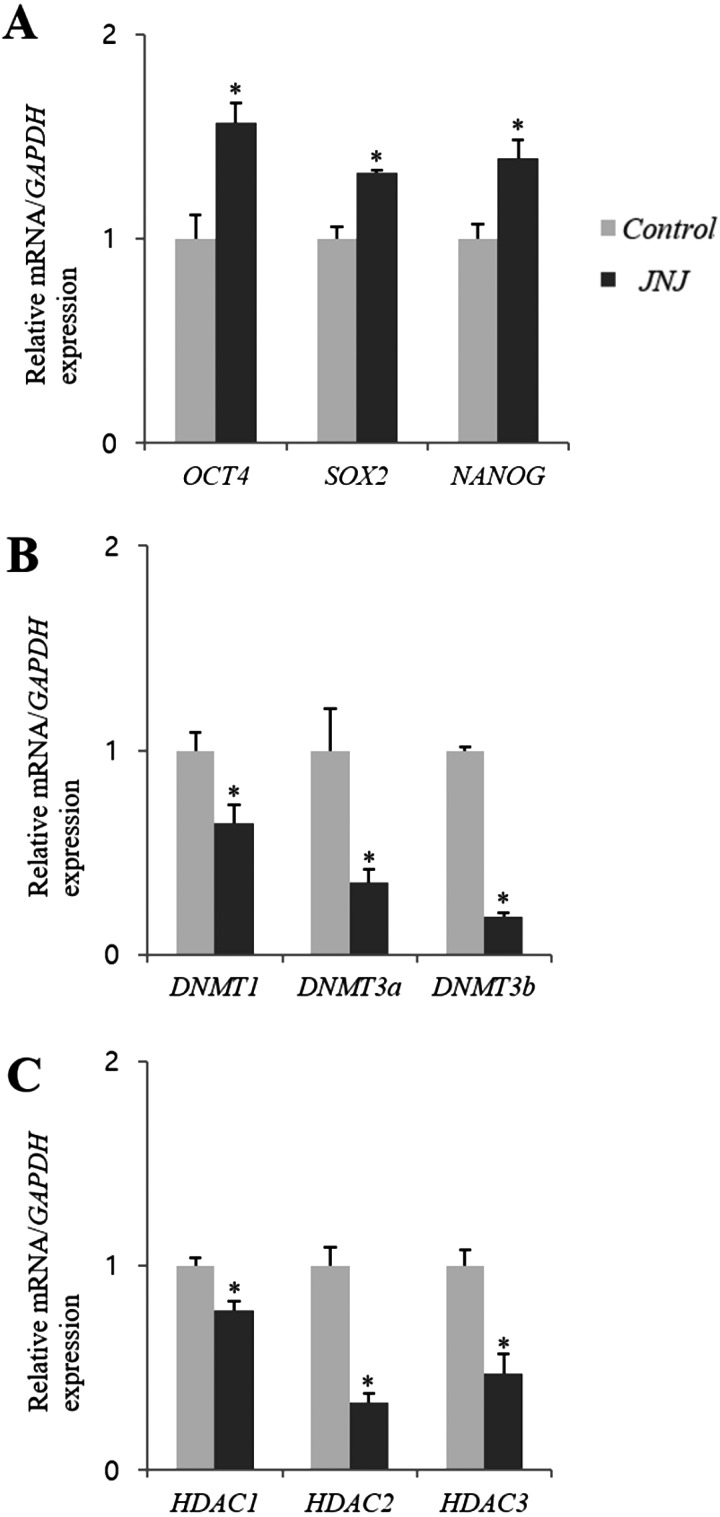
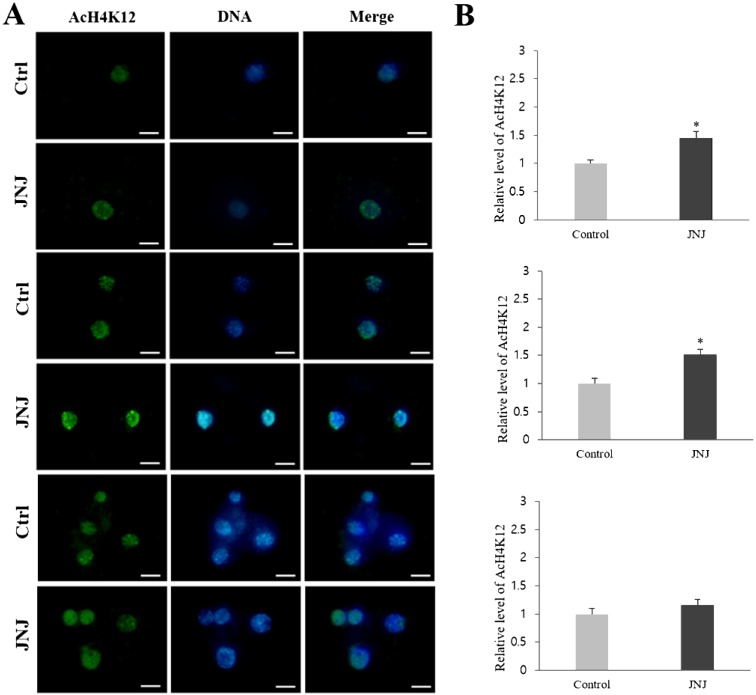
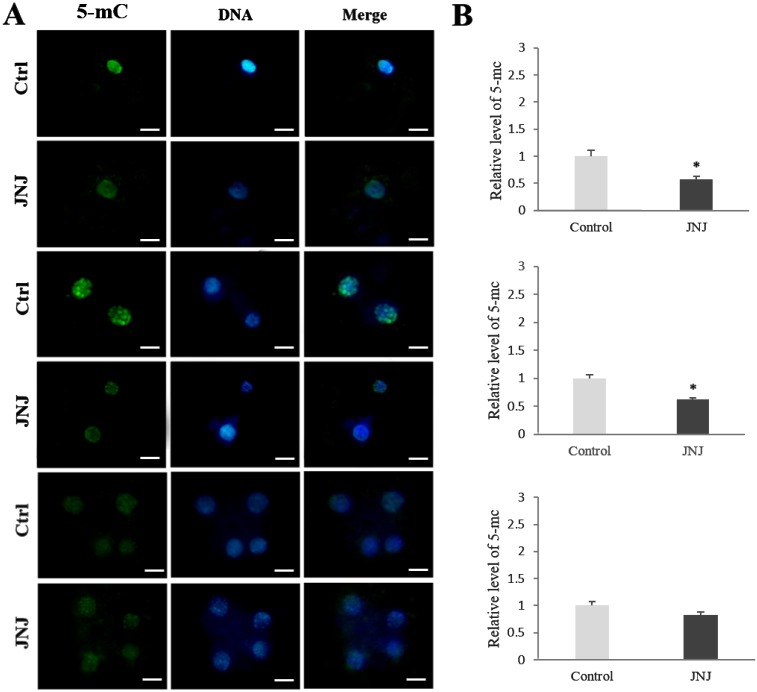
Recently, the modification of the epigenetic status of somatic cell nuclear transfer (SCNT) embryos by treatment with histone deacetylase inhibitors (HDACis) has made it possible to alter epigenetic traits and improve the developmental competence of these embryos. In the current study, we examined the effects of an HDACi, quisinostat (JNJ), on the in vitro development of porcine cloned embryos and their epigenetic nuclear reprogramming status. SCNT embryos were cultured under various conditions, and we found that treatment with 100 nM JNJ for 24 h post activation could improve blastocyst formation rates compared to the control (P < 0.05). Therefore, this was chosen as the optimal condition and used for further investigations. To explore the effects of JNJ on the nuclear reprogramming of early stage embryos and how it improved cloning efficiency, immunofluorescence staining and quantitative real-time PCR were performed. From the pseudo-pronuclear to 2-cell stages, the levels of acetylation of histone 3 at lysine 9 (AcH3K9) and acetylation of histone 4 at lysine 12 (AcH4K12) increased, and global DNA methylation levels revealed by anti-5-methylcytosine (5-mC) antibody staining were decreased in the JNJ-treated group compared to the control (P < 0.05). However, JNJ treatment failed to alter AcH3K9, AcH4K12, or 5-mC levels at the 4-cell embryo stage. Moreover, JNJ treatment significantly upregulated the expression of the development-related genes OCT4, SOX2, and NANOG, and reduced the expression of genes related to DNA methylation (DNMT1, DNMT3a, and DNMT3b) and histone acetylation (HDAC1, HDAC2, and HDAC3). Together, these results suggest that treatment of SCNT embryos with JNJ could promote their developmental competence by altering epigenetic nuclear reprogramming events.
最近,通过用组蛋白去乙酰化酶抑制剂(HDACis)处理来修饰体细胞核移植(SCNT)胚胎的表观遗传状态,使得改变表观遗传特征并提高这些胚胎的发育能力成为可能。在本研究中,我们检测了一种HDACi——喹赛诺司(JNJ)对猪克隆胚胎体外发育及其表观遗传核重编程状态的影响。SCNT胚胎在各种条件下培养,我们发现与对照组相比,激活后用100 nM JNJ处理24小时可提高囊胚形成率(P < 0.05)。因此,将此条件选为最佳条件并用于进一步研究。为了探究JNJ对早期胚胎核重编程的影响以及它如何提高克隆效率,进行了免疫荧光染色和定量实时PCR。从假原核期到2细胞期,与对照组相比,JNJ处理组中赖氨酸9处组蛋白H3的乙酰化(AcH3K9)水平和赖氨酸12处组蛋白H4的乙酰化(AcH4K12)水平升高,并且抗5-甲基胞嘧啶(5-mC)抗体染色显示的整体DNA甲基化水平降低(P < 0.05)。然而,JNJ处理未能改变4细胞胚胎期的AcH3K9、AcH4K12或5-mC水平。此外,JNJ处理显著上调了发育相关基因OCT4、SOX2和NANOG的表达,并降低了与DNA甲基化(DNMT1、DNMT3a和DNMT3b)及组蛋白乙酰化(HDAC1、HDAC2和HDAC3)相关基因的表达。总之,这些结果表明用JNJ处理SCNT胚胎可通过改变表观遗传核重编程事件来促进其发育能力。