Hill Lisa J, Moakes Richard J A, Vareechon Chairut, Butt Gibran, Ng Aaron, Brock Kristian, Chouhan Gurpreet, Vincent Rachel C, Abbondante Serena, Williams Richard L, Barnes Nicholas M, Pearlman Eric, Wallace Graham R, Rauz Saaeha, Logan Ann, Grover Liam M
1Institute of Clinical Sciences, University of Birmingham, Birmingham, B15 2TH UK.
2School of Chemical Engineering, University of Birmingham, Birmingham, B15 2TT UK.
NPJ Regen Med. 2018 Dec 21;3:23. doi: 10.1038/s41536-018-0061-4. eCollection 2018.
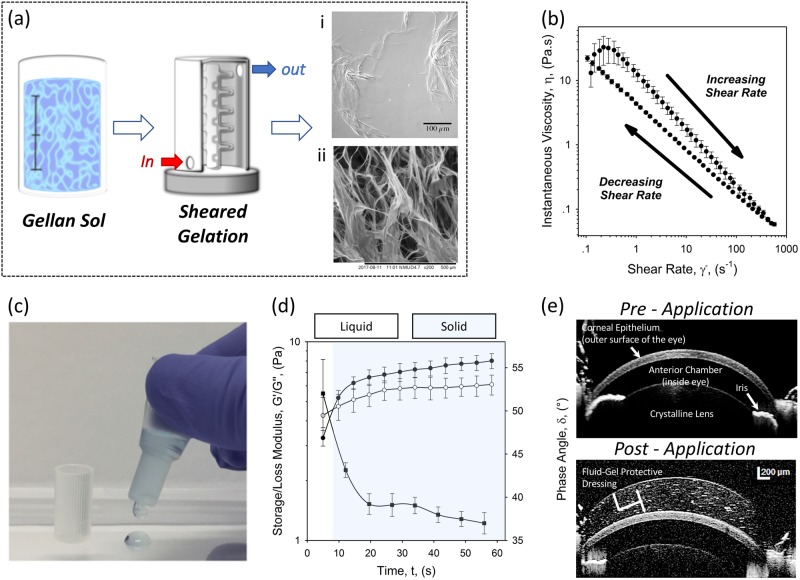
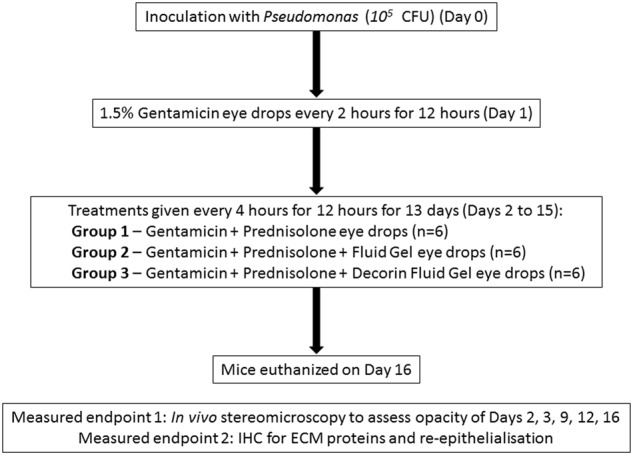
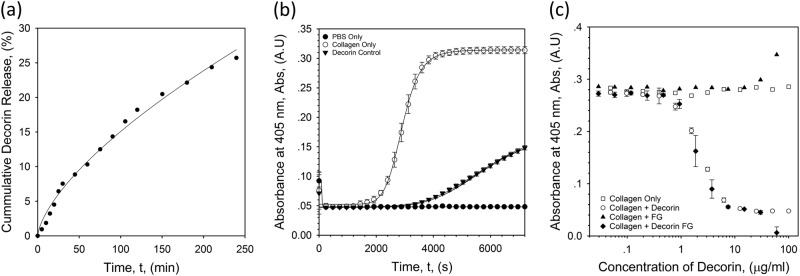
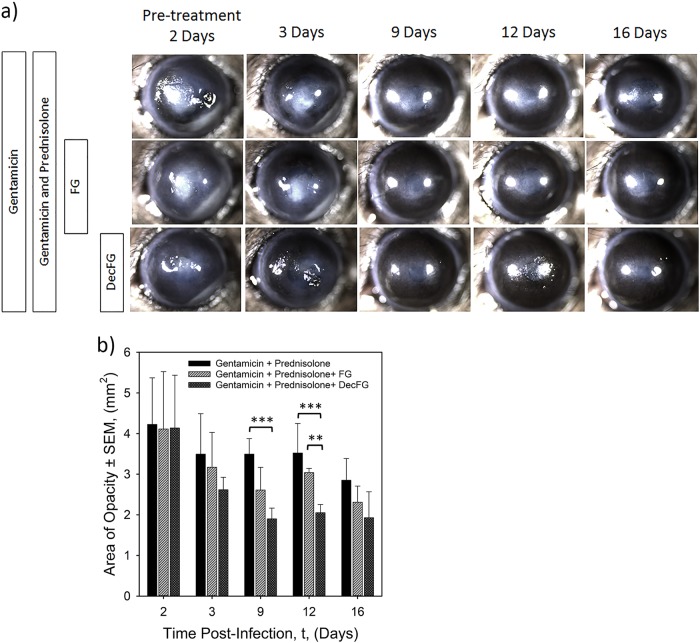
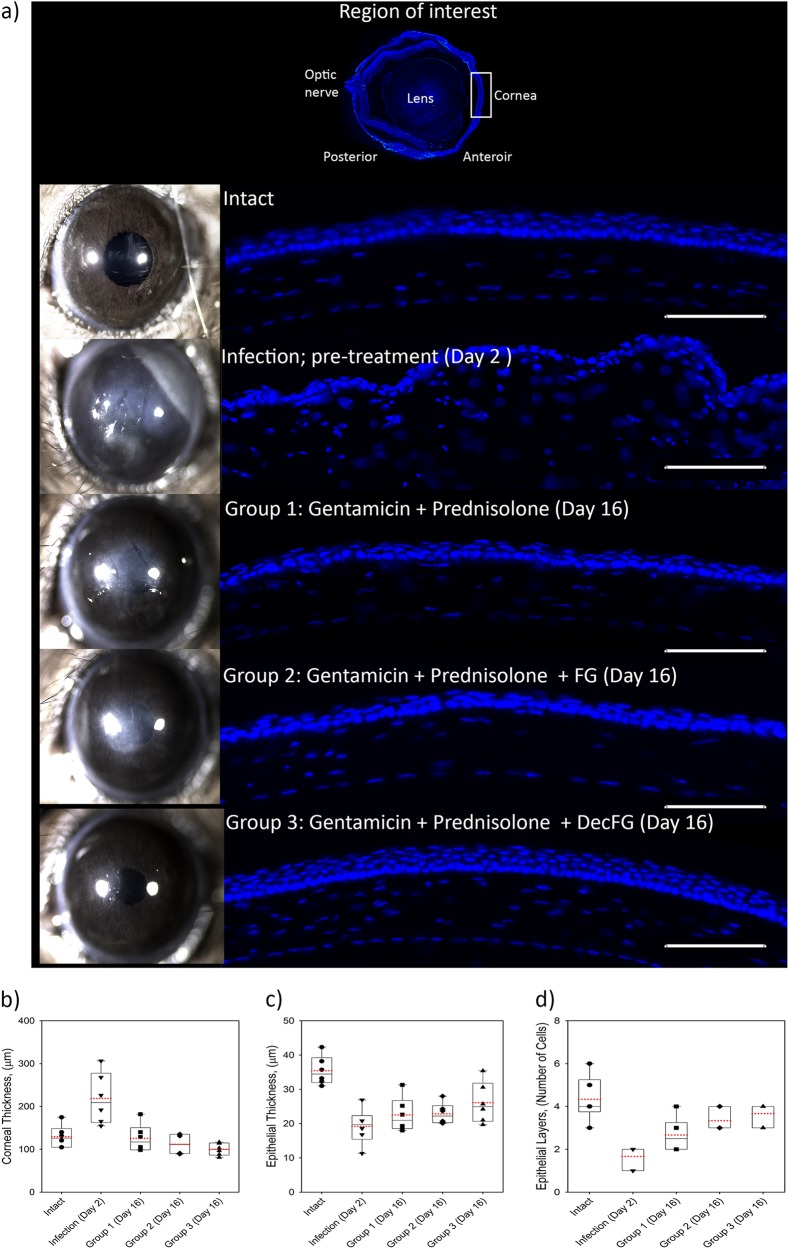
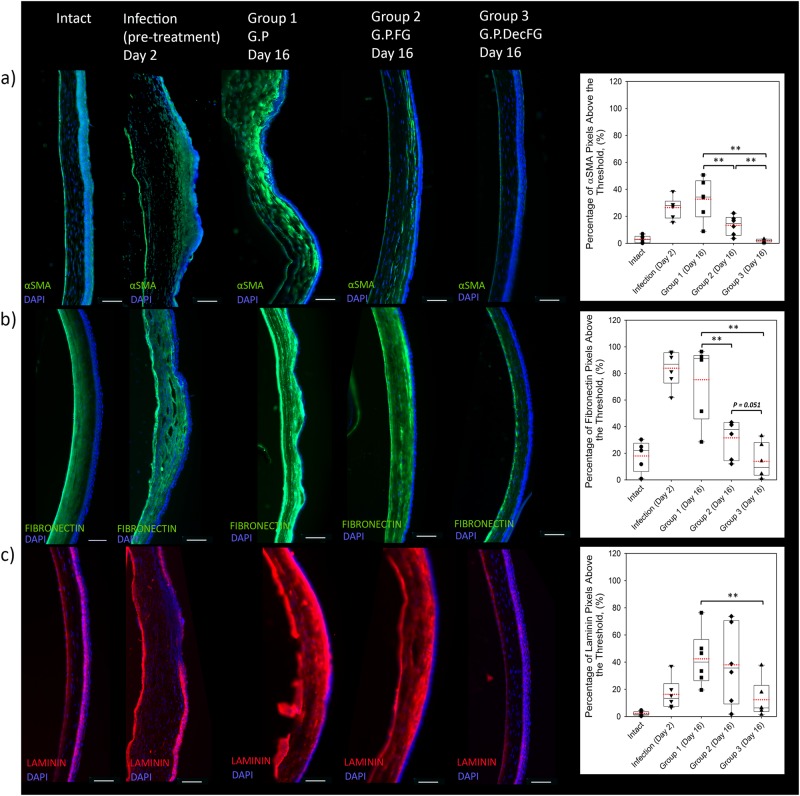
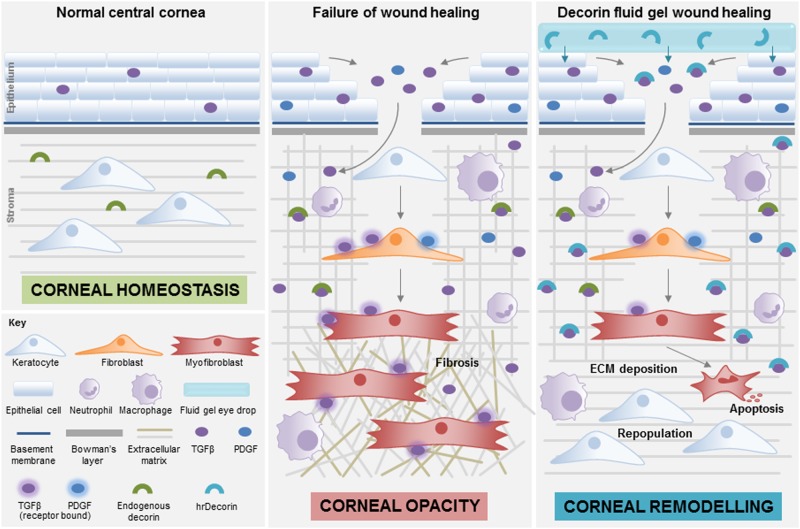
Disorganization of the transparent collagenous matrix in the cornea, as a consequence of a variety of infections and inflammatory conditions, leads to corneal opacity and sight-loss. Such corneal opacities are a leading cause of blindness, according to the WHO. Public health programs target prevention of corneal scarring, but the only curative treatment of established scarring is through transplantation. Although attempts to minimize corneal scarring through aggressive control of infection and inflammation are made, there has been little progress in the development of anti-scarring therapies. This is owing to eye drop formulations using low viscosity or weak gelling materials having short retention times on the ocular surface. In this study, we report an innovative eye drop formulation that has the ability to provide sustained delivery of decorin, an anti-scarring agent. The novelty of this eye drop lies in the method of structuring during manufacture, which creates a material that can transition between solid and liquid states, allowing retention in a dynamic environment being slowly removed through blinking. In a murine model of , applying the eye drop resulted in reductions of corneal opacity within 16 days. More remarkably, the addition of hrDecorin resulted in restoration of corneal epithelial integrity with minimal stromal opacity endorsed by reduced α-smooth muscle actin (αSMA), fibronectin, and laminin levels. We believe that this drug delivery system is an ideal non-invasive anti-fibrotic treatment for patients with microbial keratitis, potentially without recourse to surgery, saving the sight of many in the developing world, where corneal transplantation may not be available.
由于各种感染和炎症情况导致角膜中透明胶原基质的紊乱,会引起角膜混浊和视力丧失。据世界卫生组织称,这种角膜混浊是失明的主要原因。公共卫生项目旨在预防角膜瘢痕形成,但对于已形成的瘢痕,唯一的治疗方法是通过移植。尽管人们试图通过积极控制感染和炎症来尽量减少角膜瘢痕形成,但在抗瘢痕治疗的开发方面进展甚微。这是因为眼药水制剂使用的低粘度或弱凝胶材料在眼表的保留时间较短。在本研究中,我们报告了一种创新的眼药水制剂,它能够持续递送抗瘢痕形成剂核心蛋白聚糖。这种眼药水的新颖之处在于其制造过程中的结构化方法,该方法创造了一种能够在固态和液态之间转变的材料,使其能够在动态环境中保留,并通过眨眼缓慢清除。在小鼠模型中,应用这种眼药水在16天内导致角膜混浊减轻。更值得注意的是,添加人重组核心蛋白聚糖可使角膜上皮完整性得以恢复,同时基质混浊最小化,这通过降低α平滑肌肌动蛋白(αSMA)、纤连蛋白和层粘连蛋白水平得到证实。我们认为,这种药物递送系统对于微生物性角膜炎患者是一种理想的非侵入性抗纤维化治疗方法,可能无需进行手术,从而拯救发展中世界许多无法获得角膜移植的人的视力。