Department of Basic Medical Sciences, Neurosciences and Sensory Organs (SMBNOS), Section of Human Anatomy and Histology, University of Bari "Aldo Moro", Bari, Italy.
Department of Emergency and Organ Transplantation (DETO), Pathology Section, University of Bari "Aldo Moro", Bari, Italy.
Mediators Inflamm. 2018 Nov 26;2018:1965935. doi: 10.1155/2018/1965935. eCollection 2018.
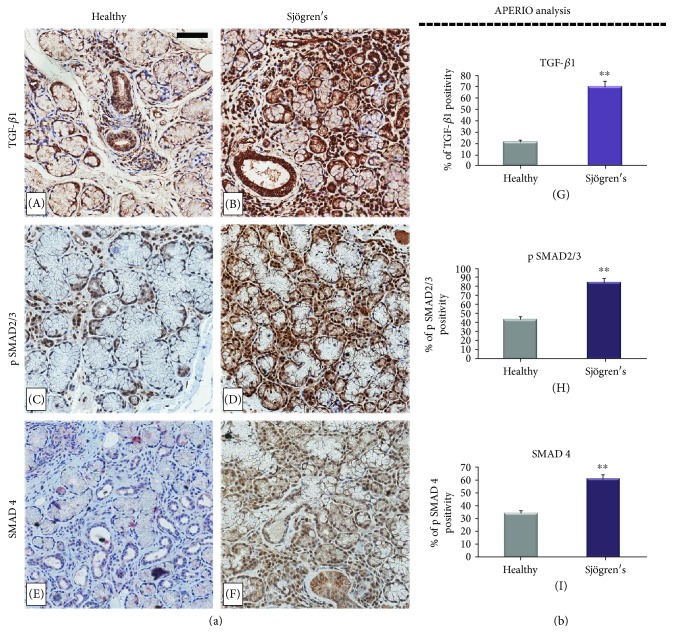
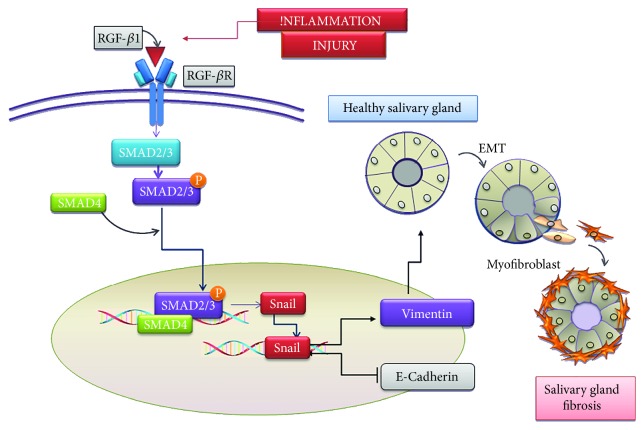
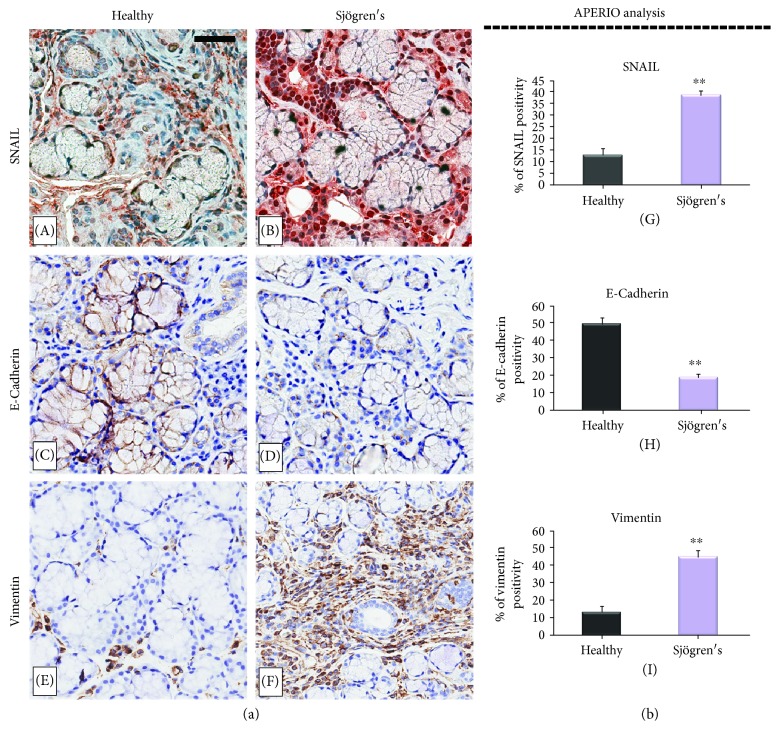
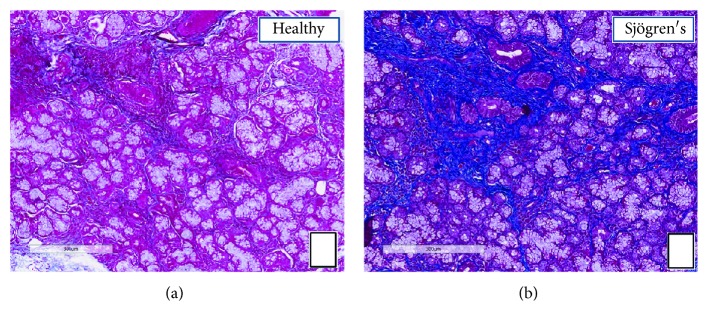
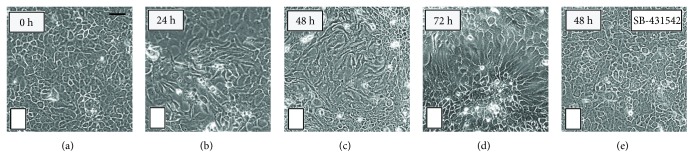
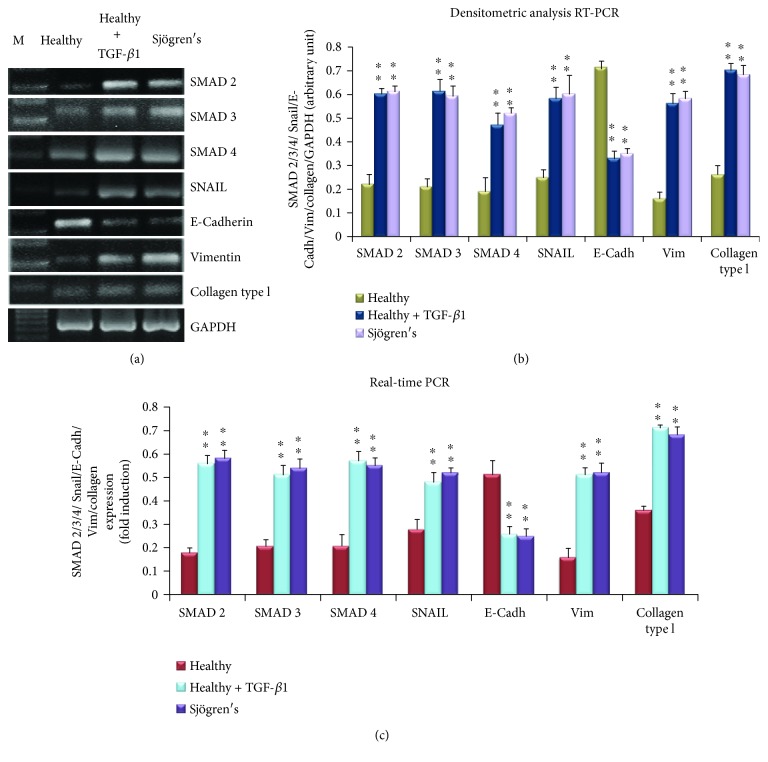
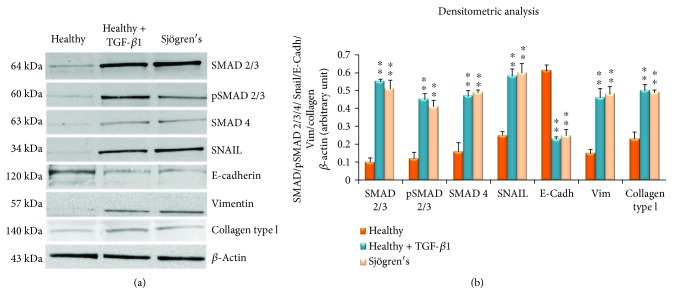
Transforming growth factor 1 (TGF-1) plays a crucial role contributing to marked fibrotic changes that compromise normal organ function. The TGF-1 signal exerts its biological effects via the TGF-/SMAD/Snail signaling pathway, playing an important pathogenic role in several fibrotic diseases. It has as yet been poorly investigated in the chronic autoimmune disease Sjögren's syndrome (SS). Here, we firstly tested, by immunohistochemistry, whether the TGF-1/SMAD/Snail signaling pathway is triggered in human pSS salivary glands (SGs). Next, healthy salivary gland epithelial cell (SGEC) cultures derived from healthy donors were exposed to TGF-1 treatment, and the relative gene and protein levels of , Snail, E-cadherin, vimentin, and collagen type I were compared by semiquantitative RT-PCR, quantitative real-time PCR, and Western blot analysis. We observed, both at gene and protein levels, higher expression of , , and and Snail in the SGEC exposed by TGF-1 compared to untreated healthy SGEC. Additionally, in TGF-1-treated samples, we found a significant reduction in the epithelial phenotype marker E-cadherin and an increase in the mesenchymal phenotype markers vimentin and collagen type I compared to those in untreated SGEC, indicating that TGF-1 induces the EMT via the TGF-1/SMAD/Snail signaling pathway. Therefore, by using the specific TGF- receptor 1 inhibitor SB-431542 in healthy SGEC treated with TGF-1, we showed a significant reduction of the fibrosis markers vimentin and collagen type I while the epithelial marker E-cadherin returns to levels similar to untreated healthy SGEC. These data demonstrate that TGF-1 is an important key factor in the transition phase from SG chronic inflammation to fibrotic disease. Characteristic changes in the morphology and function of TGF-1-treated healthy SGEC further confirm that TGF-1 plays a significant role in EMT-dependent fibrosis.
转化生长因子 1(TGF-1)在导致明显的纤维化改变中起着关键作用,这些改变会损害正常的器官功能。TGF-1 信号通过 TGF-/SMAD/Snail 信号通路发挥其生物学效应,在几种纤维化疾病中发挥重要的致病作用。然而,在慢性自身免疫性疾病干燥综合征(SS)中,该通路的研究还很少。在这里,我们首先通过免疫组织化学检测 TGF-1/SMAD/Snail 信号通路是否在人 pSS 唾液腺(SG)中被触发。接下来,我们将来自健康供体的健康唾液腺上皮细胞(SGEC)培养物暴露于 TGF-1 处理,并通过半定量 RT-PCR、定量实时 PCR 和 Western blot 分析比较 、Snail、E-钙粘蛋白、波形蛋白和胶原 I 的相对基因和蛋白水平。我们观察到,在基因和蛋白水平上,与未处理的健康 SGEC 相比,TGF-1 处理的 SGEC 中 、、和 Snail 的表达更高。此外,在 TGF-1 处理的样本中,与未处理的 SGEC 相比,上皮表型标志物 E-钙粘蛋白显著减少,间充质表型标志物波形蛋白和胶原 I 增加,表明 TGF-1 通过 TGF-1/SMAD/Snail 信号通路诱导 EMT。因此,我们在 TGF-1 处理的健康 SGEC 中使用特异性 TGF-受体 1 抑制剂 SB-431542,显示纤维化标志物波形蛋白和胶原 I 的显著减少,而上皮标志物 E-钙粘蛋白恢复到与未处理的健康 SGEC 相似的水平。这些数据表明,TGF-1 是 SG 慢性炎症向纤维化疾病转变阶段的重要关键因素。TGF-1 处理的健康 SGEC 的形态和功能的特征变化进一步证实,TGF-1 在 EMT 依赖性纤维化中起重要作用。