Ossom Williamson Peace, Minter Christian I J
Director for Research Data Services, Libraries, University of Texas at Arlington, 702 Planetarium Place, Box 19497, Arlington, TX 76019,
Community Engagement and Health Literacy Librarian, McGoogan Library of Medicine, University of Nebraska Medical Center, 986705 Nebraska Medical Center, Omaha, NE 68198-6705,
J Med Libr Assoc. 2019 Jan;107(1):16-29. doi: 10.5195/jmla.2019.433. Epub 2019 Jan 1.
PubMed's provision of MEDLINE and other National Library of Medicine (NLM) resources has made it one of the most widely accessible biomedical resources globally. The growth of PubMed Central (PMC) and public access mandates have affected PubMed's composition. The authors tested recent claims that content in PMC is of low quality and affects PubMed's reliability, while exploring PubMed's role in the current scholarly communications landscape.
The percentage of MEDLINE-indexed records was assessed in PubMed and various subsets of records from PMC. Data were retrieved via the National Center for Biotechnology Information (NCBI) interface, and follow-up interviews with a PMC external reviewer and staff at NLM were conducted.
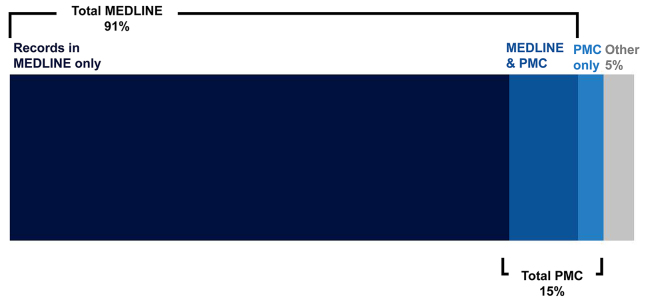
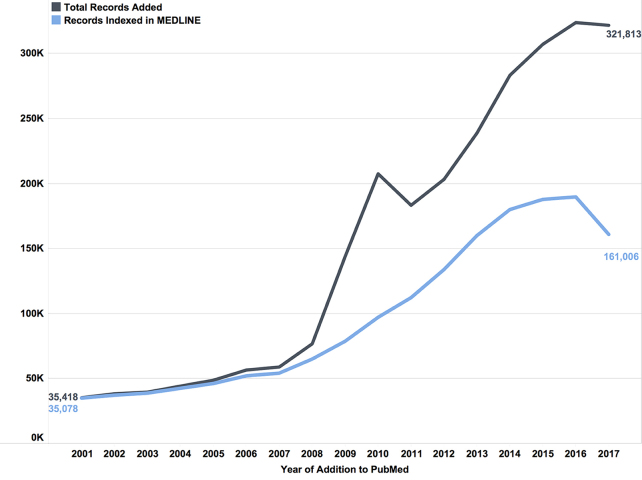
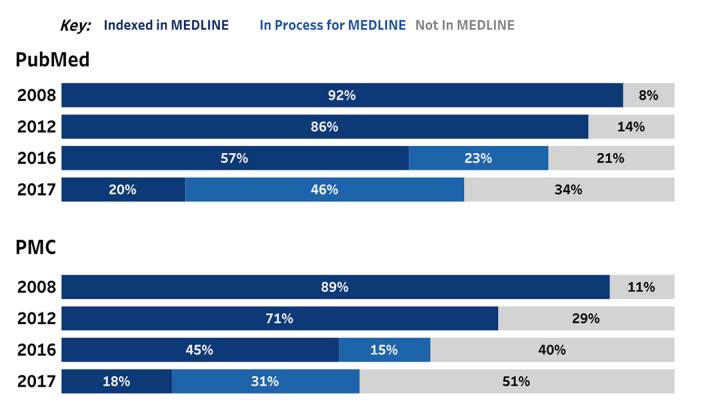
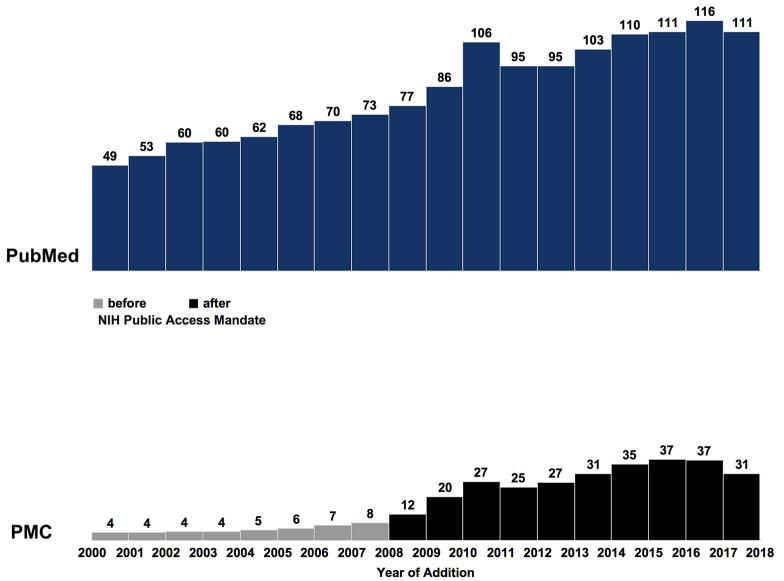
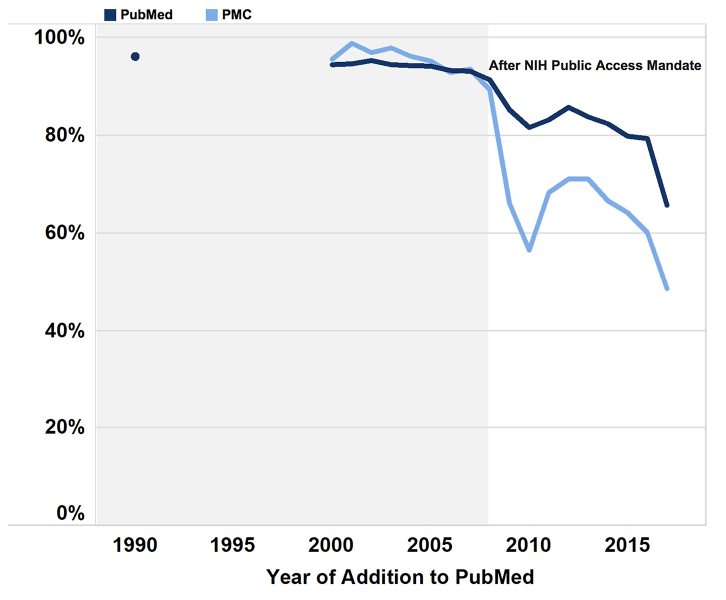
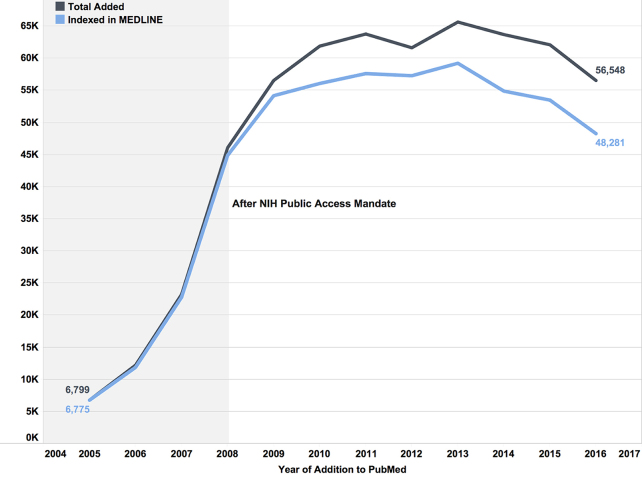
Almost all PubMed content (91%) is indexed in MEDLINE; however, since the launch of PMC, the percentage of PubMed records indexed in MEDLINE has slowly decreased. This trend is the result of an increase in PMC content from journals that are not indexed in MEDLINE and not a result of author manuscripts submitted to PMC in compliance with public access policies. Author manuscripts in PMC continue to be published in MEDLINE-indexed journals at a high rate (85%). The interviewees clarified the difference between the sources, with MEDLINE serving as a highly selective index of journals in biomedical literature and PMC serving as an open archive of quality biomedical and life sciences literature and a repository of funded research.
The differing scopes of PMC and MEDLINE will likely continue to affect their overlap; however, quality control exists in the maintenance and facilitation of both resources, and funding from major grantors is a major component of quality assurance in PMC.
PubMed提供的MEDLINE及其他美国国立医学图书馆(NLM)资源使其成为全球最易获取的生物医学资源之一。PubMed Central(PMC)的发展及公共获取要求影响了PubMed的构成。作者检验了近期关于PMC内容质量低并影响PubMed可靠性的说法,同时探讨了PubMed在当前学术交流格局中的作用。
评估了PubMed及PMC记录的各个子集中MEDLINE索引记录的百分比。数据通过美国国立生物技术信息中心(NCBI)接口检索,并对一名PMC外部审稿人和NLM工作人员进行了后续访谈。
几乎所有PubMed内容(91%)都被索引到MEDLINE中;然而,自PMC推出以来,PubMed中被MEDLINE索引的记录百分比一直在缓慢下降。这种趋势是由于未被MEDLINE索引的期刊在PMC中的内容增加,而非作者按照公共获取政策提交到PMC的稿件导致的。PMC中的作者稿件继续以很高的比例(85%)发表在被MEDLINE索引的期刊上。受访者澄清了两者来源的差异,MEDLINE是生物医学文献中期刊的高度选择性索引,而PMC是高质量生物医学和生命科学文献的开放存档以及资助研究的知识库。
PMC和MEDLINE不同的范围可能会继续影响它们的重叠情况;然而,在维护和促进这两种资源方面都存在质量控制,并且主要资助者的资金是PMC质量保证的主要组成部分。