Krishnankutty Sajesh Puthenpurackal, Muraleedharan Megha, Perumal Rajadurai Chinnasamy, Michael Saju, Benny Jubina, Balan Bipin, Kumar Pramod, Manazhi Jishnu, Kumar Bangaruswamy Dhinoth, Santhosh Sam, Thomas George, Gupta Ravi, Zachariah Arun
AgriGenome Labs Pvt. Ltd., SmartCity Kochi, Kakkanad, Kerala 682042 India.
SciGenom Research Foundation, Cheruthuruthy, Kerala 679531 India.
J Venom Anim Toxins Incl Trop Dis. 2018 Dec 22;24:41. doi: 10.1186/s40409-018-0181-8. eCollection 2018.
The oral cavities of snakes are replete with various types of bacterial flora. Culture-dependent studies suggest that some of the bacterial species are responsible for secondary bacterial infection associated with snakebite. A complete profile of the ophidian oral bacterial community has been unreported until now. Therefore, in the present study, we determined the complete bacterial compositions in the oral cavity of some snakes from India.
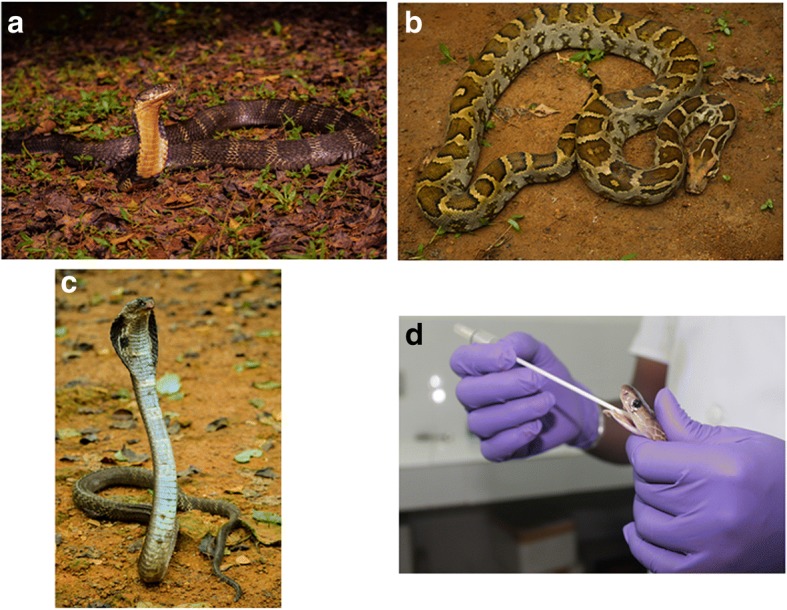
Total DNA was isolated from oral swabs collected from three wild snake species (Indian Cobra, King Cobra and Indian Python). Next, the DNA was subjected to PCR amplification of microbial 16S rRNA gene using V3-region-specific primers. The amplicons were used for preparation of DNA libraries that were sequenced on an Illumina MiSeq platform.
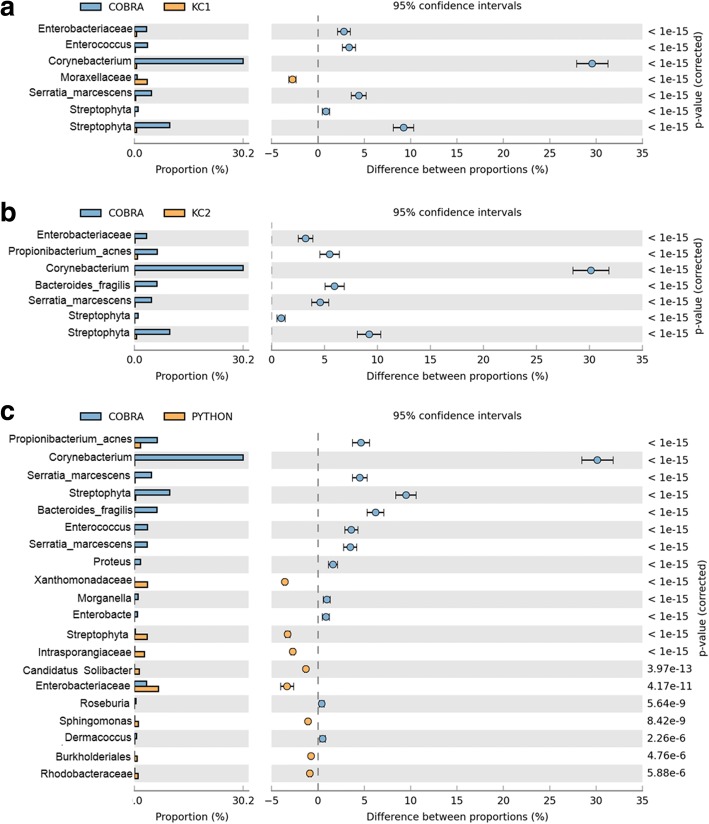
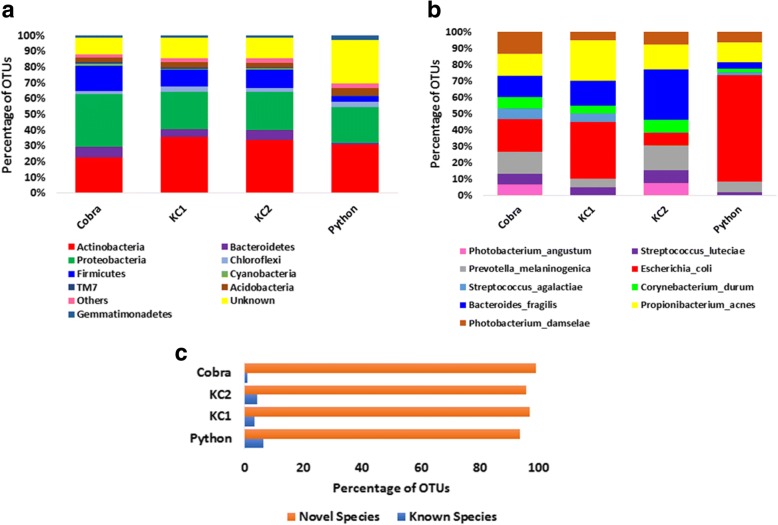
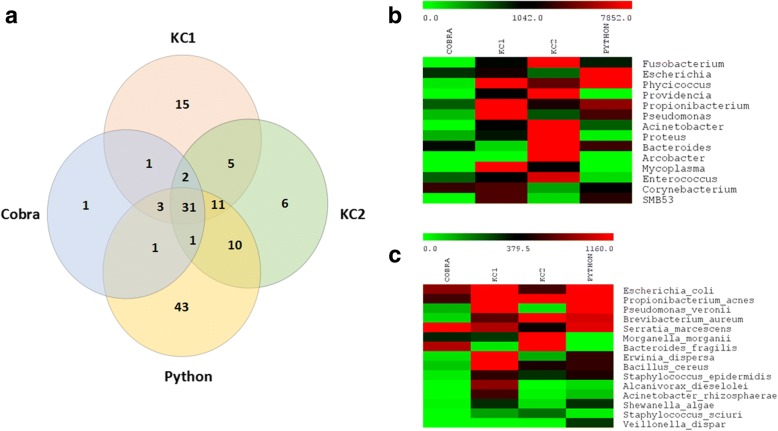
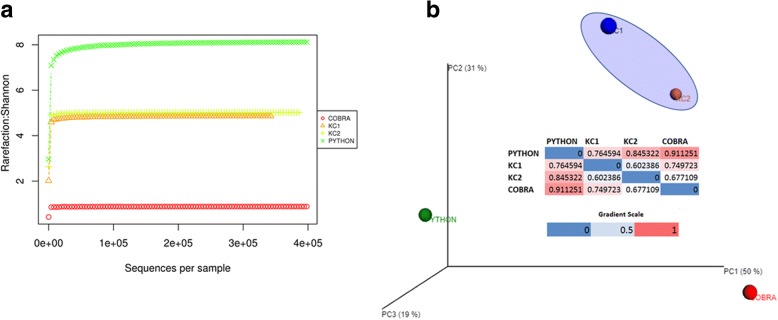
The cluster-based taxonomy analysis revealed that Proteobacteria and Actinobacteria were the most predominant phyla present in the oral cavities of snakes. This result indicates that snakes show more similarities to birds than mammals as to their oral bacterial communities. Furthermore, our study reports all the unique and common bacterial species (total: 147) found among the oral microbes of snakes studied, while the majority of commonly abundant species were pathogens or opportunistic pathogens to humans. A wide difference in ophidian oral bacterial flora suggests variation by individual, species and geographical region.
The present study would provide a foundation for further research on snakes to recognize the potential drugs/antibiotics for the different infectious diseases.
蛇的口腔中充满了各种类型的细菌群落。依赖培养的研究表明,某些细菌物种与蛇咬伤相关的继发性细菌感染有关。迄今为止,尚未有关于蛇口腔细菌群落完整概况的报道。因此,在本研究中,我们确定了来自印度的一些蛇口腔中的完整细菌组成。
从三种野生蛇类(印度眼镜蛇、眼镜王蛇和印度蟒)采集的口腔拭子中分离总DNA。接下来,使用V3区域特异性引物对DNA进行微生物16S rRNA基因的PCR扩增。扩增产物用于制备DNA文库,并在Illumina MiSeq平台上进行测序。
基于聚类的分类分析表明,变形菌门和放线菌门是蛇口腔中最主要的门类。这一结果表明,在口腔细菌群落方面,蛇与鸟类的相似性高于与哺乳动物的相似性。此外,我们的研究报告了在所研究的蛇口腔微生物中发现的所有独特和常见细菌物种(共计147种),而大多数常见的丰富物种对人类来说是病原体或机会性病原体。蛇口腔细菌群落存在很大差异,表明个体、物种和地理区域存在差异。
本研究将为进一步研究蛇提供基础,以识别针对不同传染病的潜在药物/抗生素。