Noflatscher Maria, Schreinlechner Michael, Sommer Philip, Kerschbaum Julia, Berggren Katharina, Theurl Markus, Kirchmair Rudolf, Marschang Peter
Department of Internal Medicine III (Cardiology, Angiology), Medical University of Innsbruck, Anichstr. 35, A-6020 Innsbruck, Austria.
Department of Internal Medicine IV (Nephrology and Hypertension), Medical University of Innsbruck, Anichstr. 35, A-6020 Innsbruck, Austria.
J Clin Med. 2018 Dec 31;8(1):32. doi: 10.3390/jcm8010032.
Atherosclerosis is a systemic multifocal disease with a preference for the branching points of the arteries. In this study, we quantitatively measured carotid and femoral plaque volume in subjects with cardiovascular risk factors (CVRF) and/or established atherosclerotic disease using a 3D ultrasound technique.
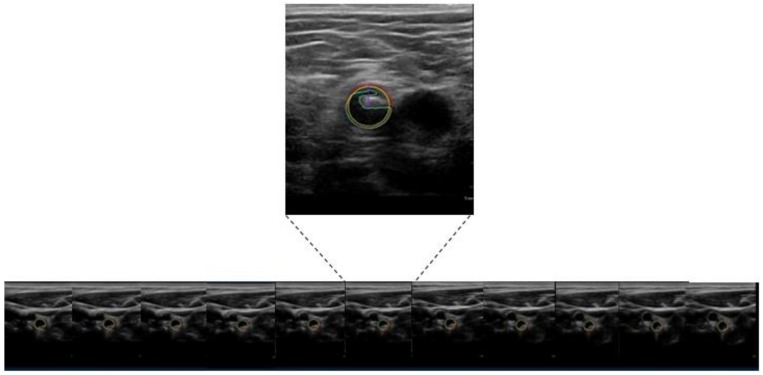
In this prospective, single-centre study, we included 404 patients (median age 64; 56.9% men) with at least one CVRF or established cardiovascular disease. Plaque volume was measured using 3D ultrasound equipped with an automated software.
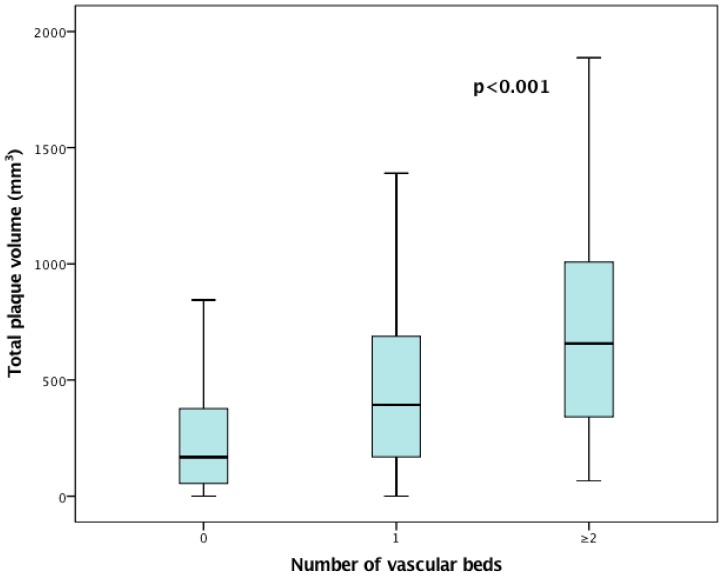
We found a strong correlation of plaque volume with CVRF and the number of vascular beds involved. The strongest associations with total and femoral plaque volume were noted for smoking, hypertension, age, as well as for the presence of peripheral arterial occlusive disease ( < 0.05). Carotid plaque volume was best predicted by hyperlipidaemia, hypertension, age, as well as the presence of cerebrovascular disease and coronary artery disease ( < 0.05).
We conclude that smoking appears to be associated with total and femoral plaque volume, whereas hyperlipidaemia seems to be associated with carotid plaque volume. Measurement of 3D plaque volume is a practical and reproducible technique with the potential to become an additional screening tool in cardiovascular risk stratification.
动脉粥样硬化是一种全身性多灶性疾病,好发于动脉分支处。在本研究中,我们使用三维超声技术对具有心血管危险因素(CVRF)和/或已确诊动脉粥样硬化疾病的受试者的颈动脉和股动脉斑块体积进行了定量测量。
在这项前瞻性单中心研究中,我们纳入了404例患者(年龄中位数64岁;男性占56.9%),这些患者至少有一项CVRF或已确诊心血管疾病。使用配备自动软件的三维超声测量斑块体积。
我们发现斑块体积与CVRF及受累血管床数量之间存在强相关性。吸烟、高血压、年龄以及外周动脉闭塞性疾病与总斑块体积和股动脉斑块体积的相关性最强(<0.05)。高脂血症、高血压、年龄以及脑血管疾病和冠状动脉疾病与颈动脉斑块体积的相关性最强(<0.05)。
我们得出结论,吸烟似乎与总斑块体积和股动脉斑块体积相关,而高脂血症似乎与颈动脉斑块体积相关。三维斑块体积测量是一种实用且可重复的技术,有可能成为心血管风险分层中的一种额外筛查工具。